Trump targets China's polysilicon dominance with new tariffs
China leads by far in its polysilicon production capacity compared to the rest of the world
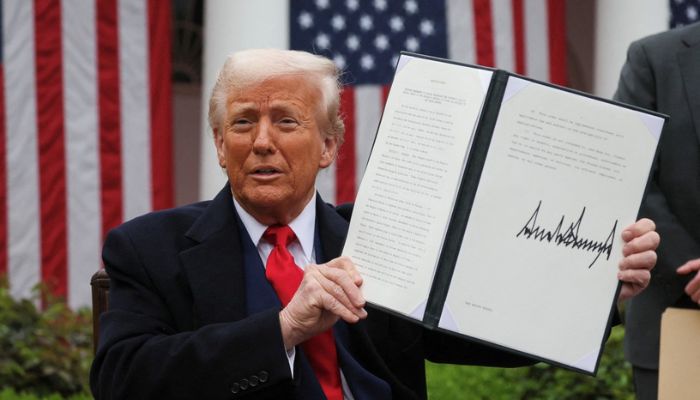
The White House has imposed a 15% tariff and a series of minimum import prices on polysilicon, the raw material for both semiconductor and solar panel production.
The measures, announced on Thursday, aim at a supply chain that is overwhelmingly controlled by China and seek to increase competitiveness in artificial intelligence and energy for the United States.
The executive order of President Trump refers to Section 232 of the Trade Expansion Act of 1962, which is a national security act granting sweeping presidential powers to control imports using tariffs, quotas, or minimum prices.
The order states the plan is intended to help ensure the commercial viability of US polysilicon production and its derivatives, which officials argue is necessary to meet economic and national security requirements. Implementation is delayed until December 4, giving supply chains time to adjust.
Polysilicon refers to very pure silicon, which serves as the raw material at the beginning of the manufacturing process of semiconductors and solar panels before being processed into wafers and solar cells.
American solar companies have been accusing Chinese companies of dumping panels and taking advantage of their subsidies for nearly a decade now.
China leads by far in its polysilicon production capacity compared to the rest of the world, according to industry figures.
The United States currently has just two polysilicon factories: Hemlock Semiconductor, a joint venture between Corning and Japan's Shin-Etsu Handotai operating in Michigan, and a Wacker Chemie plant in Tennessee.
A Corning spokesperson said the decision "encourages continued investment in US capacity," while Wacker said it was still reviewing the measures but welcomed the administration's continued engagement, while Wacker said it was still reviewing the measures but welcomed the administration's continued engagement given the implications for semiconductor supply chain resilience and defence interests.
Domestic chip manufacturing depends partly on solar demand, since the solar industry's larger appetite for polysilicon helps sustain production capacity that chipmakers also rely on, even though chips account for a small fraction of global polysilicon demand.


-
 Google launches Gemini 4 Argon as its new frontier model
 -
 Bill Gates has a plan for AI taking human jobs: Tax robots
 -
 OpenAI’s new API to give AI agents a watchdog
 -
 Google challenges EU ruling that could open its search services to rivals
 -
 US added jobs, but that doesn’t mean companies are hiring
 -
 Google Play to turn your game library into playlists
 -
 WhatsApp Channels may move to chats tab in new test
 -
 Android Auto's Razr calling bug just got worse with Gemini