NASA's bold effort to rescue Swift Observatory telescope hits an unexpected setback
The Swift telescope was launched in 2004 for the purpose of a two-year mission to study gamma-rays bursts
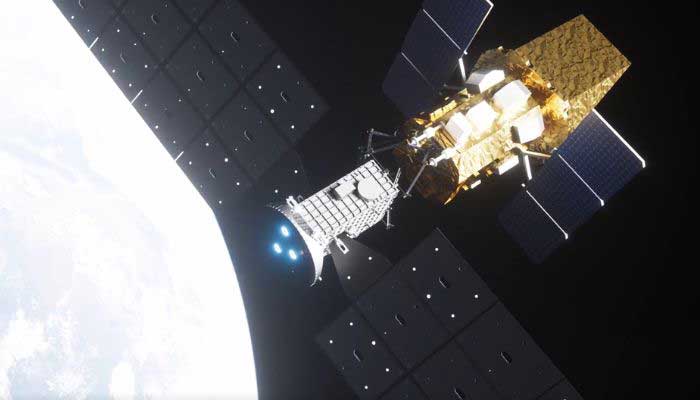
NASA’s race to rescue deteriorating Neil Gehrels Swift Observatory telescope hit an unexpected setback during the last-minute mission.
The space agency launched a daring rescue mission for the aging telescope ,which is at the brink of losing altitude and at risk of burning up in Earth's atmosphere due to atmospheric drag.
To save it from falling towards Earth, NASA would use a robotic spacecraft named LINK which is developed by the startup Katalyst. The launch of spacecraft would be carried out through a Pegasus rocket. The rocket will be air-launched from a jet rather than a traditional ground-based launchpad.
On Thursday, Northrop Grumman’s rocket-launching jet was ready to take off from the Marshall Islands in the Pacific. However, a last-minute software glitch occurred, compelling the agency to abort the mission immediately and keeping the rocket tied to the plane.
Under this mission, the robot will use three movable arms to capture a falling satellite and tow it to an orbit roughly 300 km higher.
According to NASA, the issue has been resolved and they will carry out another launch attempt on Friday.
During the mission, the engineers face a challenge of not having a clear view of the telescope’s docking area, dividing the success rate to 50-50 percent chances.
According to NASA and Katalyst, the mission, if successful, would “pave the way for new possibilities in spacecraft management, and is worth a shot.”


-
 NASA expands Moon base research with three new investigations
 -
 Are Europe's data centres hiding their water use?
 -
 SpaceX set to send Google AI chips into space for data centers
 -
 New report warns of record ocean warming and rising seas
 -
 Why NASA scientists believe Scotland holds clues to Mars’ ancient past
 -
 China’s bold Mars plan: Map entire Red Planet by 2028
 -
 Swiss drought reveals Roman secrets that could redraw ancient maps
 -
 SpaceX’s Starship engine failure raises questions over NASA’s moon mission