Scientists create world’s first synthetic cell from scratch, marking historic biology milestone
Researchers have created what they say may count as the first-ever synthetic cell
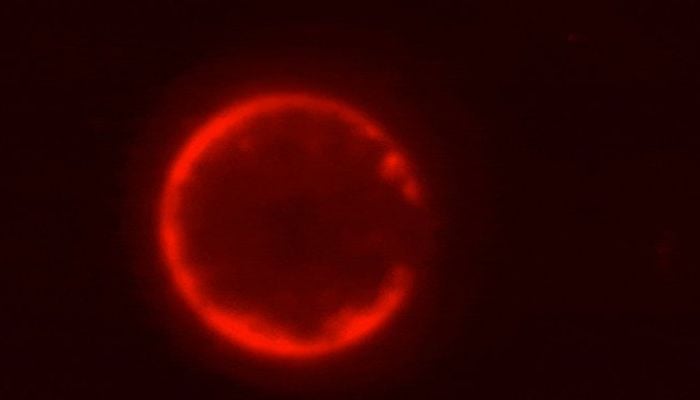
Scientists in a historic breakthrough have developed a first-ever synthetic cell capable of completing life cycle like a natural cell.
The historic first synthetic cell, nicknamed “SpudCell” can grow, feed and replicate like a natural cell, but here lies the major difference. Unlike previous experiments based on existing yet modified bacterial cells, the new research led by the researchers at the University of Minnesota developed this cell using “only non-living chemical components.”
The team led by Kate Adamala, a synthetic biologist and professor at the University of Minnesota, suggested that this biological breakthrough is significant, ushering in an “era of made-to-order organisms that act like living machines.”
Unlike a natural cell comprising millions or billions of molecules, the synthetic one consists of only 150-200 molecules along with a genome of 90,000 base pairs.
Speaking about its functionality, it can replicate for about 5 generations, though it is "incredibly wimpy" and requires constant human intervention.
“Building a cell from scratch means you are no longer tied to the constraints and evolutionary baggage of natural biology. It opens up the possibility of designing systems and programming them to do things that living cells may not do easily, or may not do at all,” Yuval Elani, an associate professor in biochemical technologies at Imperial College London, said.
According to Adamala, the research debunks the need of having mysterious magical spark to start biological processes, citing, “It proves that the most fundamental functions of life, like growth and replication do not need a mysterious magical spark.”
Future implications
The researchers claimed that the creature is not independent and “fragile prototype” but it could pave the way helping the scientists to understand the origin of life
Having been called chassis, the researchers hope that SpudCell will help solve the major problems like developing new cancer treatments, manufacturing chemicals and medicine and capturing carbon to tackle climate change.
The team aims to make the technology available as a shared global standard to accelerate research through a new public-benefit institution called Biotic,
Adamala hoped, “We’re hoping we’re really starting the true age of bioeconomy enabling technology that will let people engineer biology.”


-
 A ‘neglected’ neutrino may hold the key to why the Universe exists
 -
 Can cancer drugs be made in space? Here’s what the new mission aims to find out
 -
 SpaceX Falcon 9 successfully launches Bandwagon-5 mission with 32 payloads
 -
 Europe launched 8 orbital rockets last year, can it rival Starlink?
 -
 Japan launches world’s first mission to bring sample back from phobos
 -
 Orionid meteor shower 2026: Peak date, viewing tips and what to expect
 -
 Why Mars looks blue in NASA’s unedited curiosity panorama?
 -
 Blue Origin upgrades new Glenn rocket launch infrastructure to take on SpaceX