Can ‘space airbags’ save Earth from solar storms? Scientists propose new shield plan
'The proposed approach uses existing technology and materials, making it a practical future defence against space weather risks'

Astronomers in a recent breakthrough have proposed a new protective plan, aiming to shield Earth from destructive solar flares.
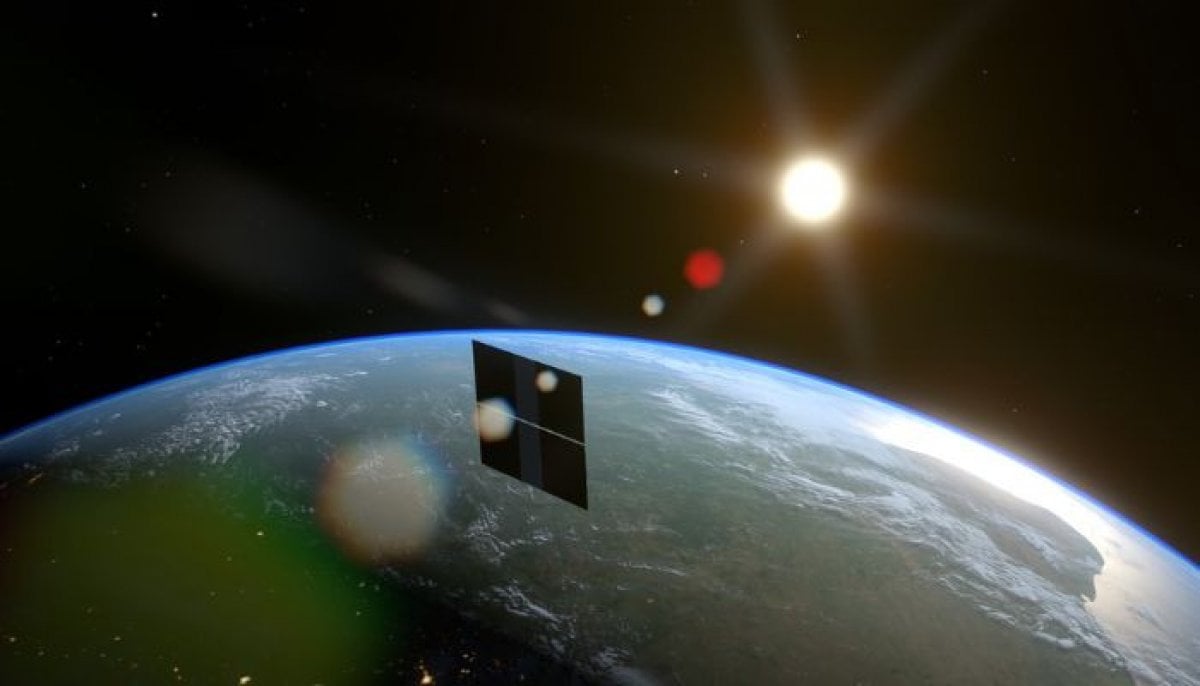
According to a new study, the chemicals ejected from satellites at the edge of Earth’s magnetic field can act as potential airbags that could protect the planet.
The earth hit with solar flares can experience disruption in radio communications and damage satellite electronics. Consequently, the streams of high-energy particles ejected from the Sun also disrupt the GPS signals and power grids.
The new plan focuses on building a spacecraft system that can fire chemicals at the edge of magnetic fields to strengthen the planet’s defenses and reduce the intensity of a major geomagnetic storm.
According to astronomer Daniel Welling, author of the study from the University of Michigan, "It's as if you could install an airbag in the magnetosphere.”
Named Storm Wall, the system would be equipped with six spacecraft launched into “a geosynchronous orbit to sync their rotation with the Earth's.”
_updates.jpg)
Each satellite would hold a bucket of an “alkaline chemical like barium or lithium” to create electrical charge and enrich the atmosphere with plasma. In turn the plasma would “disrupt the flow of energy” flowing between solar storms and the magnetosphere.
However, launching such a system comes with cost barriers. According to estimates, the proposed system would require launching six spacecraft, each carrying material equivalent to roughly twelve oil trucks.
"The proposed approach uses existing technology and materials, making it a practical future defence against space weather risks," researchers wrote.
"If you built it, if it was deployed, it would help all people on the planet. You couldn't make it in a way that helped only one country, one group of satellites," Dr Walsh said.


-
 Apple unveils Klarna-powered ‘Apple Upgrade’ plan for iPhone, Mac and iPad in US
 -
 Apple dethrones Nvidia as world's most valuable company: Will it last?
 -
 Who will control Strait of Hormuz? Oman proposes regional mechanism to Iran
 -
 China moves closer to build ‘Artificial Sun’ after testing 582-ton fusion magnet
-
China moves closer to build ‘Artificial Sun’ after testing 582-ton fusion magnet
-
 FCC approvals can transform Earth's night sky, experts warn
 -
 Double meteor shower peaks this week: Best time and tips to see celestial event
 -
 US-Russian space crew returns to Earth after eight-month mission on the International Space station
 -
 Viking 1 mars landing: 50 years since first photos
 -
 Four hidden dead stars found in Earth's backyard
 -
 What happened during SpaceX’s 13th Starship test? First upgraded Starlinks successfully deployed
 -
 Astronomers may have found the first moon beyond our solar system