Can meteorites be recovered from Cape Cod Bay? Harvard professor compares search to a ‘fishing expedition’
‘It was moving at 100 times the speed of sound when it exploded as a result of friction in the air,’ said Loeb
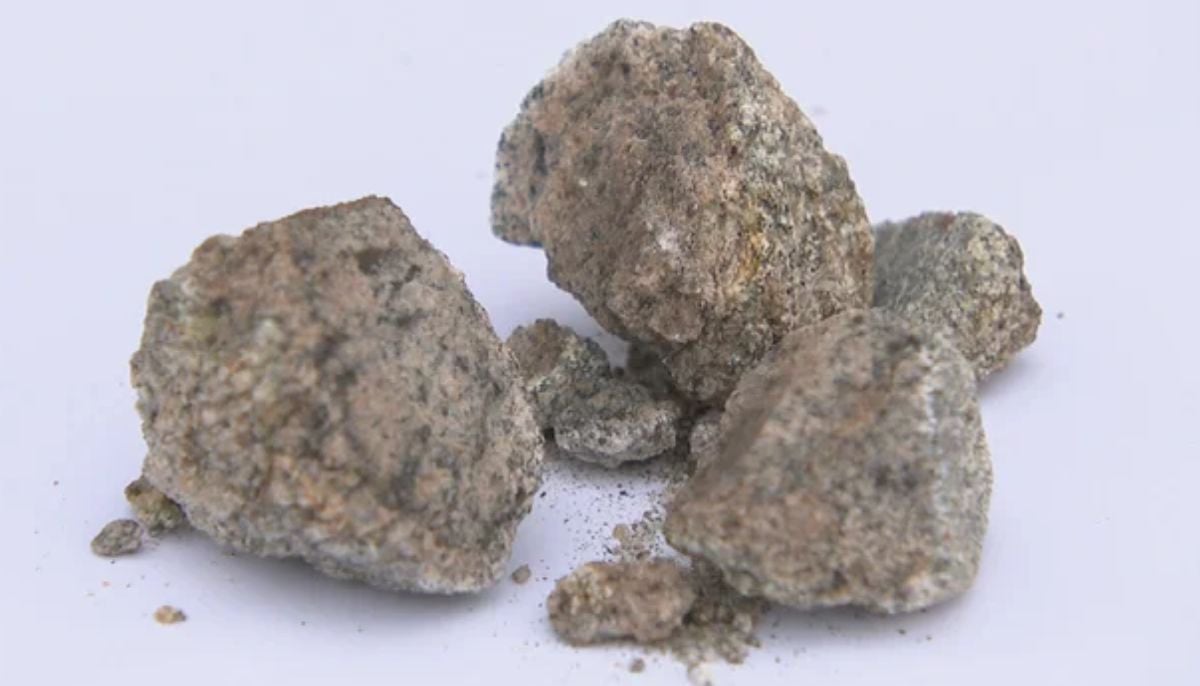
A surprising discovery showed that the sonic boom off the coast of Massachusetts has triggered a viral sensation online. A meteor mainly exploded over Cape Cod Bay after breaking the sound barrier, creating a boom that could be heard and felt from several states away.
A Harvard Professor, Avi Loeb said: “It was moving at 100 times the speed of sound when it exploded as a result of friction in the air.”
“The explosion released 300 tons of a TNT equivalent amount of energy which amounts to 2% of the Hiroshima atomic bomb energy,” Loeb added.
Loeb was of the view that the meteor specifically exploded at an altitude of roughly 40 miles. NASA released data showed that the space rock was five feet in diameter. On the other hand, it was traveling at 42,000 miles per hour.
NASA has further clarified that meteorites found in Cape Cod Bay range in size from 40grams to multiple kilograms.
It has been observed that meteorites are common to provide historical data as the chances for recovering weather-related facilities on land are often slim.
Following the current discovery, a geophysicist is investigating the actual cause of the incident that the blast was caused by a meteorite.
The Dolan’s also heard this sonic boom but clarified that it was not actually the boom related to the meteorite that struck their home. They are still looking to determine the exact origin of the noise that originated from the recent blast.
Meanwhile Loeb is looking for the remains of an interstellar meteor in the Pacific. A team of scientists used an array of magnets to retrieve tiny micrometeorites from the seafloor.
Loeb further said: “It needs to be quite an extensive operation however one can be lucky it is just like a fishing expedition.”


-
 Biden calls out Trump’s ‘vanity projects’ at Maryland Democratic Gala—Here’s why
 -
 Pima County Sheriff responds to new claims in Nancy Guthrie case
 -
 Mayor Mamdani jumps into NYC pool to revive old tradition
 -
 Trump’s Gaza Board of Peace seeks to grant itself total immunity and free use of property: Here’s why
-
 Scientists found 'super-puff' planets 1,110 light-years away
 -
 Scientists find ancient microbial life in places it shouldn't exist
 -
 Why Marijuana is suddenly sending thousands of dogs to hospitals in US?
 -
 36 years on, Hubble shows how stars actually change over time
 -
 Hidden magma beneath Mars? Scientists' 'unexpected' discovery raises new questions about alien life
 -
 Rare 3,200-year-old coral blue hole discovered in South China Sea
 -
 What happens at black hole’s event horizon? Scientists find the first-ever clue
 -
 Scientists discover evidence of fires used by humans 1.8 million years ago
-
 Did NASA just uncover evidence of ancient life on Mars? Key discoveries explained
 -
Four powerful earthquakes strike three continents within hours: Scientific link or coincidence?
-
Mysterious interstellar comet passing our solar system may be 12 billion years old, scientists say
-
When do we really become adults? Science has an answer