Nobel Laureate Physicist Chen Ning Yang dies at 103
Scientist who revolutionized particle physics with parity violation theory passes away in Beijing
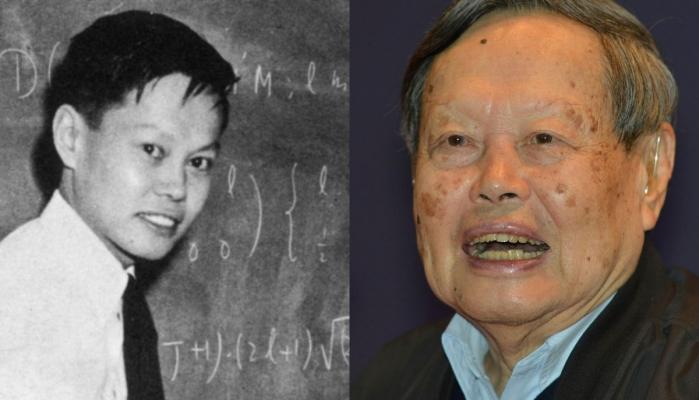
Chen Ning Yang, the Chinese-American physicist who transformed modern science through his groundbreaking work on subatomic symmetry principles, has died at age 103.
The Nobel laureate passed away on Saturday, October 18, 2025 in Beijing following an illness, concluding a celebrated career that fundamentally altered understanding of the universe's basic forces.
The renowned scientist shared the 1957 Nobel Prize in Physics with colleague Tsung-Dao Lee for their collective research challenging established parity laws.
Revolutionary researcher's work demonstrated that fundamental particles don't necessarily obey mirror symmetry, disproving long-held assumptions about left-right equivalence in subatomic interactions and opening new frontiers in theoretical physics.
Yang developed his early academic foundation on Tsinghua University's campus where his father taught mathematics before continuing his education in the United States postwar.
The physicist joined the University of Chicago through a fellowship program, studying under nuclear pioneer Enrico Fermi before establishing his professional career at Princeton's Institute for Advanced Study.
The theoretical physicist maintained academic connections with both American and Chinese institutions throughout his life, embodying transnational scientific collaboration during decades of geopolitical tension.
Yang's parity violation discovery continues influencing particle physics research generations after his Nobel achievement, securing his legacy among the twentieth century's most significant theoretical minds.


-
 Taylor Swift and Travis Kelce's wedding guest list revealed
 -
 New GTA 6 features confirmed: Dual protagonists, larger map, social feeds
 -
 Arrest warrant issued for Eminem’s ex-wife Kim Scott
 -
 Why Netflix’s expanded deal for Russian cartoon ‘ Masha and the Bear’ is sparking backlash in Ukraine
 -
 Brad Pitt rejects marriage plans with Ines de Ramon: 'Never feels like his girlfriend'
 -
 'Mildred Pierce' star Ann Blyth passes away at 98
 -
 Sam Smith announces fifth album 'Hazel Eyes,' releases new love song
 -
 Bill Gates' extramarital affairs: Who are Mila Antonova, Karima Nigmatulina and Alice Jacobs?