Surprising brain cells found to play key role in storing emotional memories
Emotional memories can be strongly encoded in the brain
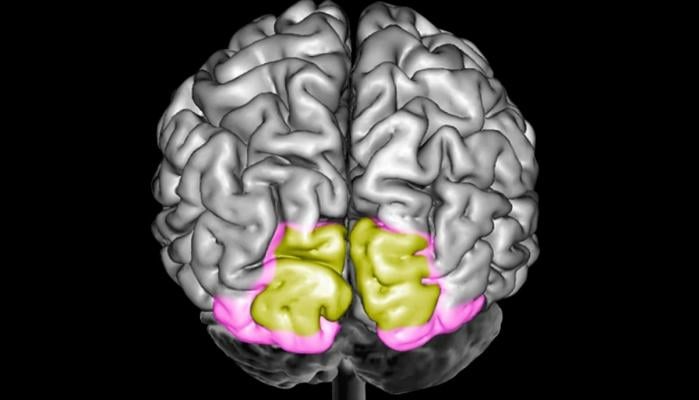
According to a new study published in Nature, emotional memories are powerfully encoded in the brain primarily through the interaction of a type of cell called an astrocyte, which plays a central role in memory consolidation.
Astrocytes were simply thought to support neurons in creating the biophysical traces of memories; however, the study found that they have a more participatory role and can even be directly triggered by trauma reenactment.
The researchers further suggest that the cells could be a new target for treating memory conditions such as those associated with combat neurosis disorder and Alzheimer’s disease.
According to the study co-author Jun Nagai, they get an answer to the question of how a specific memory is retained for a longer period of time by studying astrocytes.
The study further identifies how the brain selectivity filters and highlights significant recollections at the cellular level.
Nagai and his colleagues mainly focused on the question of memory fortification and how short-term memory loss becomes more permanent in the brain.
Meanwhile previous research has found biophysical changes in the brain regions such as the hippocampus and amygdala.
It was not clear how these "engrams" were stored in the brain as cherished memories after repeated exposure to the same stimulus.
Upon further inquiry, researchers developed a method for measuring activation patterns in astrocytes across the whole brain of a mouse as it completes a memory task.
They assessed the augmentation of a gene called Fos- an early marker of cell activity that is correlated with the physical traces of memories in the brain.
The experiment used a Contextual Fear Conditioning task (CFC) to train the mice to associate a certain cage with unpleasant foot shocks, while the researchers monitored the progress of Fos in their brains.
A few days later the animals would re-enter the cage and recall the unpleasant sensation.
The researchers observed strong Fos amplification in astrocytes in the amygdalas and other brain regions when mice re-entered the cage, but not during the initial conditioning.
This suggests that astrocyte activity was more dominant for stabilizing or consolidating past events into long-term memories.
Nagai said, "The surprise was that astrocytes did not respond to the fear experienced the first time, only the second time."


-
 Dubai becomes millionaire hotspot after 102% wealth surge: Report finds
 -
 ‘It's time to say goodbye’: Gary Stevenson pauses YouTube channel amid mental health struggles
 -
 Lamine Yamal strongly warned about romance with girlfriend Ines Garcia
 -
 Lamine Yamal’s girlfriend Ines Garcia hits 4 Instagram followers after Spain’s World Cup win
 -
 US sports betting nears $300 billion as experts warn of addiction risks
 -
 Are we closer to a real-life ‘genie’ that grants any wish: Here's what Sam Altman thinks
 -
 Elon Musk’s recent claim about Bill Gates sparks fresh online controversy
 -
 Watch: Kaitlan Collins’ reaction to Trump’s remarks
-
 Max Verstappen slams ‘broken’ Red Bull after Hungary shocking qualifying disaster
 -
Trump reacts to Ferran Torres' viral 'Make Spain Great Again' hat
-
Ferran Torres, Marcos Llorente become target of false claims after Ibiza photos go viral
-
Typhoon Noul nears Southern China, prompting high alerts and public transport suspensions