NASA scientist unveils startling theory about alien silence
Astrophysicist proposed ‘radical mundanity’ theory explaining why aliens have stopped calling Earth
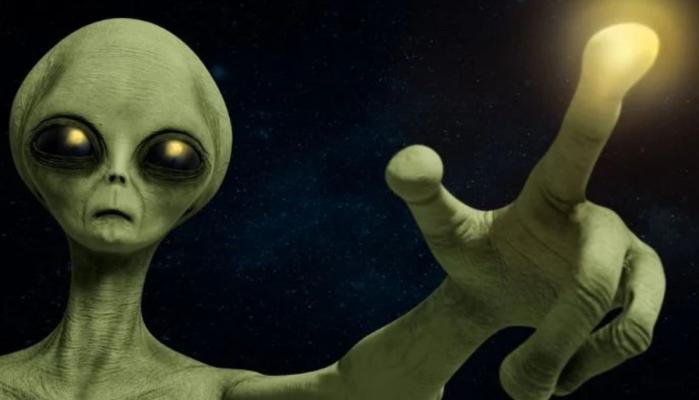
For centuries, extraterrestrial life has been a debatable subject, arguing about whether another life exists beyond Earth's planet or not.
Various theories prevail regarding the existence of aliens and their possible detection in different galaxies.
As per scientists’ theories, aliens are equipped with better technology, helping them to explore their cosmic neighbourhood. Consequently, they got bored and stopped calling the Earth, thereby making it difficult to detect them.
Recently, a latest theory termed as “radical mundanity” has come to surface, explaining the silence of aliens and lack of evidence of technology-using extraterrestrials civilisations (ETCs) in the galaxy, called the Fermi paradox.
The Fermi paradox explains striking contradiction between the high possibility of existence of extraterrestrial civilizations and complete lack of evidence or contact with them.
The principle of radical mundanity proposes that the Milky Way also hosts a modest number of extraterrestrial civilizations whose technology is not much more impressive than possessed by humans.
Proposed by Dr Robin Corbet, a senior research scientist who is based at Nasa’s Goddard Space Flight Center, none of these extraterrestrial civilizations “have achieved technology levels sufficient to accomplish large-scale astro-engineering or lack the desire to do so.”
“The idea is that they are more advanced, but not much more advanced. It’s like having an iPhone 42 rather than an iPhone 17,” said Dr Robin.
According to the researcher’s paper titled ‘A Less Terrifying Universe? Mundanity as an Explanation for the Fermi Paradox’, these ETCs are capable of sending high-power probes to contact other civilizations.
But here is the catch! A huge amount of energy is required to send a signal. Similarly, it would take millions or billions of years to receive a signal.
Resultantly, the aliens have given up on the idea of making contact with Earth.
If this galaxy hosts a number of ETCs, Earth is “not likely to be a very interesting place to visit,” he added.
According to Prof Michael Garrett, who is the director of the Jodrell Bank Centre for Astrophysics, “I lean towards a more adventurous explanation of the Fermi paradox: that other, post-biological civilisations advance so rapidly that they slip beyond our capacity to perceive them.”





-
 Dan Levy confronts 'Schitt's Creek' glory while making 'Big Mistakes' on Netflix
 -
 Brad Pitt delivers savage blow to ex-wife Angelina Jolie amid legal battle: 'It bugs her'
 -
 Elon Musk highlights Neuralink’s potential for restoring vision and hearing
 -
 Take-Two Interactive cuts AI team ahead of GTA VI release
 -
 Luke Combs knew his 2016 song would make him superstar
 -
 Adele to perform on major celebrity's milestone birthday in November
 -
 'Harry Potter' star John Lithgow shares his two cents on J.K. Rowling's controversy
 -
 Britney Spears 'swears to clear the slate' as fears grow after DUI arrest
-
 Ozzy Osbourne's daughter Kelly drops ice-cold message for ex-fiancé Slipknot DJ Sid Wilson
 -
Netflix surprises Gordon Ramsay with special gift for his 60th birthday: 'It's absolutely huge'
-
Alison Hammond gushes over younger boyfriend in candid confession
-
'The Young and the Restless' star Dee Freeman passes away at 66