
Discovery maps hidden bacteria in tumors that could help beat cancer
The bacteria living inside tumors can produce a molecule that can fight cancer cells
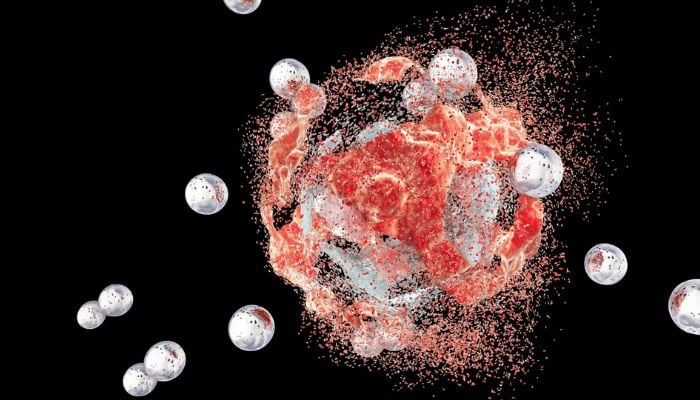
An international team of scientists discovered that bacteria living inside tumors produce molecules that can fight cancer cells and can control cancer progression and boost the effectiveness of chemotherapy.
The molecule called 2-methylisocitrate (2-MiCit) was found to make colorectal cancer cells more vulnerable to chemotherapy by damaging their DNA and disrupting their metabolic dysregulation.
Meanwhile practical experimentation using worms, flies and human cancer cells confirmed its dynamic anti-cancer effects.
Benefits of tumor-host communities of bacteria revealed
People are quite familiar with the microbes on skin and in our gut, but the recent discoveries demonstrate that tumors also have unique communities of bacteria.
Scientists are now investigating how these tumor-associated bacteria can affect tumor growth and the response to chemotherapy.
The research was published in Cell Systems, which provides a revolutionary development in this field and identified a chemo-preventive agent produced by bacteria associated with colorectal cancer.
The research findings open the door to new strategies for treating cancer, including the development of cutting-edge therapy that could make existing treatments more influential.
The novel screening approach was rolled out
The researchers used a large-scale screening approach to test over 1,100 conditions in a type of microscopic worm called C.elegans.
They have found that the bacteria E. coli produced a molecule called 2 methylisocitrate (2-MiCit) that could play a crucial role to improve the effectiveness of the chemotherapy drug 5-flurouracil (5-FU).
The team used computer-modelling to demonstrate that the tumor-associated microbiomes from patients were able to produce 2-MiCit.
In order to testify the effectiveness of 2-MiCit, the team used systems of human cancer cells and a fly model of colorectal cancer.
The study found that in both cases, 2-MiCiT showed potent anti-cancer properties, and for the flies it could extend survival.
The study revealed that 2-MiCit worked by impeding a key enzyme in the mitochondria of cancer cells.
The evolution of DNA damage and the resulting need for a multifaceted attack are known to mitigate the progression of cancer.
This multi-pronged attack ultimately weakens the cancer cells and works in synergy with 5-FU.
It has been observed that this combination was particularly more effective at killing cancer cells than either compound alone.
The postdoctoral researcher at the LMS and the first author of the paper, Dr Daniel Martinez-Martinez, said, "Microbes are an essential part of us and a single molecule can exert such a profound impact on cancer progression and is truly remarkable…."
The study highlights the crucial discoveries, and their impact on tumor progression and the pivotal role of bacterial metabolites in improving cancer treatments.
The findings can further contribute to medicine and underscore the importance of considering not only the patients but also their microbes in a promising approach.






-
 Cruz Beckham releases new romantic track 'For Your Love'
 -
 Michelle Yeoh addresses 'Wicked For Good' snub at 2026 Oscars
 -
 John Wick game confirmed with Keanu Reeves and Lionsgate collaboration
 -
 Sony PlayStation State of Play reveals 'Castlevania' and 'Metal Gear' return
 -
 Kylie Kelce reveals why she barely planned her wedding day?
 -
 Paul Anthony Kelly opens up on 'nervousness' of playing JFK Jr.
 -
 'Finding Her Edge' creator explains likeness between show and Jane Austin novel
 -
 How AI boyfriends are winning hearts in China: Details might surprise you