NASA, ESA failure: Misses asteroid that flew closer to Earth than satellites
NASA has halted public communications amid the ongoing US government shutdown
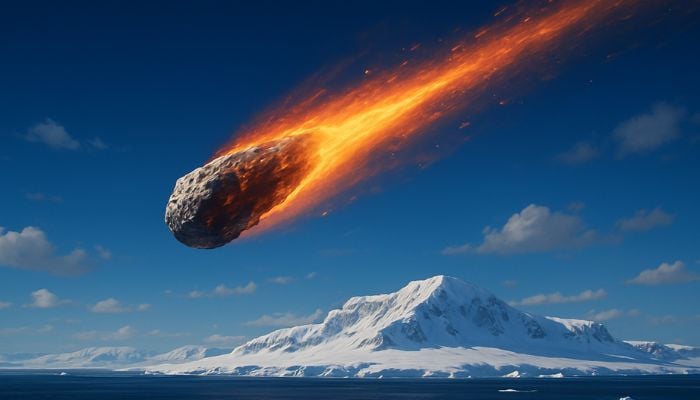
National Aeronautics and Space Administration (NASA), European Space Agency (ESA) and many other agencies with all their sophisticated telescopes, tracking the interstellar objects, recently suffered a major failure.
Astronomers failed to detect a small giraffe-sized asteroid named 2025 TF that zoomed past Antarctica, closer to the Earth than most of the satellites circling around the planet.
According to the European Space Agency, the interstellar object passed just 265 miles above the Earth’s surface on Tuesday, September 30, 2025. It was detected hours later by a NASA-funded mission’s, Catalina Sky Survey, observations.
ESA estimated the size of the asteroid to be around 3.3 to 9.8 feet wide and said, “It posed no serious threat to the Earth and might have burned up as a fireball had it entered the Earth’s atmosphere.”
For an object to be considered potentially hazardous, it must measure at least 460 feet in diameter and must follow an orbit that comes within 4.65 million miles of Earth.
2025 TF did not meet the threshold and therefore, its size and orbit might also be the reason that it evaded detection.
NASA has halted public communications amid the ongoing U.S. government shutdown. However, its Near-Earth Object Studies website notes that the tiny asteroid is not expected to approach Earth again until 2087.






-
 'Laguna Beach' stars Kristin Cavallari, Lauren Conrad take subtle swipe at past drama
 -
 ‘Unitree G1’ robot turns heads racing with laughing kids in Brooklyn Bridge Park: Watch
 -
 Zayn Malik revisits intimate past in 'Sideways'
 -
 Taylor Swift wows Travis Kelce with sweet gesture for six-month anniversary
 -
 John Mellencamp dedicates iHeartRadio Music Award to daughter Teddi: 'That's Your'
 -
 What's Kim Kardashian really doing in Tokyo? Full details
 -
 Miley Cyrus gets real about 'the fake that made her' at iHeartRadio Music Awards
 -
 Taylor Swift makes rare plea while accepting top honor at 2026 iHeartRadio Awards
-
 Druski's Erika Kirk backlash: Will comedian do damage control again like JSN drama?
 -
'Harry Potter' young stars attend first glitzy red-carpet party but under tight curfew: Find out here
-
Keith Urban sparks fear of relapse as Nicole Kidman divorce drama deepens
-
DeepMind unveils Lyria 3 Pro for high-end AI music creation: Here’s how it works