Australia's Red Goshawk nears extinction as range collapses across continent
Endangered raptor's population falls below 1,000 as habitat loss and climate change threaten remaining strongholds
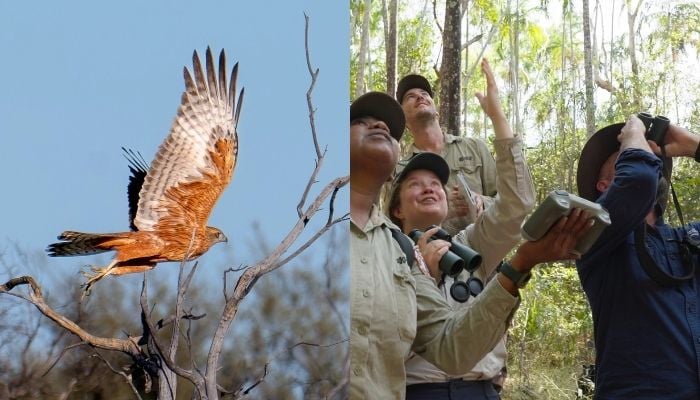
Australia's rarest bird of prey, the red goshawk, is vanishing from the nation's skies as the species suffers a catastrophic range collapse that has eliminated populations across eastern Australia.
Once found as far south as Sydney, the distinctive raptor now survives only in northern tropical savannas, with researchers estimating fewer than 1,000 mature birds remain in the wild.
University of Queensland researcher Chris MacColl confirmed: The species has gone extinct all across eastern Australia, right under our noses.”
MacColl further revealed records from northern New South Wales and southeast Queensland have completely disappeared since the 2000s.
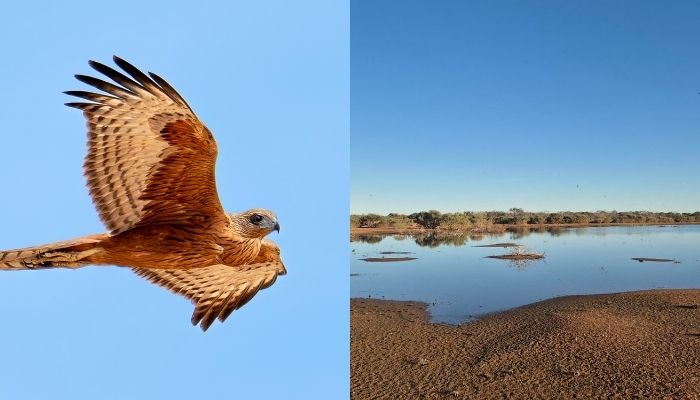
The federal government elevated the bird's conservation status from vulnerable to endangered in 2023, acknowledging its accelerated slide toward extinction.
The mysterious raptor, first described in 1801 from a drawing of a specimen nailed to a settler's hut in Botany Bay, represents a unique evolutionary lineage with only one close relative in Papua New Guinea.
BirdLife Australia's Dr Richard Seaton describes the birds as masters of camouflage that "will just glare at you" rather than flee when approached, making population assessments particularly challenging.
Conservationists have identified just ten known breeding pairs on the Australian mainland this year, with another ten on the Tiwi Islands where Melville Island serves as the species' final stronghold.
The birds require massive territories up to 600 square kilometers and build meter-wide nests in the tallest trees near waterways, habitats increasingly fragmented by agriculture, logging and mining operations.
Indigenous rangers and traditional owners are receiving specialized training to monitor nesting sites and track breeding success, providing crucial data for conservation efforts.
Climate change poses additional threats, with extreme heat creating thermal risks for vulnerable juvenile birds during their perilous 1,500-kilometer migratory flights to central Australia before returning to northern coastal areas.


-
 France deploys naval minehunters to clear Strait of Hormuz after US-Iran pact
 -
 Pope Leo issues major appeal as America celebrates its 250th birthday
 -
 Dog attacks woman after man attempt to help goes horribly wrong
 -
 Why Trump’s campaign-style rally for America’s 250th anniversary is sparking debate
 -
 ‘Trump accounts’ for children go live today: What parents need to know
 -
 Insider spills where Taylor Swift is now emotionally as she snubs Blake Lively on her wedding
 -
 Nancy Guthrie case update: How a cruel ‘imposter’ allegedly ‘harassed’ Annie Guthrie and Tommaso Cioni
 -
 Turkish comedian insults President Erdogan, suffers unexpected consequences
-
 Sara Netanyahu’s heated clash with Benjamin Netanyahu steals the spotlight at Maccabiah Games opening
 -
Ex-Olympic canoeist indicted for allegedly ‘vandalizing’ Trump’s $14m reflecting pool project
-
Best Poki games for July 2026: Check list here
-
Tesla Model Y L arrives in US with six seats and 325-mile range