Unforgeable Quantum money can be stored in ultracold ‘debit card’
Unforgeable quantum money could allow people to store some funds for the future
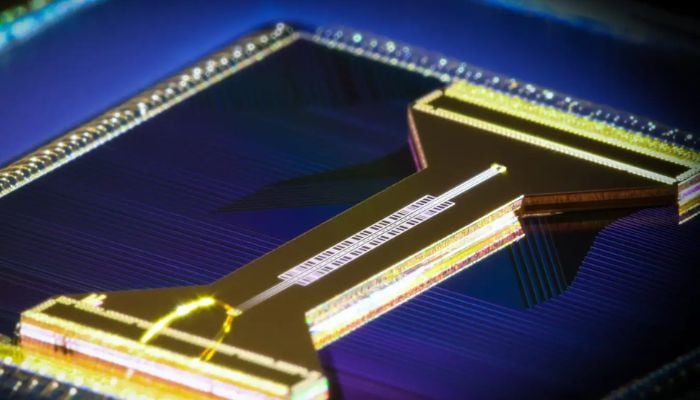
The idea of unforgeable quantum money stored in an ultracold card serves as a practical demonstration of quantum money, and a new experiment has added a way to store some of it for future use.
The discovery of counterfeit money often depends on the skill of the forger but in a quantum bank a law of physics called the no-cloning theorem would make a successful forgery impossible.
A giant leap in Quantum Information Theory
The law states that identical copies of quantum information simply cannot be made, and a physicist Stephen Wiesner formulated a protocol that relies on the no-cloning theorem to create unforgeable currency.
However, Julien Laurat at the Kastler Brossel Laboratory in France and his colleagues have now executed the idea in the most experimental way.
Novel Quantum Money Protocol
The bank issues banknotes made of quantum particles that possess a unique characteristic state, and this state is protected from forgery by the no-cloning theorem in the banking protocol.
According to Laurat, the protocol itself is a foundational text, but it never had been implemented in such a way that the user could store quantum money.
His team has made such storage possible by incorporating quantum memory devices into their setup.
The experiment is designed to communicate with a quantum device playing the role of the bank by exchanging photons and elementary particles. The state of each photon can be stored in the memory, similar to loading up a debit card.
It has been observed that quantum states of atoms could be controlled accurately with light, but Laurat’s team took years to determine how to do it well enough for the cold-atomic memory to work as a part of a quantum debit card.
The repeated trials led by his colleagues showed photons can be effectively retrieved from the atoms where the user wants to spend their quantum money, without those quantum states being destroyed in the process.
In this regard, Christoph Simon at the University of Calgary in Canada says that the new experiment is a pivotal step in the direction of operational unforgeable quantum money, but the storage is roughly 6 millionths of a second, which is too short for the protocol to have practical implications.
The development of state-of-the-art quantum memories could enable ultra-secure long-distance quantum communication and represents a major experimental milestone in several areas of quantum computing.


-
 Why Trump’s Fourth of July weekend kickoff is turning heads
 -
 Nancy Guthrie case update: How a cruel ‘imposter’ allegedly ‘harassed’ Annie Guthrie and Tommaso Cioni
 -
 UN raises alarm as intensifying El Niño threatens more ‘extreme weather events’
 -
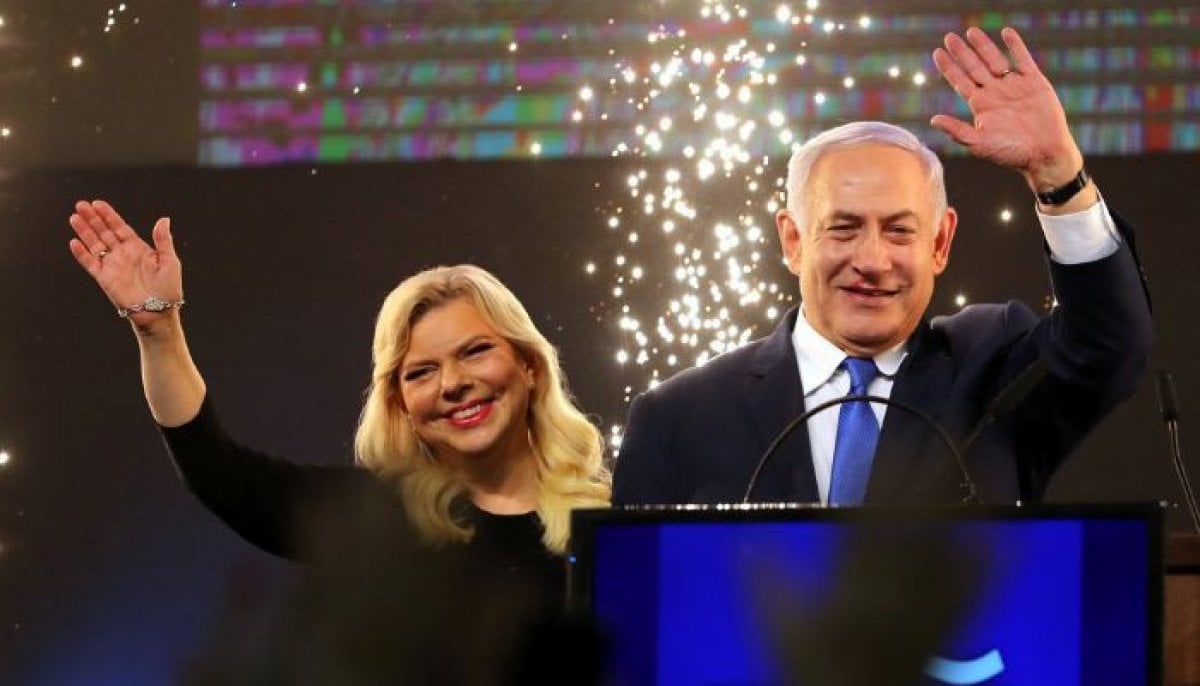 Sara Netanyahu’s heated clash with Benjamin Netanyahu steals the spotlight at Maccabiah Games opening
-
 Insider spills where Taylor Swift is now emotionally as she snubs Blake Lively on her wedding
 -
Nancy Guthrie case update: How a cruel ‘imposter’ allegedly ‘harassed’ Annie Guthrie and Tommaso Cioni
-
 Turkish comedian insults President Erdogan, suffers unexpected consequences
 -
Sara Netanyahu’s heated clash with Benjamin Netanyahu steals the spotlight at Maccabiah Games opening
-
 Ex-Olympic canoeist indicted for allegedly ‘vandalizing’ Trump’s $14m reflecting pool project
 -
 Best Poki games for July 2026: Check list here
 -
 Tesla Model Y L arrives in US with six seats and 325-mile range
 -
 Why FDA issued salmonella warning over potato chips?
-
 Empire State Building couple once stunned world by scaling tallest building after Burj Khalifa
 -
Trump takes aim at 'Trump Derangement Syndrome' in viral post with 'unusual' diet plan
-
Who are the Russian couple behind the Empire State Building proposal?
-
Sony is ending PlayStation game discs: Here's when