Huawei to double output of top AI chip in 2026 as it fills Nvidia void
Huawei plans major AI chip production hike, targeting 600,000 flagship units in 2026
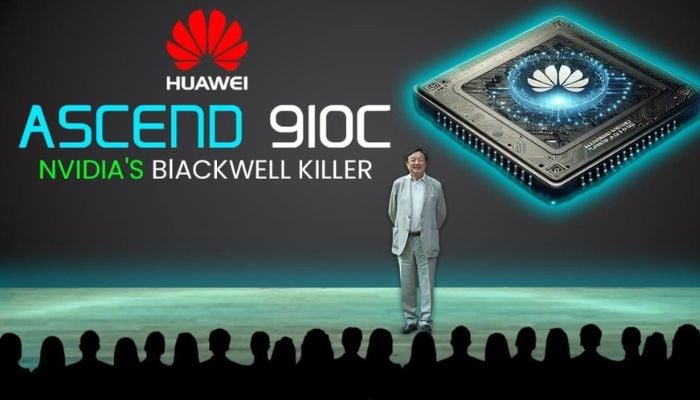
Huawei plans to increase production of its flagship Ascend AI chips in 2026 as the demand is surging due to Nvidia’s diminishing presence in China.
The Chinese technology company plans to double the production with manufacturing around 600,000 of its top-tier 910C Ascend chips in 2026.
The move is made in an effort to replace foreign-made semiconductors that power China's artificial intelligence sector.
In 2025, Huawei manufactured approximately one million dies (basic silicon components), which is expected to increase to 1.6 million in 2026.
This aggressive growth is driven by Nvidia's increasing struggles in the Chinese market.
The US chipmaker said it had zero sales of its China-specific H20 AI chip in the last quarter, and Beijing is increasingly banning or threatening to ban domestic sales of American semiconductors on security grounds.
The production targets at Huawei serve as an indicator that the company and SMIC have developed methods to resolve manufacturing bottlenecks that have hindered China's objective of achieving self-sufficiency in semiconductors.
The ambitious plans notwithstanding, Huawei's chip still lags behind Nvidia's in terms of performance.
In the next version, Ascend 950, Huawei is expected to achieve a performance of approximately 6% of that of the Nvidia next-generation VR200 superchip, according to Bernstein estimates.
Now, the largest Chinese tech companies, such as Alibaba and Tencent, mostly rely on Huawei to conduct inference tasks instead of training more complex AI models.
Nonetheless, Huawei is developing improved nanometer technology, packaging methods and exploring a re-engineered next-generation chip, which may potentially train AI algorithms, but is unlikely to be commercialized until 2027 or later.
In September, Huawei made the unusual move of publicly mapping its three-year roadmap, aiming to neutralize the power of Nvidia, reflecting both increasing confidence and the strategic value that Beijing attributes to semiconductor self-sufficiency.






-
 'Virgin River' star found dead days after going missing: Here's what we know
 -
 'It Takes Two' rapper Rob Base passes away at 59
 -
 Dustin Hoffman sets clear boundaries at 88: 'I can't look'
 -
 Stephen Colbert gushes over his wife Evelyn McGee Colbert
 -
 Trump confirms he will not attend son Donald Trump Jr.'s wedding with Bettina Anderson
 -
 How did Kyle Busch die? Leg injury and lawsuit draw attention as fans mourn his death
 -
 Sora shutdown forces AI film Critterz to miss Cannes
 -
 Kyle Busch’s final NASCAR win message leaves fans heartbroken
-
 Savannah Guthrie gets emotional as exciting news shared with her
 -
Olivia Rodrigo releases new song 'The Cure': 'It's my favorite on the album'
-
'Michael 2' confirmed: Lionsgate chairman feels 'excited about the progress'
-
Matt Damon feels jealous of 'The Odyssey' costar Charlize Theron's one physical trait