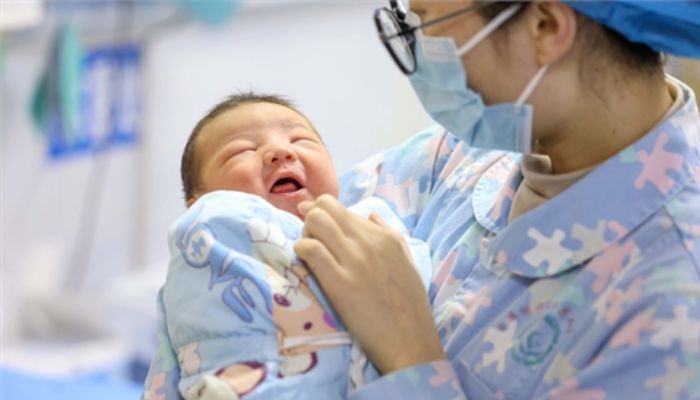
The first nationwide subsidy program has been introduced by China to encourage population growth.
The subsidy offers parents 3,600 yuan ($500) per year for each child under three that aims to motivate families to have more children.
The move comes as the country faces a deepening demographic crisis, with its population shrinking for three straight years.
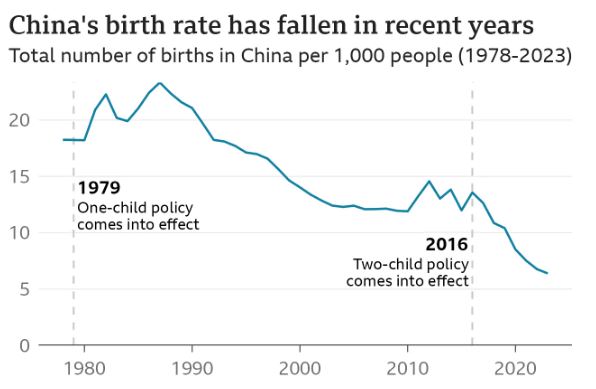
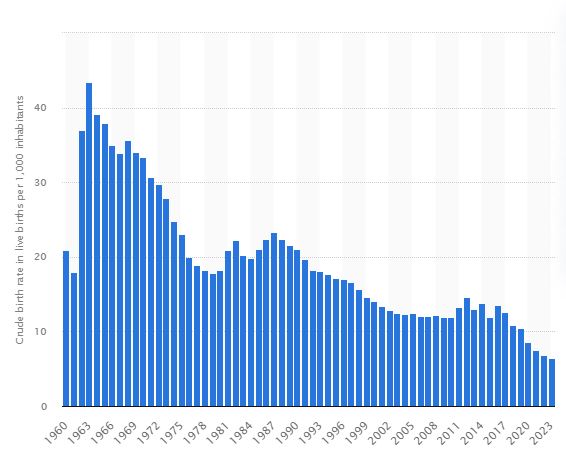
China’s birth rate has been falling for decades even after the government scrapped its one-child policy in 2015 and later allowed three children per family.
However, a combination of factors including high costs of raising children, professional engagements, career pressures and economic uncertainty have deterred young couples from starting families.
According to a recent study, it takes an average of $75,700 by age 17 to raise a child. Since such expenses are unmanageable for most of the families, they stick to only one child or even no children at all.
Under these circumstances, the population of the country has dropped by 2.08 million in 2023 with only 9.54 million births recorded in 2024. This indicates a rapidly ageing workforce, straining healthcare and pension systems.
Chinese parents can receive up to 10,800 yuan ($1500) per child over three years and will be applicable retroactively to children born between 2022 and 2024. The subsidy will initiate from this year (2025) and will benefit approximately 20 million families of toddlers and infants as reported by the official Xinhua news agency.
In connection to this, the National Health Commission states that the plan is an “important national livelihood policy” and direct cash subsidies would help “reduce the cost of family childbirth and parenting”.
In the past two years, provinces have started handing out childcare subsidies on a provincial level in amounts that vary considerably from 1,000 yuan ($139.32) per child to up to 100,000 yuan ($13931.75) per child including housing subsidies.
Instead of local authorities, the central government will fund the new national policy and are expected to announce more details regarding the subsidy on July 30, 2025. Local governments are also rolling out additional incentives, such as monthly payments for third children and free preschool education.
While the subsidies may help some families, many young Chinese still see financial and career barriers to having children. The low consumer confidence and high youth unemployment (14.1%) further discourage family planning in couples.
A Chinese economist at Capital Economics, WiZichun Huang stated that the sums involved are inadequate to have a near-term impact on the birth rate or consumption.
He further said: “But the policy does mark a major milestone in terms of direct handouts to households and could lay the groundwork for more fiscal transfers in future.”
According to an estimation reported by Citi Research, a total lump-sum payout of 117 billion yuan in the second half of this year will be rolled out through the plan, stating the scheme is more meaningful as a consumption policy than as a population policy.
The researchers claimed that: “As a population policy, it remains to be seen whether the national program can move the needle on fertility rate.”
The shrinking population of China threatens its long-term economic growth with fewer workers supporting a growing elderly population. The introduction of such subsidies aims to slow the decline but experts say the trend may be locked in due to societal shifts.
With China joining the countries like Japan and South Korea in facing population decline, the success of these policies will depend on whether they can ease the financial burden on young couples or not.