
Canada becomes new hotspot of measles outbreak in North America
Measles cases surge to highest levels in decades

Although measles has been declared eliminated in most of the developing countries including Canada since 1998, the country is facing its worst measles outbreak.
The number of cases have even surpassed recent peaks in the U.S. and U.K. As per the data reported by CDC, Canada is among the top 10 global hotspots for measles. It raises questions about public health responses in the country and vaccination rate.

How did Canada become an outbreak epicenter?
The outbreak affected Alberta and Ontario the most with Alberta recording the highest per capita measles rate in North America.
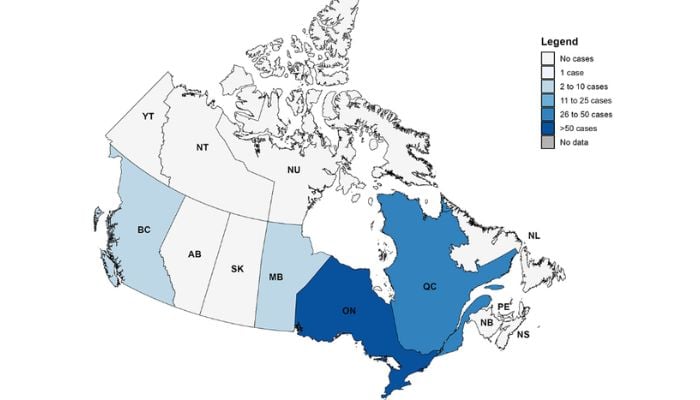
The rapid spread of the disease started in late 2024 when an unvaccinated individual contracted measles at a large Mennonite gathering in New Brunswick and spread it upon returning home. Other incidents that contribute in Canada’s becoming measles hotspot include:
- After COVID-19, there has been widespread misinformation related to vaccines that worsened the hesitancy even among people that previously got immunization.
- Pandemic also played a significant role in the delay of childhood vaccination that left many unprotected.
Why is Canada worse off than the U.S.?
Unlike the U.S. where public figures like Robert F. Kennedy Jr. has amplified vaccine skepticism; there's no singular “anti-vaxxer” leader in Canada. But still the rate of vaccination is low in the country as compared to the U.S. Critics argue that following factors lead to less number of immunized people:
- A special concentration of conservative low German-speaking Mennonite communities where high distrust of vaccines runs deeper than in U.S. counterparts.
- Low funds public health outreach in rural areas.
- Delayed detection, with cases likely underreported before spreading widely
The human toll
As reported by BBC, more than 3,800 cases have been reported in Canada in 2025 affecting mostly children and infants. This figure is nearly three times higher than the number of confirmed U.S. cases despite having a comparatively far smaller population.
From 1998 to 2024, there have an average of 91 measles cases reported in Canada annually with between 0 and 751 cases reported each year.

Healthcare workers describe the current alarming situation as:
- Mobile clinics in Ontario reported measles masquerading as ear infections before diagnoses surged.
- Alberta’s outbreak exploded so fast that officials couldn’t trace its origin.
- Unvaccinated children under 12 months are especially vulnerable.
What’s being done?
Health authorities are scrambling to contain the outbreak through initiating emergency vaccine drives in high-risk communities. There have also been radio ads and bulletins urging immunizations. In addition to it, governments have also initiated mobile clinics targeting isolated groups like Mennonites where historical discrimination has bred medical distrust.






-
 Timothee Chalamet rejects fame linked to Kardashian reality TV world while dating Kylie Jenner
 -
 Sarah Chalke recalls backlash to 'Roseanne' casting
 -
 Willie Colón, salsa legend, dies at 75
 -
 Touching Eric Dane moment with daughter emerges after viral final words
 -
 Ryan Coogler explains why his latest project 'Sinners' is so close to his heart
 -
 Who is Punch? Here’s everything to know about the viral sensation winning over internet
 -
 Matty Healy sets summer wedding date close to ex Taylor Swift's nuptials
 -
 Kayla Nicole reveals surprising reason behind separation from Travis Kelce