China logs hottest year on record in 2024: weather agency
"The top four warmest years ever were the past four years," says China Meteorological Administration
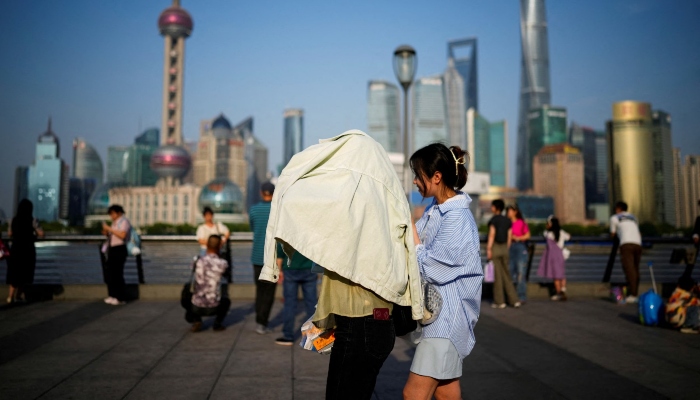
Last year was China's warmest on record, its weather agency said, as the world experiences a surge in extreme weather fuelled by climate change.
China is the leading emitter of the greenhouse gases scientists say are driving global warming, though Beijing has pledged that carbon dioxide emissions will peak by 2030 and be brought to net zero by 2060.
The average national temperature for 2024 was 10.92 degrees Celsius (51.66 Fahrenheit), 1.03 degrees higher than average — "the warmest year since the start of full records in 1961", the China Meteorological Administration said on its news site Wednesday night.
"The top four warmest years ever were the past four years, with all top ten warmest years since 1961 occurring in the 21st century," it added.
China has already this year logged its hottest month in the history of observation in July, as well as the hottest August and the warmest autumn, on record.
The United Nations said in a year-end message on Monday that 2024 was set to be the warmest year ever recorded worldwide.
Global warming, driven largely by the burning of fossil fuels, is not just about rising temperatures but the knock-on effect of all the extra heat in the atmosphere and seas.
Warmer air can hold more water vapour, and warmer oceans mean greater evaporation, resulting in more intense downpours and storms.
Impacts are wide-ranging, deadly and increasingly costly, damaging property and destroying crops.
Dozens killed
In China, dozens of people were killed and thousands evacuated during floods around the country last year.
In May, a highway in southern China collapsed after days of rain, killing 48 people.
Residents of the southern city of Guangzhou experienced a record-breaking long summer, with state media reporting there were 240 days where the average temperature was above 22°C (71.6°F), breaking the record of 234 days set in 1994.
Sichuan, Chongqing, and the middle reaches of the Yangtze River suffered from heat and drought in early autumn.
Globally, 2024 saw deadly flooding in Spain and Kenya, multiple violent storms in the United States and the Philippines, and severe drought and wildfires across South America.
Natural disasters caused $310 billion in economic losses in 2024, Zurich-based insurance giant Swiss Re has said.
The 2015 Paris climate accords aimed to limit global warming to well below two degrees Celsius above pre-industrial levels — and to 1.5°C if possible.
In November, the World Meteorological Organization said the January-September mean surface air temperature was 1.54°C above the pre-industrial average measured between 1850 and 1900.


-
 Crow flocks over Israel spark conspiracy theories
 -
 Former UK MP Crispin Blunt pleads guilty to crystal meth possession case
 -
 Inside Trump’s 15-point plan: Global stocks climb as oil falls on hopes of Iran peace deal
 -
 Savannah Guthrie adopts new strategy in search of her missing mother Nancy
 -
 Is world heading toward global recession in 2026? Larry Fink warns of looming risk
 -
 Nanaimo weather improves as BC lifts flood advisories following days of heavy rainfall
 -
 Denmark election: Frederiksen faces tough coalition negotiations after losing majority
 -
 Brian Nathan wins close Florida Senate race with recount possible after narrow lead
-
 National Hurricane Centre updates forecast cone to improve storm tracking and warnings for 2026
 -
Canada federal minimum wage increase confirmed with new $18.15 rate starting April 1
-
Jyoti Gondek named in RCMP probe as warrants executed in Calgary City Hall investigation
-
Emily Gregory secures major win in Florida as Democrats flip Trump's Mar-a-Lago district