Earth now has second black hole only 2,000 light years away
Earth's new black hole is 33 times bigger than Sun
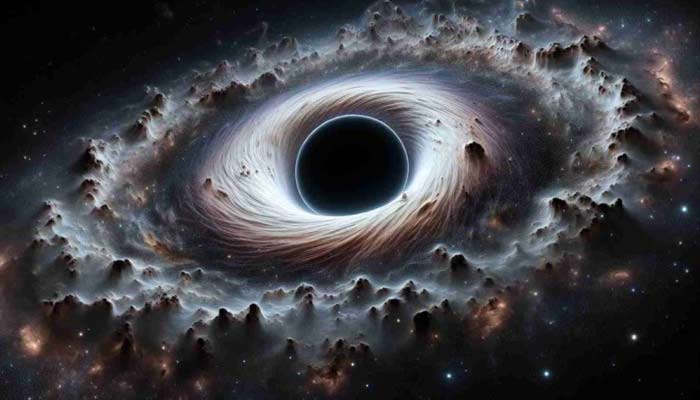
The Milky Way galaxy's most massive stellar black hole has been found by astronomers.
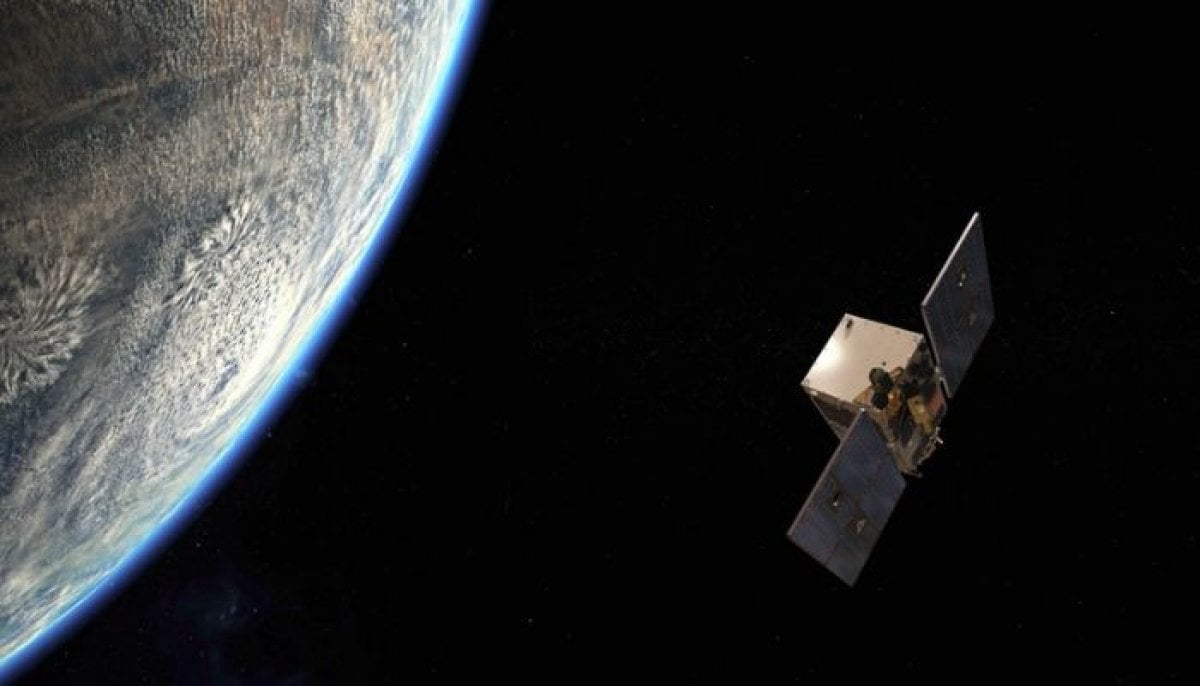
Data from the European Space Agency's Gaia space observatory revealed this stellar giant because it causes the companion star — that orbits it — to have an unusual "wobbling" motion, according to SciTech Daily.
Verified by using data from the Very Large Telescope (VLT) of the European Southern Observatory (ESO) and other ground-based telescopes, the black hole's mass was found to be an astounding 33 times that of the Sun.
Massive stars collapse and turn into black holes, and the ones that have been found in the Milky Way are typically ten times as massive as the Sun.
This latest finding of the celestial behemoth is remarkable because even Cygnus X-1, the next most massive star black hole known to exist in our galaxy, only reaches 21 solar masses.
This black hole is remarkably close to Earth as well, located in the constellation Aquila and is just 2000 light-years away, making it the second-closest known black hole to Earth.
It was discovered by the Gaia observatory and was given the nickname Gaia BH3 for short.
"No one was expecting to find a high-mass black hole lurking nearby, undetected so far," says Gaia collaboration member Pasquale Panuzzo, an astronomer from the National Centre for Scientific Research (CNRS) at the Observatoire de Paris – PSL, France.
"This is the kind of discovery you make once in your research life."


-
 Chinese astronomers discover real-life three-body system unlike Liu Cixin’s fiction
 -
 Hunter’s Moon 2026: When and how to watch October’s full moon
 -
 Elon Musk’s Mars colonization dream faces reality check from Nobel laureate
 -
 NASA competition model 2.0 cuts mission selection by 45%
 -
 A ‘neglected’ neutrino may hold the key to why the Universe exists
 -
 Can cancer drugs be made in space? Here’s what the new mission aims to find out
 -
 SpaceX Falcon 9 successfully launches Bandwagon-5 mission with 32 payloads
 -
 Europe launched 8 orbital rockets last year, can it rival Starlink?