Polar vortex ‘exceptional’ disruption: Rare shift signals extreme February winter
Polar vortex disruption will trigger extreme winter conditions across the US, Europe, and Canada
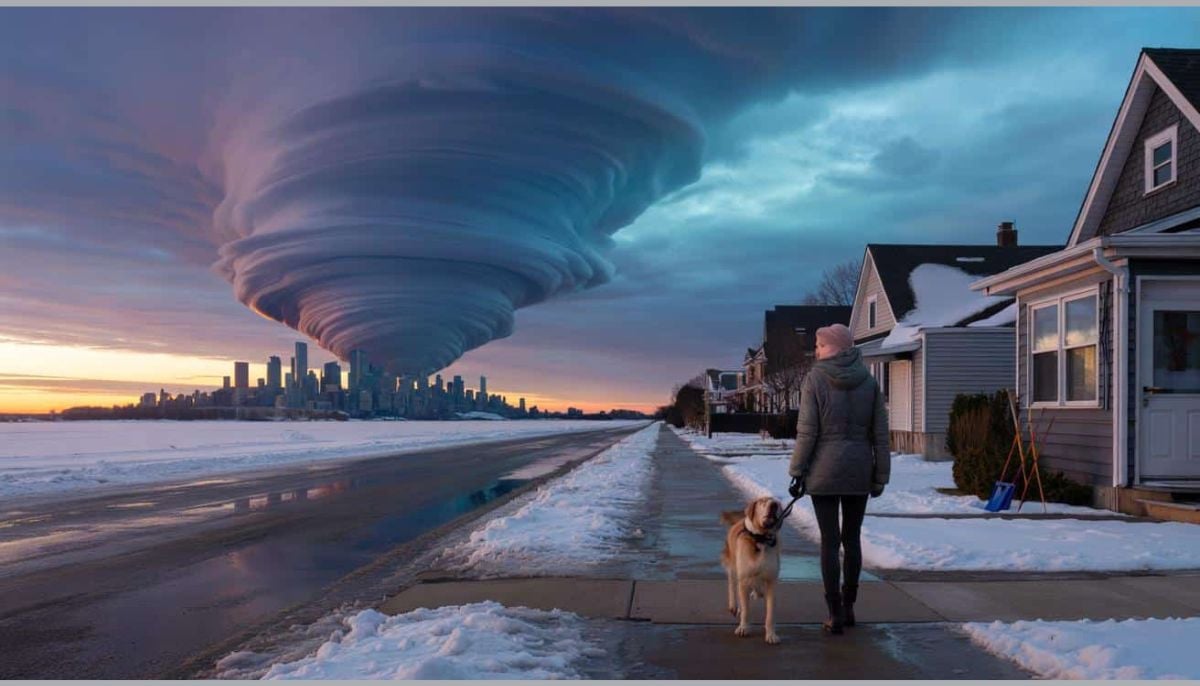
A significant and rare polar vortex shift is currently unfolding in February 2026, triggering extreme winter conditions across the US, Europe, and Canada.
The “exceptional” and unprecedented disruption is driven by a Sudden Stratospheric Warming (SSW) event where temperatures 30 km above the Arctic have spiked by over 50°C.
This “textbook extreme” shift is currently causing brutally cold conditions across North America and is expected to reshuffle global weather patterns for the remainder of the month.
What is polar vortex?
Polar vortex acts as a large-scale and high-altitude fence of winds over the Northern Hemisphere. It is responsible for trapping freezing Arctic air at the North Pole.
_updates.jpg)
Acting as a wall of wind, the polar vortex starts from the surface and extends to the stratosphere. Thus, it is no mistake to say that it consists of two layers.
The first one comprises the stratosphere at high altitude and the second one consists of the troposphere which is more close to the surface. Being connected with each other, both layers help in trapping cold air near the poles. If the pole vortex stays intact, the US and much of Europe experience mild winter conditions.
But, when the fence breaks or disrupts due to a Stratospheric warming event, the cold air spills south, triggering harsh weather conditions along with winter storms.
Polar vortex split forecast
What is happening right with the polar vortex is quite worrisome. According to the recent analysis at the 10 mb level in mid stratosphere, the experts have witnessed a distorted vortex. The vortex has effectively split into two cores, with a primary lobe currently centered over North America.
_updates.jpg)
This disruptive pattern will push cold Arctic air mass to the United States. According to The Spokesman-Review, Over 100 million people in the U.S. and Canada are under alerts. Major cities like Boston, New York, and Detroit are seeing wind chills drop as low as -30°F.
As reported by Futura, central and eastern US states will face significant winter storms. Florida and Southwest would be largely spared. Northern regions of Europe are set to experience colder air currents, while western and southern regions remain mild.
Moreover, amplification of Arctic warming can also be a reason for disruption of the polar vortex along with the climate change paradox.


-
 Earth’s close encounter with giant asteroid Apophis is less than 3 years away
 -
 Chinese astronomers discover real-life three-body system unlike Liu Cixin’s fiction
 -
 Hunter’s Moon 2026: When and how to watch October’s full moon
 -
 Elon Musk’s Mars colonization dream faces reality check from Nobel laureate
 -
 NASA competition model 2.0 cuts mission selection by 45%
 -
 A ‘neglected’ neutrino may hold the key to why the Universe exists
 -
 Can cancer drugs be made in space? Here’s what the new mission aims to find out
 -
 SpaceX Falcon 9 successfully launches Bandwagon-5 mission with 32 payloads