NASA eyes March moon mission launch following test run setbacks
NASA resumes countdown as astronauts get ready for critical test flight around Moon
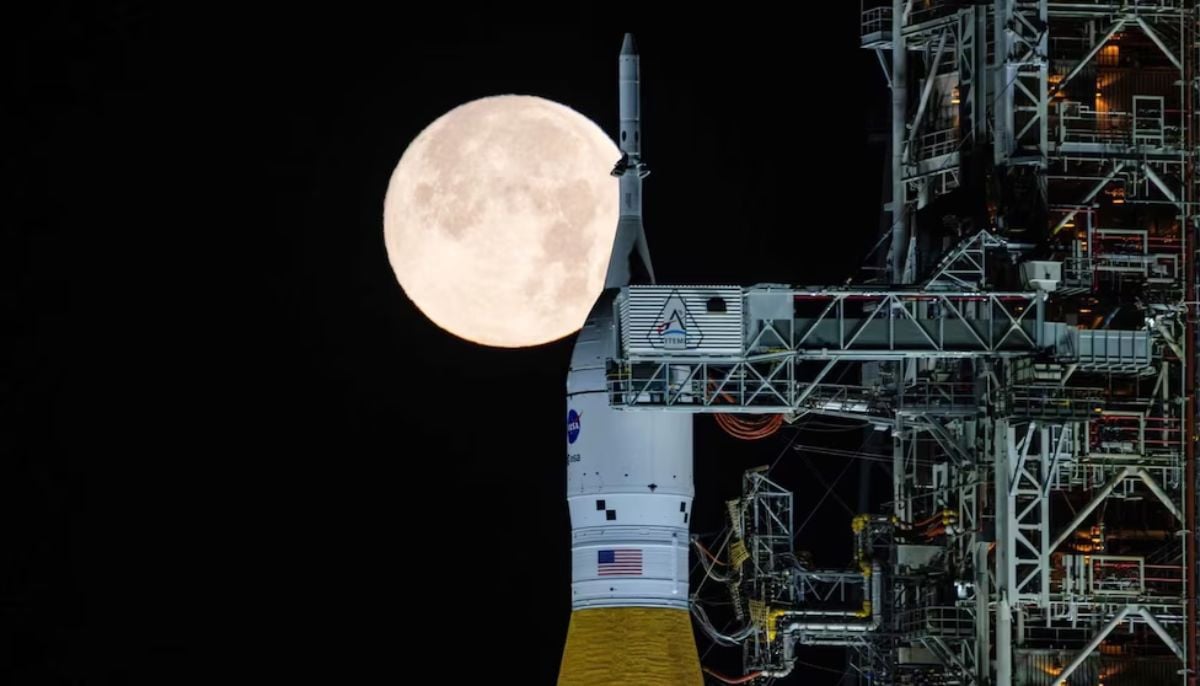
NASA is preparing to launch its latest Artemis mission as a narrow launch window opens following delays caused by extreme cold weather. The US space agency has only a few days each month to send the rocket into space, and February’s window was already shortened due to freezing temperatures. The mission will test key systems, carry astronauts around the Moon, and mark a major step in NASA’s long term lunar plans.
After falling behind schedule because of a bitter cold snap, NASA restarted countdown procedures on Saturday night. Launch controllers used the time to rehearse final steps and address any remaining technical concerns.
The countdown clocks were set to stop 30 seconds before liftoff, just ahead of engine ignition, allowing teams to confirm that all systems were functioning as expected. The cold weather conditions during this time period have created a continuous obstacle which restricts NASA's ability to conduct safe launch operations.Officials say each delay puts pressure on the already tight schedule for the Artemis programme.
Artemis mission tests spacecraft systems
The Artemis mission will last almost 10 days and its astronauts will travel to the Moon before flying to its far side and returning home to Earth. The crew will not enter lunar orbit or attempt a landing. The mission aims to test the spacecraft's life support system and navigation system and other essential systems in deep space conditions.
The mission will demonstrate that the spacecraft can transport humans to safe destinations beyond Earth orbit which serves as a vital requirement for upcoming space missions.
NASA astronauts last visited the Moon during Apollo missions which took place between 1960 and 1970. The Artemis mission will return humans to the Moon’s surface.


-
 Chinese astronomers discover real-life three-body system unlike Liu Cixin’s fiction
 -
 Hunter’s Moon 2026: When and how to watch October’s full moon
 -
 Elon Musk’s Mars colonization dream faces reality check from Nobel laureate
 -
 NASA competition model 2.0 cuts mission selection by 45%
 -
 A ‘neglected’ neutrino may hold the key to why the Universe exists
 -
 Can cancer drugs be made in space? Here’s what the new mission aims to find out
 -
 SpaceX Falcon 9 successfully launches Bandwagon-5 mission with 32 payloads
 -
 Europe launched 8 orbital rockets last year, can it rival Starlink?