For a 'boring billion' years Earth had19-hour days
Introduction of an additional ozone layer could have absorbed more sunlight than water vapour, triggering phenomenon known as Earth's lesser-known solar tides

Earth is a unique planet in the universe as it is the only known place where life has originated and found habitability. This process took billions of years and helped the planet turn into an ocean world.
However, there was a time in Earth's turbulent history when everything almost slowed down to a standstill.
According to a new study published in Nature Geoscience, this period, known as the 'boring billion', saw tectonic activity ease and biological evolution limited, resulting in a typical day on Earth lasting for 19 hours due to a delicate balance of opposing forces in our planet's distant past.
Ross Mitchell of the Chinese Academy of Sciences and Uwe Kirscher of Curtin University in Australia analysed the geological data that has emerged in recent years to better understand the Earth, including the rhythmic changes in the planet's climate driven by astronomical forces, including its wobble and axial tilt.
The researchers proposed that the introduction of an additional ozone layer could have absorbed more sunlight than water vapour, triggering a phenomenon known as Earth's lesser-known solar tides.
These solar tides reverberate through the atmosphere as it warms up during the day and cools down at night, leading to a rhythmic cycle of atmospheric pressure changes that could have affected the planet's rotation.
The study provides insight into how Earth's rotational speed has changed over time and how it may continue to change in the future.


-
 US finally confirms weapons in orbit: What it means for space warfare
 -
 How China's FAST telescope is mapping the cosmic gas behind star birth
 -
 Did Sun eat super-Earth? New study says maybe
 -
 Did Sun swallow a super-Earth? Scientists search for its ‘fingerprints’
 -
 Blue Origin sets sights on Mars with new NASA network
 -
 NASA, IBM launch open-source lunar foundation AI model to help map ice, craters on moon
 -
 Bacteria can remember without brain, new study finds
 -
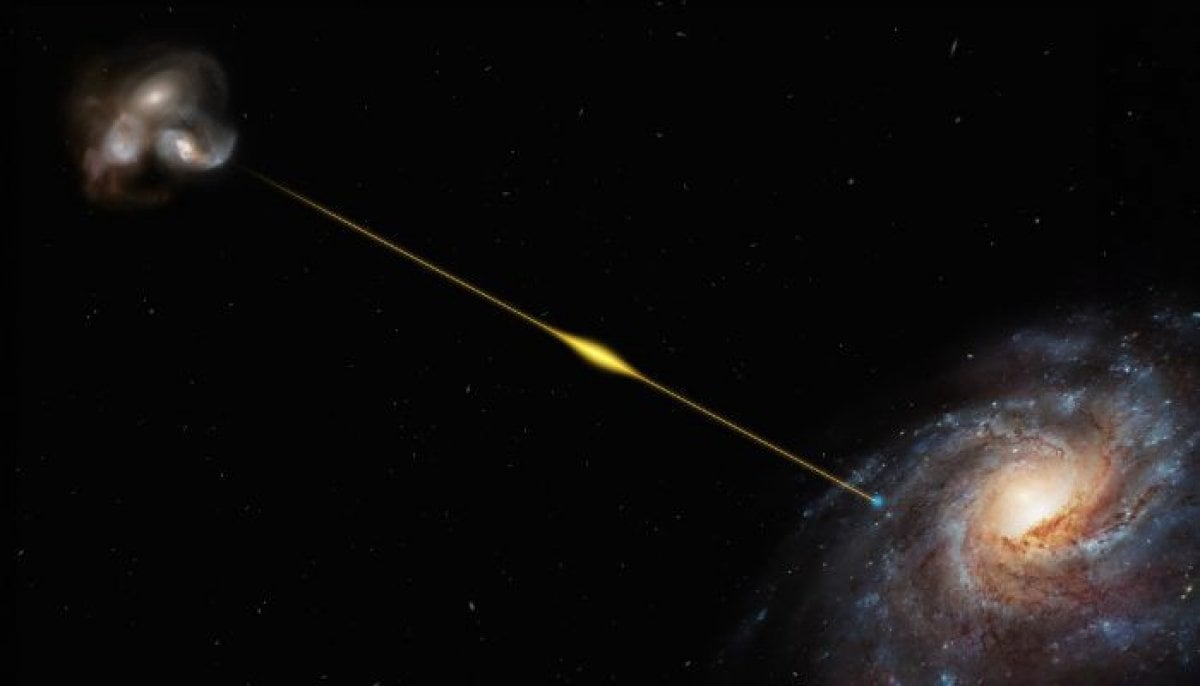 Fast radio bursts may unlock secrets of dark matter, energy and neutrinos