
India assets remain steady after military strike: report
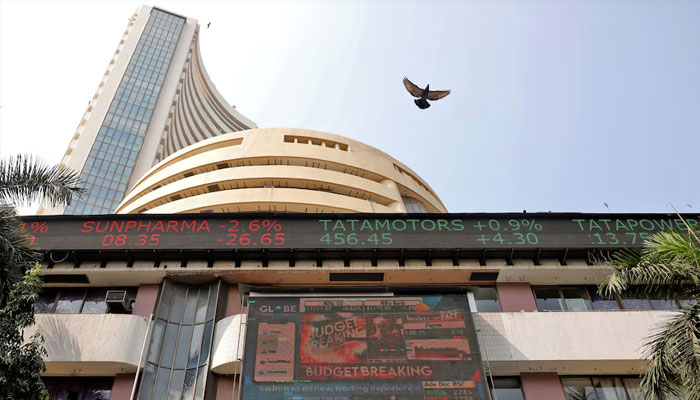
Pakistan’s stocks slid, while Indian assets were steady after both countries retaliated in expected tit-for-tat blows following a militant attack last month in Kashmir, reports Bloomberg.
The benchmark KSE-30 Index tumbled as much as 6.1 per cent to the lowest since December 4, before halving those losses. India’s NSE Nifty 50 Index swung between gains and losses, after initially dropping as much as 0.7 per cent. The nation’s currency fell 0.4 per cent against the dollar, while the 10-year bond yield was little changed.
India said early Wednesday that it conducted targeted military strikes against Pakistan after accusing Islamabad of the terror attack. The action came just hours after India and the UK announced a free-trade agreement, which helped cushion the impact on the former’s financial assets. Pakistani Defence Minister Khawaja Muhammad Asif said on Bloomberg Television his country’s military shot down five Indian jets.
The deal with the UK provides India a potential template for the ongoing trade talks with the US. Additionally, local assets were supported by a rebound in regional markets, driven by China’s economic stimulus measures.
“The India-UK trade deal, China cutting rates and injecting liquidity, potential US-India and US-UK trade deals to be announced in this week are far more economic impact events for today,” said Amit Kumar Gupta, chief investment officer at New Delhi-based Fintrekk Capital. “The strikes won’t have any short or medium term impact on the markets.”
The recovery follows a month of relative strength for Indian markets. In April, the Nifty’s logged its second straight monthly gain, and the rupee hit a five-month high, driven by renewed foreign inflows and optimism around a potential US trade deal. Analysts now warn that renewed hostilities with Pakistan may divert government spending toward defense, squeezing fiscal space for capital investment.
India’s markets had recently caught the attention of global funds, drawn by the country’s relative resilience to trade uncertainty and support from the Reserve Bank of India’s rate cuts and aggressive liquidity measures. In April, overseas investors poured a net $1.3 billion into local stocks, reversing outflows that had peaked at over $3 billion earlier in the month.
That optimism propelled Indian equities to the top of the pack among 90 major indexes tracked by Bloomberg since the April 2 tariff announcement. The rally from April’s low added over $400 billion to India’s market value, taking it to $4.4 trillion. Pakistan’s stocks and bonds suffered their worst month in April since 2023, as traders feared that an escalating conflict with India will further dent the country’s fragile economy.
“The tensions will keep markets on tenterhooks in the short term, as the situation remains fluid,” said Sonal Varma, an economist at Nomura Holdings Inc. “That said, past episodes show that the market and economic impact of similar geopolitical events tends to be short-lived.”







-
 5 Celebrities You Didn't Know Have Experienced Depression
 -
 Trump Considers Scaling Back Trade Levies On Steel, Aluminium In Response To Rising Costs
 -
 Claude AI Shutdown Simulation Sparks Fresh AI Safety Concerns
 -
 King Charles Vows Not To Let Andrew Scandal Overshadow His Special Project
 -
 Spotify Says Its Best Engineers No Longer Write Code As AI Takes Over
 -
 Michelle Yeoh Addresses 'Wicked For Good' Snub At 2026 Oscars
 -
 Trump Revokes Legal Basis For US Climate Regulation, Curb Vehicle Emission Standards
 -
 DOJ Blocks Trump Administration From Cutting $600M In Public Health Funds
 -
 2026 Winter Olympics Men Figure Skating: Malinin Eyes Quadruple Axel, After Banned Backflip
 -
 Meghan Markle Rallies Behind Brooklyn Beckham Amid Explosive Family Drama
 -
 Scientists Find Strange Solar System That Breaks Planet Formation Rules
 -
 Backstreet Boys Voice Desire To Headline 2027's Super Bowl Halftime Show
 -
 OpenAI Accuses China’s DeepSeek Of Replicating US Models To Train Its AI
 -
 Woman Calls Press ‘vultures’ Outside Nancy Guthrie’s Home After Tense Standoff
 -
 Allison Holker Gets Engaged To Adam Edmunds After Two Years Of Dating
 -
 Prince William Prioritises Monarchy’s Future Over Family Ties In Andrew Crisis