Saudi-Iran 'proxy wars' play out in embattled Lebanon
Riyadh and other wealthy Gulf states expel Lebanese envoy
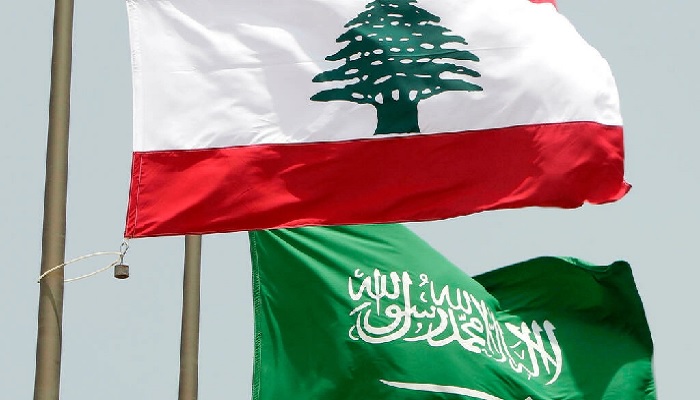
BEIRUT: Financially crippled Lebanon finds itself in a new tug-of-war between regional kingpins Saudi Arabia and Iran after Riyadh and other wealthy Gulf states expelled the Lebanese envoy, analysts say.
The crisis erupted Friday when Saudi Arabia gave Lebanon's ambassador 48 hours to leave the country, recalled its envoy from Beirut and suspended all imports from Lebanon.
The Saudi foreign ministry said the measures were taken after "insulting" remarks made by a Lebanese minister on the Yemen war, but also due to the influence of Lebanon's Iran-backed Shiite movement Hezbollah.
The group, it said, controls Lebanese ports and "hijacks" the government's decision-making in Beirut.
The United Arab Emirates, Bahrain and Kuwait were quick to follow suit.
The crisis is a fresh blow to Lebanon, a country in financial and political turmoil where a fragile government is struggling to secure international aid, namely from wealthy Arab neighbours.
But remarks by Information Minister Georges Kordahi, in an interview recorded back in August aired on Monday, slamming the Saudi-led military intervention against Iran-backed Huthi rebels in Yemen, undermined these efforts.
Kordahi said the Huthis were "defending themselves... against an external aggression", sparking angry rebukes from Saudi Arabia and its allies and calls in Lebanon for his resignation.
Analyst Karim Bitar said Kordahi's remarks were just a trigger for a looming geopolitical showdown.
The escalation "has very little to do with what this mediocre minister of information said... (and) everything to do with the Saudi-Iranian tug-of-war that has been ongoing for the past few years".
'Battlefields'
"Kordahi was only a pretext for something that was long in the making," he said.
Lebanon is "one of the battlefields between Iran and Saudi Arabia" along with Syria, Yemen and Iraq, where the two regional rivals support opposing sides, Bitar added.
Riyadh's move also reflects the kingdom's determination to push Lebanon "to take a harsher line on Hezbollah", he said.
Hezbollah wields considerable influence in Lebanon, where it holds seats in parliament, and has been designated as a terrorist group by Saudi Arabia and much of the West.
Lebanese Prime Minister Najib Mikati has said he "regrets" the Saudi decision, and urged Riyadh to reconsider its move.
He did not explicitly call for Kordahi's resignation, but said he did not speak in the name of the government.
He urged the minister to "take into consideration Lebanon's national interest... in order to appease ties with Gulf countries".
Kordahi was nominated by the Marada Movement, a Christian party allied to Hezbollah and led by Suleiman Franjieh.
The minister has refused to apologise -- as both Hezbollah and Franjieh rejected calls for his dismissal.
With Lebanon in the grip of an economic and financial crisis -- seen by the World Bank as one of the world's worst since the 1850s -- the diplomatic row becomes all the more damaging.
'Paying the price'
It comes as Sunni kingpin Saudi Arabia and Shiite-majority Iran have been holding talks for months to ease tensions after a five-year rift.
The arch-rivals broke diplomatic ties in 2016 after protesters attacked Saudi diplomatic missions in the Islamic republic following the kingdom's execution of a revered Shiite cleric.
Bitar said the latest crisis is also linked to these negotiations between Riyadh and Tehran, with Lebanon "paying the price".
"When two elephants fight, it's the grass that suffers and Lebanon for the umpteenth time in its history is the grass that is suffering when these proxy wars become more intense," he said.
Lebanon's diplomatic fallout with Saudi Arabia, the UAE, Bahrain and Kuwait also comes at a critical time for the small Mediterranean country.
Mikati's fragile government has not met for three weeks amid a campaign spearheaded by Hezbollah to remove a judge investigating last year's devastating blast at Beirut port, accusing him of political bias.
"Lebanon needs a cabinet and gains nothing by shooting itself in the foot as it finds itself in the midst of a regional clash," said Michael Young, an analyst with the Malcolm H. Kerr Carnegie Middle East Centre.
"Since the Saudis regard Lebanon as an Iranian card, they feel it makes sense to behave toward the country" in its current manner, he added on Twitter.
But he warned that "by isolating Lebanon, they will only ensure that Iran and its local proxies tighten their control" over the country.


-
 Beluga whale Cyprus dies in California months after leaving Ontario's Marineland
 -
 Australian employers using AI to track workers without their knowledge, report warns
 -
 UK hits back at Hegseth after he questions NATO allies' sacrifices in Afghanistan
 -
 US Supreme Court refuses to restore plea deals for three alleged 9/11 conspirators
 -
 ICE agents accused of using force against US citizen in Long Beach
 -
 Trump is using presidency to make himself richer, say majority Americans in new poll
 -
 Helen Haines, former nurse turned Australian MP critically injured in suspected attack
 -
 Meta admits mistaken suspension of 'No Kings' Instagram account, cites Claude AI glitch
-
 Playing loud music in public transport in UK can lead to £100 fines under new crackdown
 -
French PM calls for partial curfews as nationwide riots and protests escalate
-
Could Putin, Trump and Xi meet to discuss Ukraine? Kremlin responds
-
Putin approves major Russian government reshuffle following parliamentary elections