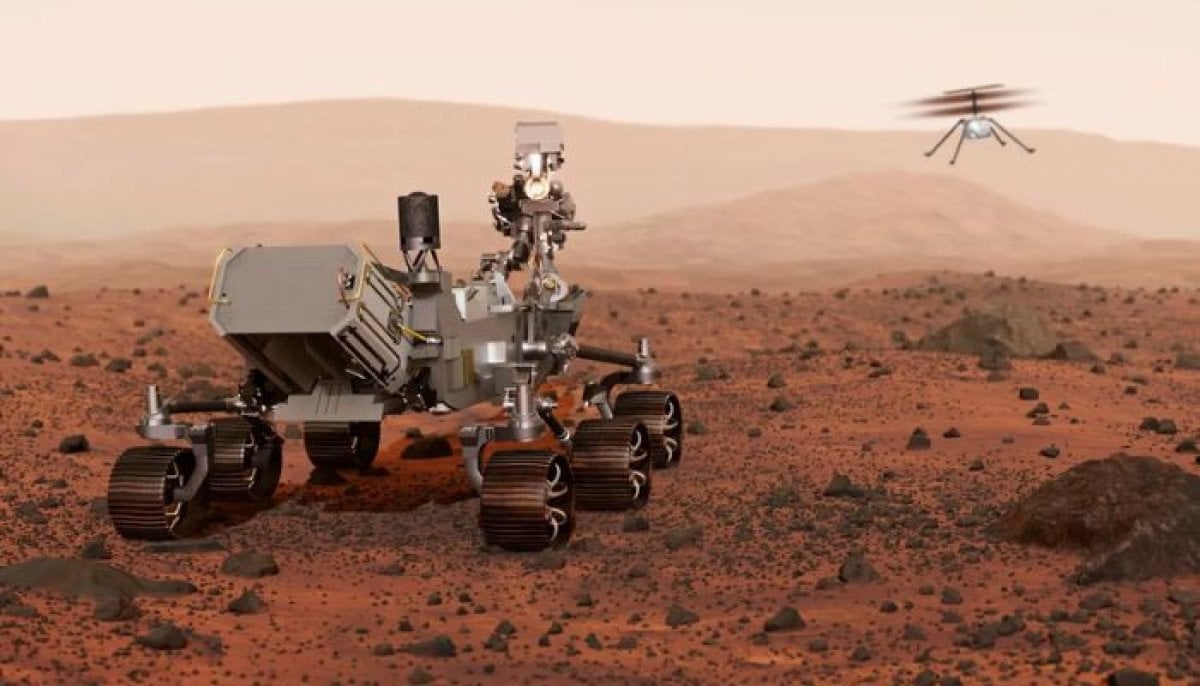
Japanese rocket carrying first Arab mission to Mars will blast into space on Monday
A Japanese rocket carrying the first Arab mission to Mars will blast into space on Monday, after being delayed by bad weather, the launch company said Friday
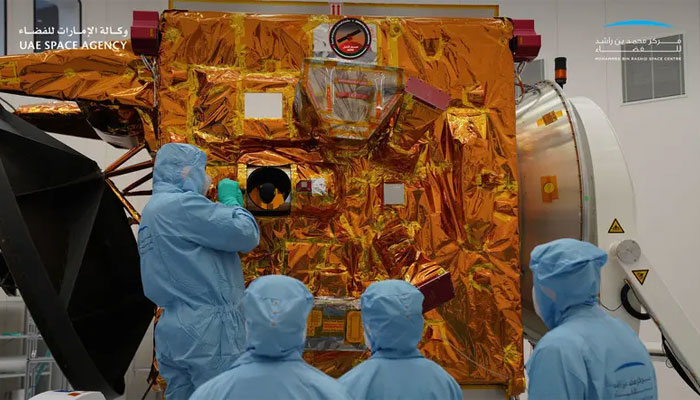
TOKYO: A Japanese rocket carrying the first Arab mission to Mars will blast into space on Monday, after being delayed by bad weather, the launch company said Friday.
The lift-off of the United Arab Emirates´ "Hope" probe, originally planned for Wednesday, is now set for 6:58am Monday (21:58 GMT Sunday) from Tanegashima Space Centre in southern Japan, Mitsubishi Heavy Industries said.
The UAE, made up of seven emirates, is set to be the first Arab nation to send a probe to Mars.
The probe is one of three racing to the Red Planet, with Chinese and US rockets also taking advantage of the Earth and Mars being unusually close: a mere hop of 55 million kilometres (34 million miles).
"Hope" -- "Al-Amal" in Arabic -- is expected to start orbiting Mars by February 2021, marking the 50th anniversary of the unification of the UAE.
Once there, it will loop the planet for a whole Martian year of 687 Earth days.
The goal is to provide a comprehensive image of weather dynamics in the Red Planet´s atmosphere.


-
 Scientists found 'super-puff' planets 1,110 light-years away
 -
 Scientists find ancient microbial life in places it shouldn't exist
 -
 Why Marijuana is suddenly sending thousands of dogs to hospitals in US?
 -
 36 years on, Hubble shows how stars actually change over time
 -
 Hidden magma beneath Mars? Scientists' 'unexpected' discovery raises new questions about alien life
 -
 Rare 3,200-year-old coral blue hole discovered in South China Sea
 -
 What happens at black hole’s event horizon? Scientists find the first-ever clue
 -
 Scientists discover evidence of fires used by humans 1.8 million years ago
-
 Did NASA just uncover evidence of ancient life on Mars? Key discoveries explained
 -
Four powerful earthquakes strike three continents within hours: Scientific link or coincidence?
-
Mysterious interstellar comet passing our solar system may be 12 billion years old, scientists say
-
When do we really become adults? Science has an answer