'Ring of fire' solar eclipse to be visible in some Pakistani cities on June 21
Pakistan Meteorological Department says the partial solar eclipse will begin and end at 8:46am and 2:34pm, while it would be greatest at 11:40am
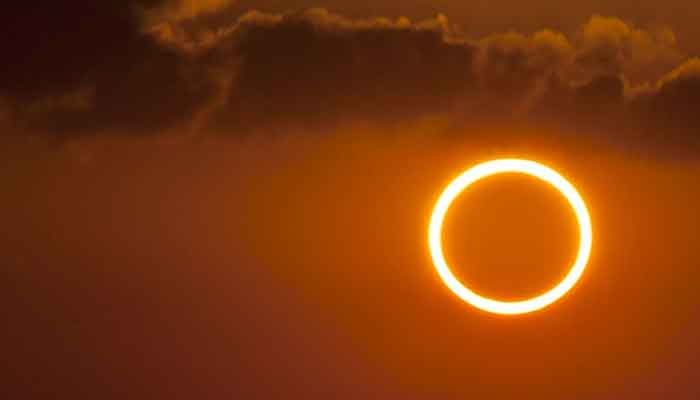
KARACHI: A solar eclipse is set to occur on June 21, 2020, and would be visible in Karachi, Lahore, Islamabad and some other major cities across the country, the Pakistan Meteorological Department has said in a statement.
According to the PMD’s Climate Data Processing Centre, "an annular solar eclipse happens when the Moon covers the Sun's centre, leaving the Sun's visible outer edges to form a 'ring of fire' or annulus around the Moon."
The partial eclipse will begin at 8:46am and end at 2:34pm while the greatest eclipse will occur at 11:40am.
Information provided in the statement indicated that cities including Islamabad, Lahore, Karachi, Peshawar, Quetta, Gilgit, Muzaffarabad, Sukkur, and Gwadar would witness the eclipse at various partial levels, with only those in Sukkur to see the annular eclipse in almost its entirety — at the Sun's coverage of 98.78%.
Gilgit would have the least Sun's coverage in the eclipse, at 74.88%, the Climate Data Processing Centre added.
The PMD noted that apart from Pakistan, the solar eclipse would also be visible in parts of Africa — including the Central African Republic, Democratic Republic of the Congo (DRC), and Ethiopia — as well as India and China.


-
 Can we finally find aliens? Scientists reveal a surprising new ‘organizational’ approach
 -
 Study reveals how to tell real alien life from chemical fakes
 -
 Scientists find hidden third ancestral group in Japanese genomes
 -
 SpaceX ‘Space Junk’ is on a collision course with the Moon, scientists say
 -
 Do you know what happened on May 10, 1967? NASA's M2-F2 disaster explained
 -
 Why the Southern Ocean is melting: Antarctica’s sea ice resilience reaches a breaking point
 -
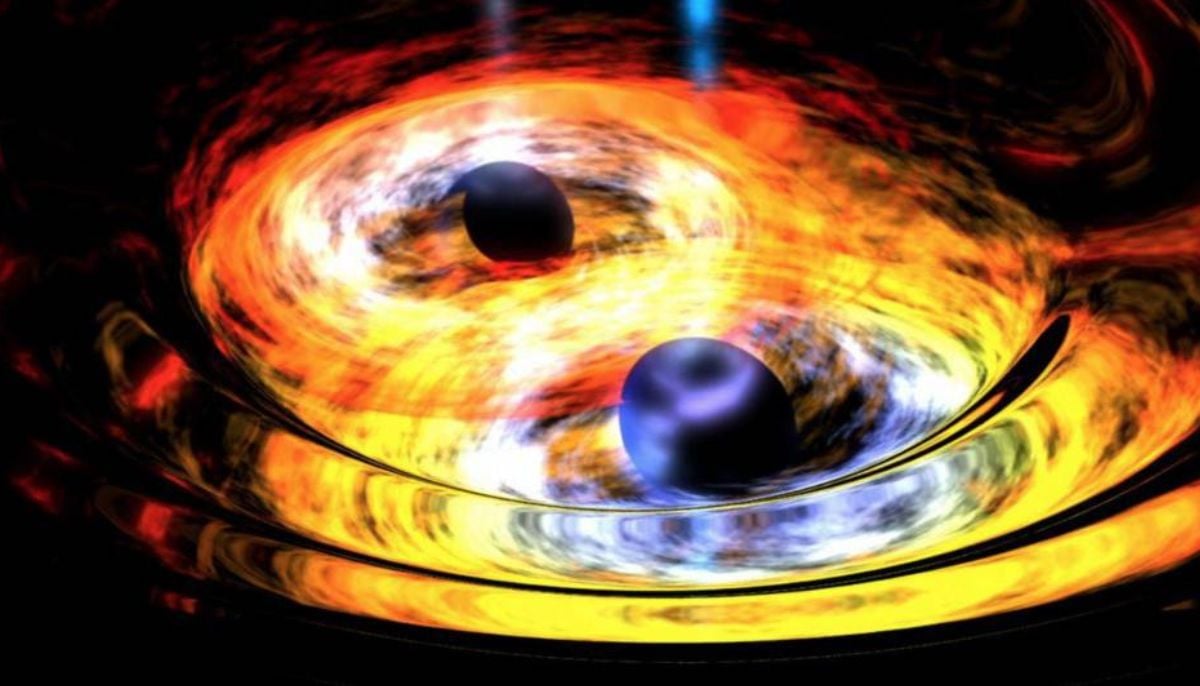 Giant black holes are cosmic ‘Frankensteins’ built by mergers, new study reveals
 -
 NASA’s Artemis 2 moon launch becomes the largest event in Space Coast history
-
 Is success written in your DNA? New study reignites nature vs nurture debate
 -
Researchers found 240-million-year-old giant mysterious 'sand creeper'
-
New solar-powered process turns plastic waste into clean hydrogen
-
Giant squid detected off Western Australia coast as deep-sea study reveals hidden species