Harvard University's Avi Loeb thinks 'Oumuamua' is a proof of extraterrestrial life
Harvard University's Astronomy Department Chairman Avi Loeb insists "Oumuamua" is a piece of an alien spacecraft
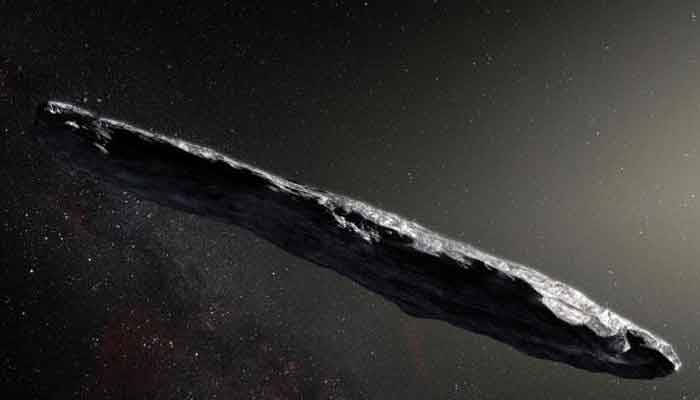
Avi Loeb, chairman of Harvard University's astronomy department, thinks " Oumuamua", an extraterrestrial object witnessed inside our solar system in recent months is actually an alien spacecraft, according to The News York Times.
According to the paper,it all started when astronomers discovered an object they called "Oumuamua".
The report said it was the first known interstellar object ever found, with astronomers confirming that Oumuamua came from another star because of the speed with which it moved past the sun.
Only Loeb and his colleague Shmuel Bialy thought it to be a piece of an alien spacecraft.
"Considering an artificial origin, one possibility is that 'Oumuamua' is a lightsail, floating in interstellar space as a debris from an advanced technological equipment," the duo wrote in Astrophysical Journal Letters this past November.
While The Harvard astronomer says the object is moving too fast to be rock, others argue "Oumuamua" is perhaps an asteroid or a comet out of its place.
Loeb says he cannot say with certainty the object was built by an alien civilization, but he is sticking with his hypothesis until someone convinces him otherwise.
"Many people expected once there would be this publicity, I would back down," he said. "It changes your perception on reality, just knowing that we're not alone. We are fighting on borders, on resources. . . . It would make us feel part of planet Earth as a civilization rather than individual countries voting on Brexit."


-
 Scientists hatch live chickens from 3D-printed eggshells: Could artificial wombs be next?
 -
 SpaceX: Starship V3 all set for debut launch ahead of IPO
 -
 Four alien species recovered from crashed UFOs, Ex-CIA researcher claims
 -
 NASA delays Moon landing as Artemis III shifts to orbit mission
 -
 Scientists reveal shocking early sighting of 3I/ATLAS comet
 -
 Asteroid 2026 JH2 to pass extremely close to Earth on May 18: Should we be concerned?
 -
 Meet the ‘last titan’: Giant new dinosaur identified from fossils in Thailand
 -
 Can we finally find aliens? Scientists reveal a surprising new ‘organizational’ approach