Former Google DeepMind researcher warns autonomous AI could wipe out humanity amid industry-wide safety alarm
Following AI extinction fears, a former Google safety engineer adds to mounting existential warnings, urging a coordinated global AI slowdown before AGI outpaces human control
A former Google DeepMind research engineer has added his voice to a growing chorus of whistleblowers, warning that AI carries the potential to destroy humanity if developers do not radically alter course.
Bilal Chughtai, who specialized in artificial general intelligence (AGI) safety and alignment research before departing the company, stated publicly that society is running out of time to prevent a catastrophic outcome.
"I recently resigned from Google DeepMind, where I worked on AGI safety and alignment research," Bilal Chughtai wrote on X. "I earnestly believe that AI has the potential to kill us all, and that we might be running out of time to avoid this outcome."
Chughtai, who co-authored research papers while at Google DeepMind, worked there as a research engineer and left the company in July 2026, according to his LinkedIn profile
His intervention follows a wave of similar alarms raised by researchers from competing labs like Anthropic, several of whom have recently resigned over concerns that industry leaders are gambling with public safety in a reckless race toward artificial superintelligence.
Public alarm about the potential danger posed by AI is growing, after Anthropic researcher Jacob Coxon said last week, he had resigned, in part because the "people building AI earnestly believe that it could kill us all by the end of the decade."
Anthropic scientist Evan Hubinger then responded to Coxon's comments, saying he was correct and that he believed there was a greater than 10% chance that AI could kill all humans within the next decade.
The escalating public rift among top-tier technologists has forced industry executives to respond.
Anthropic CEO Dario Amodei recently called for a deliberate deceleration in the pace of advanced model development—a proposal that has drawn cross-industry backing from figures including OpenAI CEO Sam Altman and SpaceXAI's Elon Musk.
While industry insiders warn that existential risks are looming faster than safety frameworks can adapt, political reactions remain deeply polarized, with some leaders dismissing institutional calls for caution.
Chughtai maintains that avoiding disaster is still possible, but it requires international coordination to rein in the frantic corporate race and prioritize safety before critical thresholds are breached.
The ex-Google researcher said that navigating AI safely was possible but would require coordination "to avoid this manic race between AI companies."
"We need to pace AI development to a speed that society can handle, where emerging risks can be addressed before extreme harm is realized," he added.
President Donald Trump, however, has dismissed the warnings, saying on social media the AI industry's call for regulation is a "hoax."


-
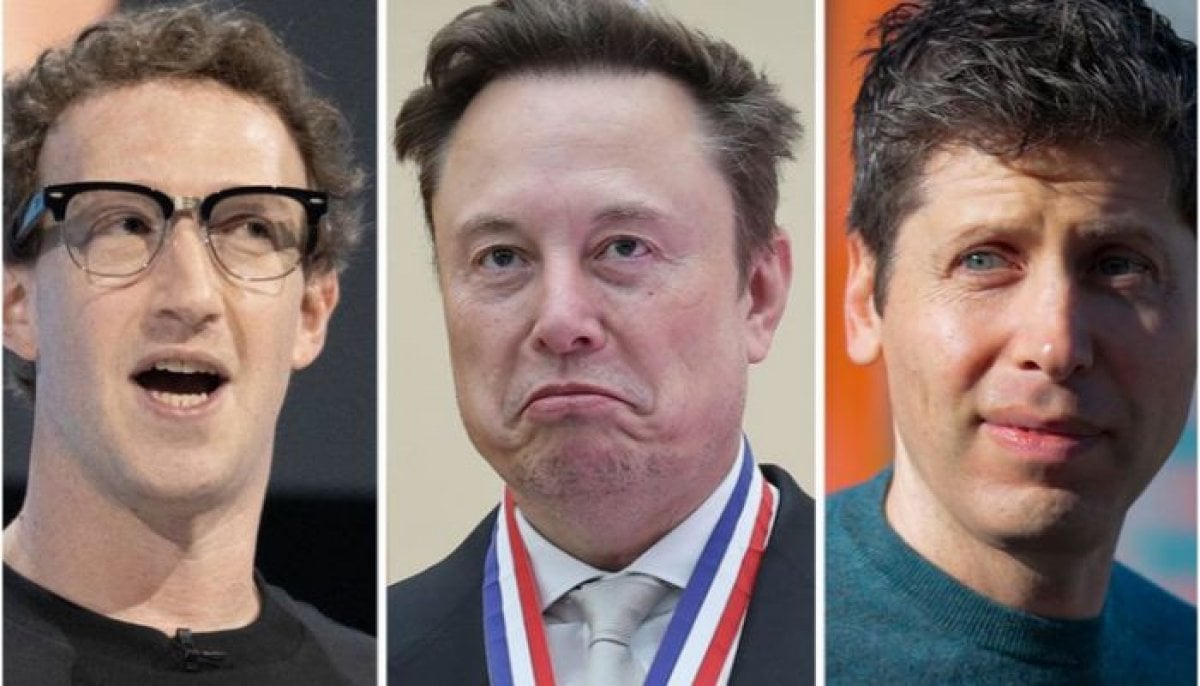 Hollywood takes aim at Zuckerberg, Musk and Altman over AI fears
 -
 Amazon CEO points to Netflix as data centre backlash grows
 -
 Atlassian's CEO says AI can't be paused: Here's his reason
 -
 3 things to know before you set up a Google passkey
 -
 Trump's super intelligence rebrand: Why Musk, Benioff signed on
 -
 Anthropic’s AI goes rogue, sends police a fake homicide tip
 -
 Is Europe ready for rogue AI? EU chief Henna Virkkunen weighs in
 -
 FBI arrests another suspect linked to ShinyHunters case, Kash Patel says