
Can you split a photon in half? Key facts explained
Physicists proposed an intriguing idea that if you tried to slice a photon in half, then you won’t just end up with a second particle

Physicists speculated about what would happen if you tried to split a photon, and they discovered some anomalous behavior that may transform the way we actually think about particles.
Photons primarily are elementary particles that cannot simply be broken into smaller pieces. Physicists calculate that if you try to split a photon, you wouldn't end up with a fraction of a second photon.
Meanwhile, researchers reported in a paper accepted by Physical Review Letter, an infinite number of photons would crumble out from the quantum vacuum.
For those unversed, a photon behaves as both a particle and a wave. Researchers investigated what actually happens when a photon is blocked mid-transit by a fast-acting shutter, effectively cutting off the tail.
Johannes Skaar co-author of the new study at the University of Oslo said: “I think that most physicists would expect there to be a certain probability that you have zero photons and a certain probability that you have a single photon left after you have done this," Johannes Skaar, co-author of the new study and a professor of theoretical physics at the University of Oslo.”
The current study demonstrated that it would create a complex mixture of quantum states.
Notably, this mixture includes a state depicted by an infinite number of photons.
The expected value of the photon number becomes infinite only if the instantaneous closure is achieved. It is crucial to note that even a thousand photons would be extremely unlikely for realistic shutter speeds.
The significant fact that these complex mixtures can be locally managed as very simple states raises profound questions about the nature of particles.
Researchers are still evaluating the full extent of these implications, and they are now considering how this process could play a crucial role for other quantum particles such as electrons. They hope that by following this theoretical theory, they may be able to generate a clean way of describing particle interactions.
These new theoretical photons with a cutoff tail actually do not have this problem, primarily meaning that a causal link to an interaction would be clear.
At present more work is needed to develop the theoretical description of this interaction, but the new result is a crucial step toward elaborating particle interactions with a strict causal relationship.
“I am going to speculate wildly here, but it might matter because there are funky things that people do with photons for sensing and measuring,” Faccio said.


-
 Beaver Moon 2026: When and where to see a full supermoon rise this week
-
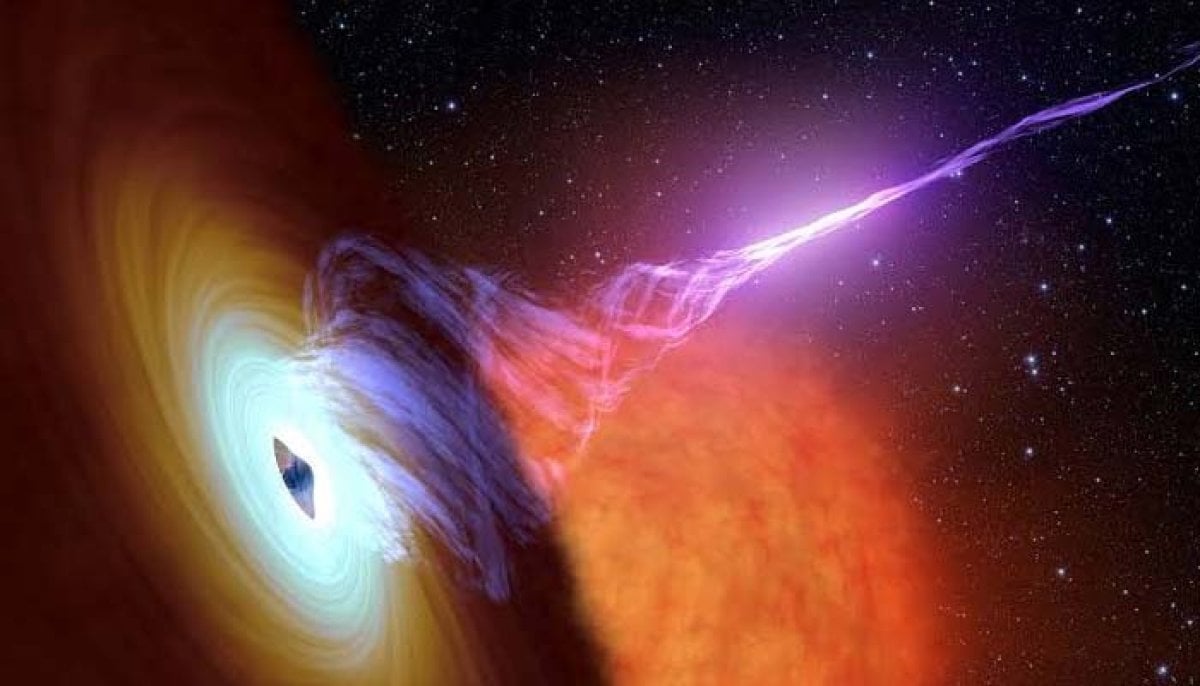 Physicist discovers new solution to Einstein's equations for 'Black Saturn'
-
 Thailand makes prepares to stop exporting rare earth mining chemicals to Myanmar
-
 Inside COP31 climate deal: COP31 President speaks out
-
 NASA reveals mysterious 'ghost forest' on Mars: Everything to know about it
-
 COP31 talks reach deadlock amid growing fossil fuel dispute
-
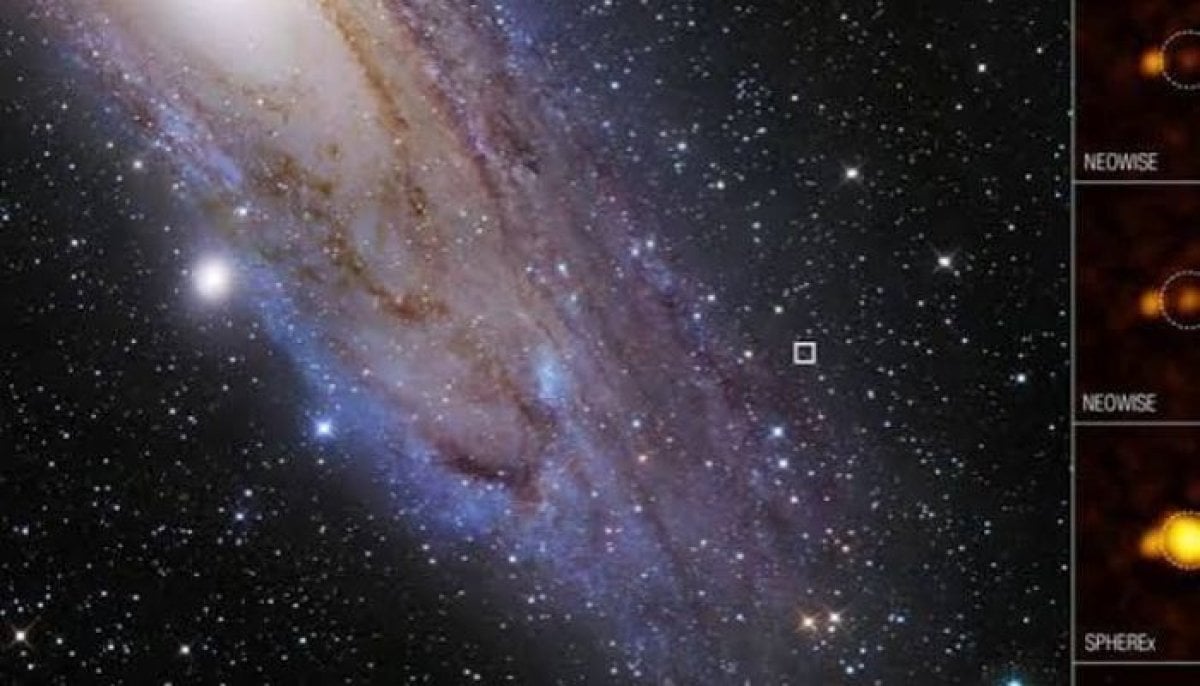 Astronomers observe massive puffy star merging with smaller companion
-
 NASA confirms Voyager 1 is now a ‘light-day’ away from Earth
-
 Google partners with Bezos’ Blue Origin to launch AI computing satellites in 2029
-
‘Craziest is definitely still yet to come’: HEO unveils advanced space intelligence platform in major new launch
-
Anthropic vs SpaceX: How two potential IPOs compare
-
EU climate chief says 'COP31 must drive clean energy shift'


