NASA reveals Curiosity rover’s latest ‘unusual’ discovery on Mars
The discovery was reported on June 19-20, 2026
_updates.jpg)
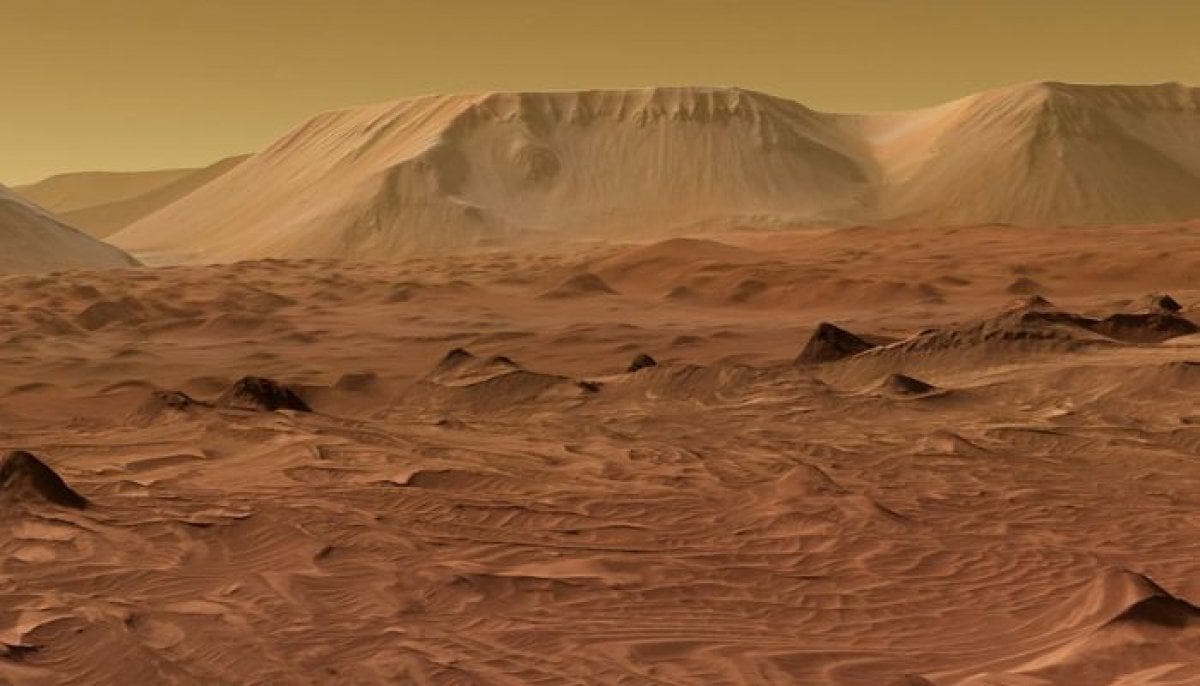
NASA’s Curiosity rover has just discovered strange and unusual patterns on the surface of Mars.
The rover has been exploring the Red Planet for approximately 14 years when it was first landed back in 2012. This time it has found a “field of honeycomb textures.”
While Curiosity has previously encountered small patches of honey-shaped textures. Now it has come across a large-scale field of honey comb-like geological features known as polygonal fractures in Martian Valley named as “Valle Grande.”
Speaking about its physical characteristics, each polygon measures approximately 1.5-3 inches across while surrounding a 20-foot tall sand-capped butte nicknamed “Microflares.”
According to the mission’s project scientist, Ashwin Vasavada of NASA’s Jet Propulsion Laboratory in Southern California, “We’ve seen a lot of fascinating landscapes through Curiosity’s eyes, but this sea of polygons took our breath away.”
“We measured their shapes and chemistry carefully and are hopeful there are clues in the data as to how these features formed.”
_updates.jpg)
Mission scientists are currently analyzing the chemistry and shape of these features to determine their origin.
While a concrete conclusion has not yet been reached, the researchers believe that these textures are the product of one or more geologic processes involving water and temperature changes.
They seemed similar to dried lake bed on Earth and may have formed through repeated wet-dry cycles. The honeycomb could also be the result from cycles of expansion and contraction driven by extreme temperature changes.
The shapes could have formed when sediment was buried and compressed, forcing water out of the material.
According to NASA, Some of the polygons previously discovered by the mission “clearly formed as mud cracks…these include "cycles of warm and cold temperatures or compression that squeezed water out of the sediment when the surface was buried.”
The discovery was reported on June 19-20, 2026 and the rover is currently ascending Mount Sharp.






-
 US finally confirms weapons in orbit: What it means for space warfare
 -
 How China's FAST telescope is mapping the cosmic gas behind star birth
 -
 Did Sun eat super-Earth? New study says maybe
 -
 Did Sun swallow a super-Earth? Scientists search for its ‘fingerprints’
 -
 Blue Origin sets sights on Mars with new NASA network
 -
 NASA, IBM launch open-source lunar foundation AI model to help map ice, craters on moon
 -
 Bacteria can remember without brain, new study finds
 -
 Fast radio bursts may unlock secrets of dark matter, energy and neutrinos