Did the Big Bang happen differently? New theory challenges origin of Universe
A new cosmological model suggest the universe may have formed differently
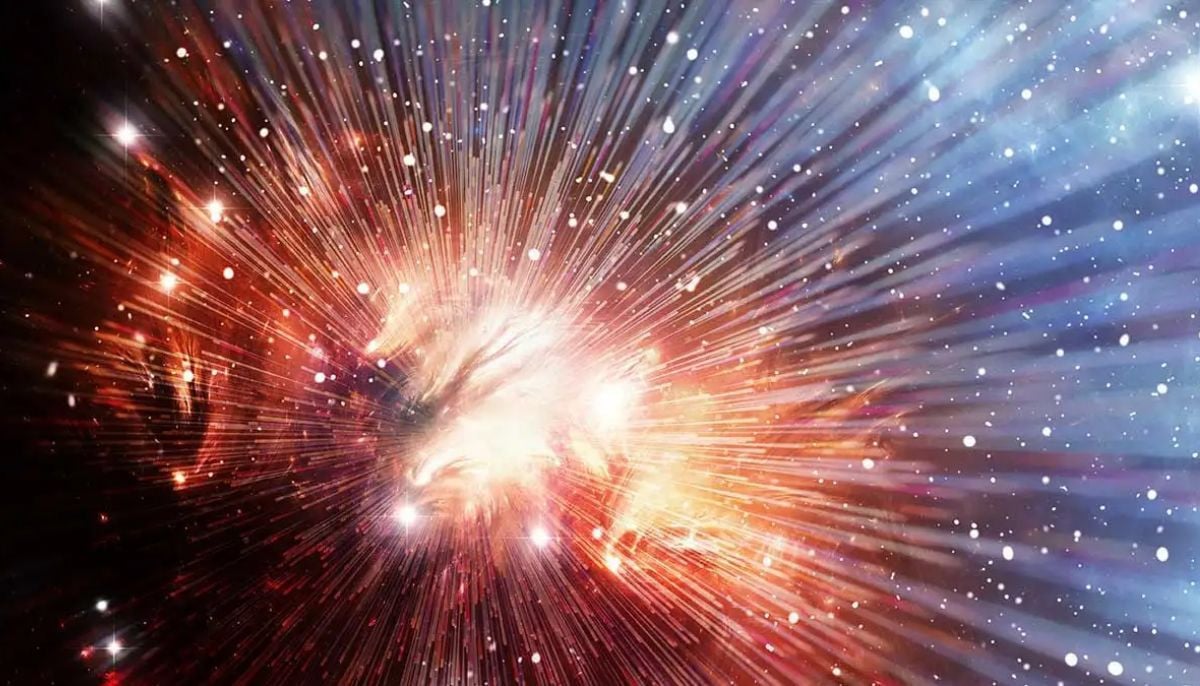
Scientists from the University of Waterloo and the Perimeter institute have discovered a new cosmological model, challenging the traditional understanding of the Big Bang origin.
The new study offers a new insight into the birth of the universe and its earliest moments.
The research led by Dr. Niayesh Afshordi, a professor of physics and astronomy, delved into a new way to combine gravity with quantum physics. The study also addresses the mathematical failures of Einstein’s general relativity at extreme energies.
The study’s findings are based on the birth of the universe through Quadratic Quantum Gravity, a model which remains stable even at extreme points, similar to the Big Bang.
Using this approach, the team discovered that the Universe's early expansion could be due to the theory of quantum gravity due to the “inflationary period”.
The theory suggests that inflation is a natural consequence of gravity itself when treated under quantum conditions.
“This work shows that the universe's explosive early growth can come directly from a deeper theory of gravity itself. Instead of adding new pieces to Einstein's theory, we found that the rapid expansion emerges naturally once gravity is treated in a way that remains consistent at extremely high energies,” Afshordi said.
The model also predicts a specific minimum level of primordial gravitational waves. This is significant because quantum gravity theories are notoriously difficult to test with physical data.
The research has the potential to bridge the gap between quantum mechanics and gravity, linking the earliest moments of the Big Band to the observable cosmos.
The findings give rise to a new era of "precision cosmology," where upcoming galaxy surveys and gravitational wave detectors may soon have the sensitivity required to confirm these predictions.





-
 Scientists found 'super-puff' planets 1,110 light-years away
 -
 Scientists find ancient microbial life in places it shouldn't exist
 -
 Why Marijuana is suddenly sending thousands of dogs to hospitals in US?
 -
 36 years on, Hubble shows how stars actually change over time
 -
 Hidden magma beneath Mars? Scientists' 'unexpected' discovery raises new questions about alien life
 -
 Rare 3,200-year-old coral blue hole discovered in South China Sea
 -
 What happens at black hole’s event horizon? Scientists find the first-ever clue
 -
 Scientists discover evidence of fires used by humans 1.8 million years ago
-
 Did NASA just uncover evidence of ancient life on Mars? Key discoveries explained
 -
Four powerful earthquakes strike three continents within hours: Scientific link or coincidence?
-
Mysterious interstellar comet passing our solar system may be 12 billion years old, scientists say
-
When do we really become adults? Science has an answer