Could humans survive on Mars? Nasa has clues
NASA’s mission allows scientists to observe Mars magnetic environment from two locations simultaneously
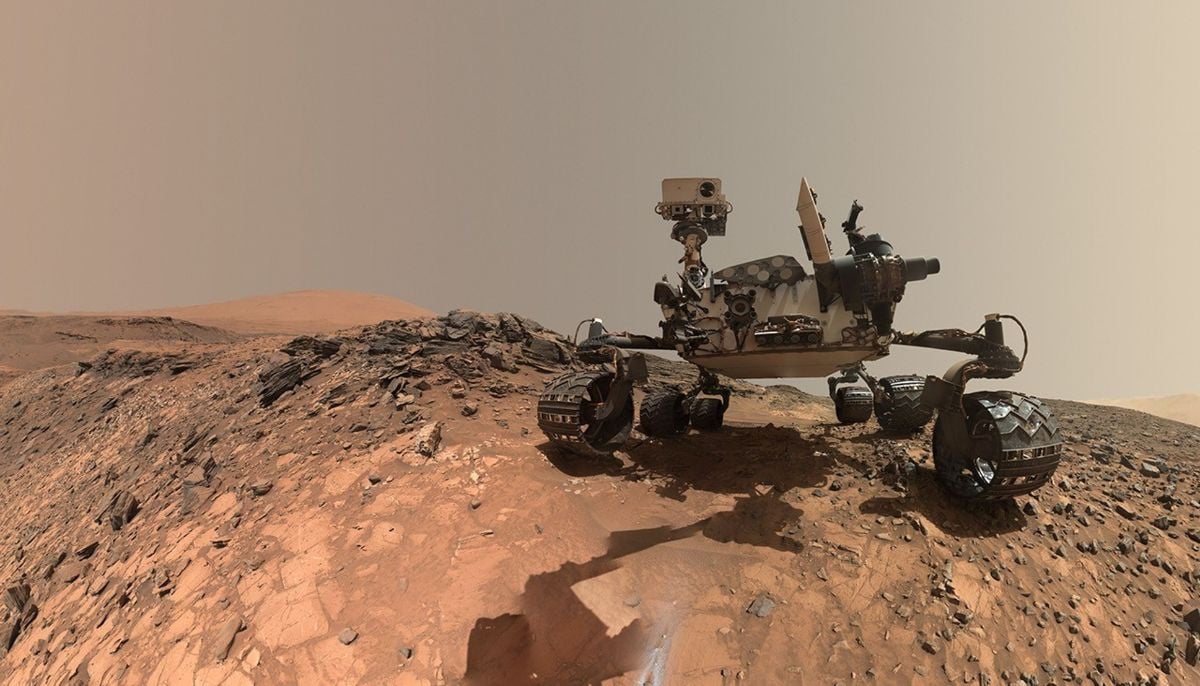
Mars used to have a warmer and wetter climate, which changed after billions of years because the Sun's solar wind removed most of its atmosphere, which transformed the planet into its current dry and frozen state.
The NASA mission, named Escape and Plasma Acceleration and Dynamics Explorers (ESCAPADE), is currently observing the process live to learn more about the loss of the planet’s habitability and to plan for the next human mission.
What NASA reveals about Mars atmosphere?
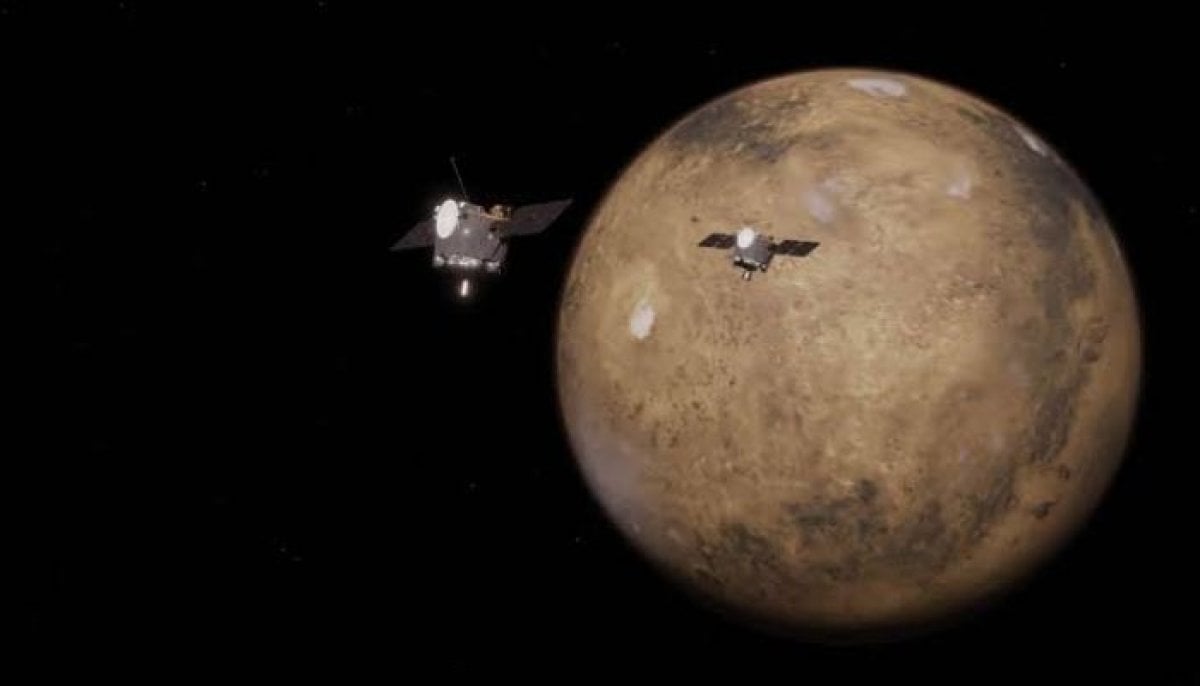
Unlike the previous mission, the NASA mission consists of two separate spacecraft orbiting the planet Mars together. This will allow the scientists to study the magnetic environment of the planet from two distinct points, providing a better perspective on the loss of the planet’s atmosphere due to the solar wind.
“The ESCAPADE duo gives a stereo perspective, two vantage points at once,” said University of California Principal Investigator Rob Lilles.
By first flying along the same path and then branching off into their own orbits, the spacecraft will be able to monitor both the incoming solar wind and Mars’ atmospheric reaction.
Mars’ thin atmosphere and weak magnetic field do not protect the planet from solar radiation as well as Earth’s do, and this is a concern for future Mars travellers. ESCAPADE is also important to scientists because of Mars’ hybrid magnetosphere and ionosphere, which is important for safe travel and reliable communications.
“Before we send humans to Mars, we need to understand the environment they’ll face,” said Michele Cash, ESCAPADE programme scientist, NASA Headquarters.
ESCAPADE is also experimenting with a new trajectory, which currently circles near Earth’s Lagrange point 2 and then uses Earth’s gravity to travel to Mars in September 2027.


-
 Can cancer drugs be made in space? Here’s what the new mission aims to find out
 -
 SpaceX Falcon 9 successfully launches Bandwagon-5 mission with 32 payloads
 -
 Europe launched 8 orbital rockets last year, can it rival Starlink?
 -
 Japan launches world’s first mission to bring sample back from phobos
 -
 Orionid meteor shower 2026: Peak date, viewing tips and what to expect
 -
 Why Mars looks blue in NASA’s unedited curiosity panorama?
 -
 Blue Origin upgrades new Glenn rocket launch infrastructure to take on SpaceX
 -
 NASA’s next Mars mission targets Phobos and Deimos, not Red Planet