Inside SpaceX-xAI merger: What it means for AI data centers in orbit
The strategic move unifies Musk’s aerospace capabilities with his cutting-edge artificial intelligence operations
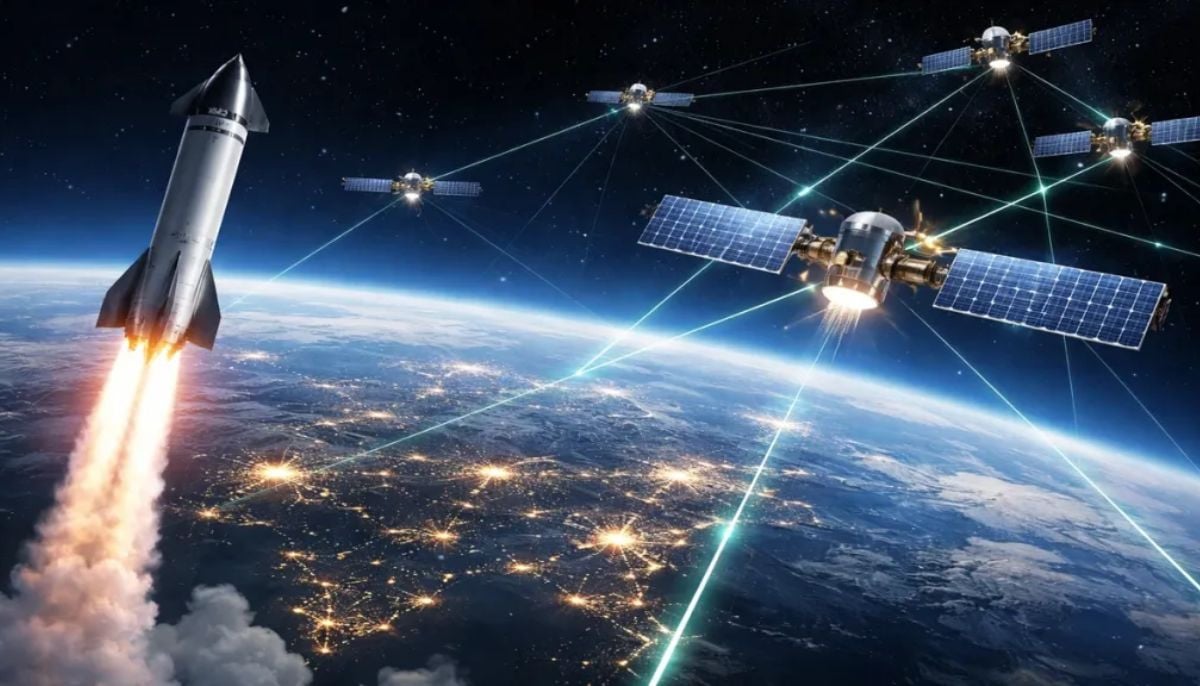
Elon Musk has announced plans to merge SpaceX with xAI in a bid to initiate a new joint venture and accelerate artificial intelligence-powered innovation.
On February 2, 2026, the 54-year-old billionaire proclaimed the highly-anticipated SpaceX-xAI merger meant to form “the most ambitious, vertically integrated innovation engine on (and off) Earth, with AI, rockets, space-based internet.”
The strategic move unifies Musk’s aerospace capabilities with his cutting-edge artificial intelligence operations.
The merger also creates a feedback loop between AI, rocket technology (Starship), and global communications (Starlink).
Recently, Elon Musk has propagated the idea of building data centers in space. Owing to terrestrial-based bottlenecks related to energy and cooling systems, SpaceX is eying to make inroads in the vast space, offering innumerable opportunities to materialize this vision.
In this regard, the concept of “orbital computing” has transitioned from science fiction to a trillion-dollar strategic frontier.
SpaceX is at the helm of this shift as it is leveraging its dominance and AI-based capabilities to build the space-based AI data center.
The recent strategic merger offers a roadmap to building data centers in orbit.
Vertical integration of space launch
The merger brings forth a vertically integrated infrastructure layer. The layer consists of three elements. SpaceX brings the proven capability of launching heavy payloads with the help of Starship rockets. These rockets make the physical deployment of heavy GPUs viable and easy.
Starlink satellites and communication infrastructure will provide connectivity to and from space.
Eventually, xAI models will bring computing and processing powers for that infrastructure built in orbit.
_updates.jpg)
Together, they will provide the stack, demonstrating “launch, connectivity & compute.”
SpaceX is seeking approval to launch up to one million satellites designed to function as a network of orbital data centers equipped “with unprecedented computing capacity to power advanced artificial intelligence models and the applications that rely on them.”
The vertical integration system paves the way for SpaceX to become competitive and dominant in technological landscape
By owning the entire process from the start to finish, the company can build a specialized system for AI in space much faster and with more chapters than terrestrial data centers.
With complete control, the company can solve every piece of the puzzle related to energy source and cooling problems.
Panacea for ever-present energy and cooling problems
AI data centers on Earth face two major issues: constrained energy source and cooling system. Fortunately, the space-based data centers will offer the permanent solution.
According to Musk, solar energy remains constant and abundant in space. Therefore, the orbiting satellites will harness sunlight without atmospheric losses, cutting operational costs and meeting the increasing demands of AI models in orbits.
Moreover, data centers in space will not require any specialized cooling infrastructure as the data centers can dissipate the immense heat by using the shaded side of the satellite. Hence, space acts as a “cold sink” for radiative cooling.
Eventually, space will become more energy efficient and sustainable.
Musk said, "Within 2 to 3 years, the lowest cost way to generate AI compute will be in space.”
Analyst Gene Munster identifies "data centers in the sky" as the merger's "most important vector."
"Kardashev" vision
Musk has also framed this merger as a major step toward achieving Kardashev Type II Civilization, one that can harness the total energy output of its star.
Electromagnetic mass driver and lunar manufacturing will also put 500 to 1000 TW/year of AI satellites into deep space, meaningfully “ascend the Kardashev scale and harness a non-trivial percentage of the Sun’s power.”
Eventually, the integration and the state-of-the-art capabilities will help SpaceX to build not only space-based data centers but also self-growing bases on the Moon.


-
 Ed Sheeran’s estranged cousin extends an olive branch after years of feuding
 -
 Nobel peace laureate Navi Pillay speaks out against US sanctions on ICC
 -
 Tom Cruise’s ‘genuine’ relation with the British royal family revealed
 -
 Nine dead in Erie, Pennsylvania mass shooting
 -
 Piers Morgan name-checks Eminem after 'Lose Yourself' blasts out at Arsenal-Leeds clash
 -
 Mikey Madison shares her Oscar’s hidden spot
 -
 Catherine Zeta-Jones goes full Welsh for killer new role
 -
 Andrew Garfield makes ‘starstruck’ revelation about Woody Harrelson