Caribbean climate breakdown crisis: Hard coral decline hits 48%
Coral reefs at least support 25 percent of marine species.
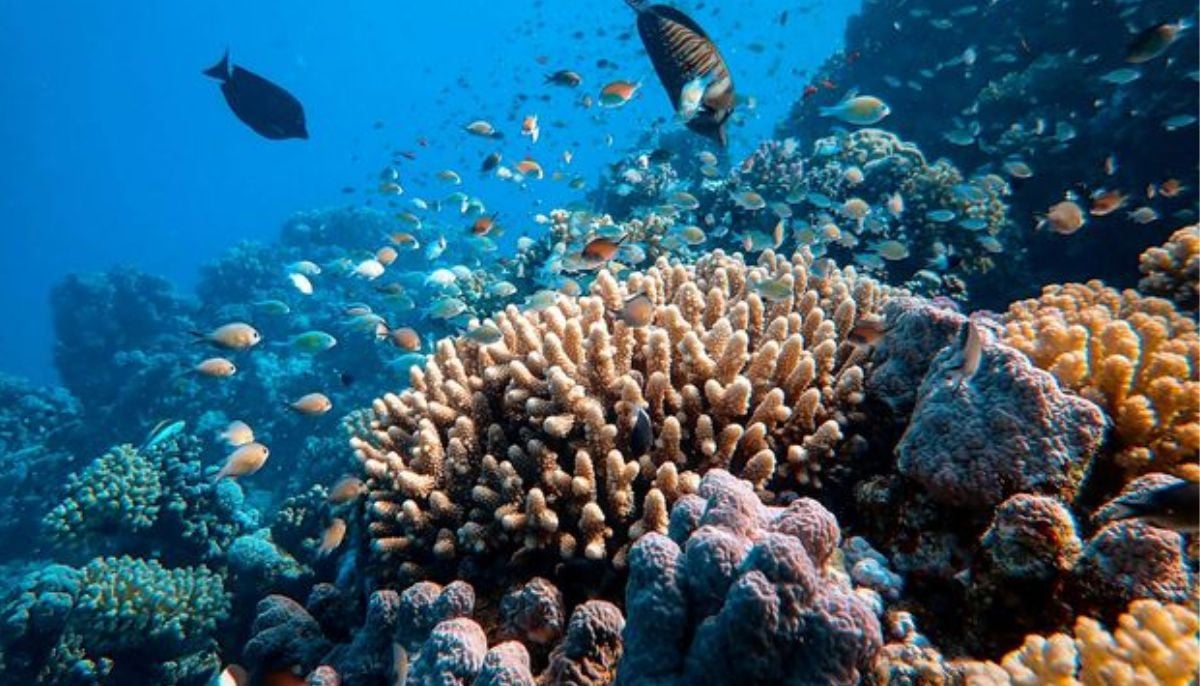
Caribbean reefs have suffered massive loss in hard coral cover since 1980, a new study suggests.
According to the Global Coral Reef Monitoring Network, climate breakdown crises, such as destructive marine heatwaves, are responsible for losing nearly 48 percent of coral cover.
These heatwaves primarily affect the microalgae, the feed of coral, and make them toxic.
As per Dr Jérémy Wicquart, one of the study’s editors’ observations, the Caribbean region experienced the most fatal thermal stress ever recorded in 2023-2024, thereby leading to 16.9 decline year-on-year. During last year’s diving, Wicquart observed the massive coral bleaching caused by the loss of essentially nourishing microalgae.
“All the corals were bleached. All white corals. I was very affected by that. It’s totally different when you see it in the field to when you see it on a graph,” he added.
Coral reefs hold a significant importance for the Caribbean's GDP, generating $6.2 billion a year through tourism and fisheries.
Besides coral reefs crisis, the recent also highlighted the successes in conserving the corals. For instance, the Mexican government developed a new marine protection area in the Gulf of Mexico which connects two national parks, thereby forming a habitat where corals and reef species flourish.
“If you act on climate change, you will reduce thermal stress to coral reefs, and the impact of cyclones. The second major solution is to reduce local threats. You can improve water quality, restrict mass tourism, and implement marine protected areas. These are ways to improve the coral reef at a local scale,” said Wicquart.
By covering 1 percent of the world's seafloor, coral reefs support 25 percent of marine species.


-
 Scientists develop technology to send smells through phones
 -
 Earth’s close encounter with giant asteroid Apophis is less than 3 years away
 -
 Chinese astronomers discover real-life three-body system unlike Liu Cixin’s fiction
 -
 Hunter’s Moon 2026: When and how to watch October’s full moon
 -
 Elon Musk’s Mars colonization dream faces reality check from Nobel laureate
 -
 NASA competition model 2.0 cuts mission selection by 45%
 -
 A ‘neglected’ neutrino may hold the key to why the Universe exists
 -
 Can cancer drugs be made in space? Here’s what the new mission aims to find out