
Giza Pyramid mystery deepens with startling discovery of hidden ‘voids’
The Pyramid of Menkaure was constructed around 2510 BC
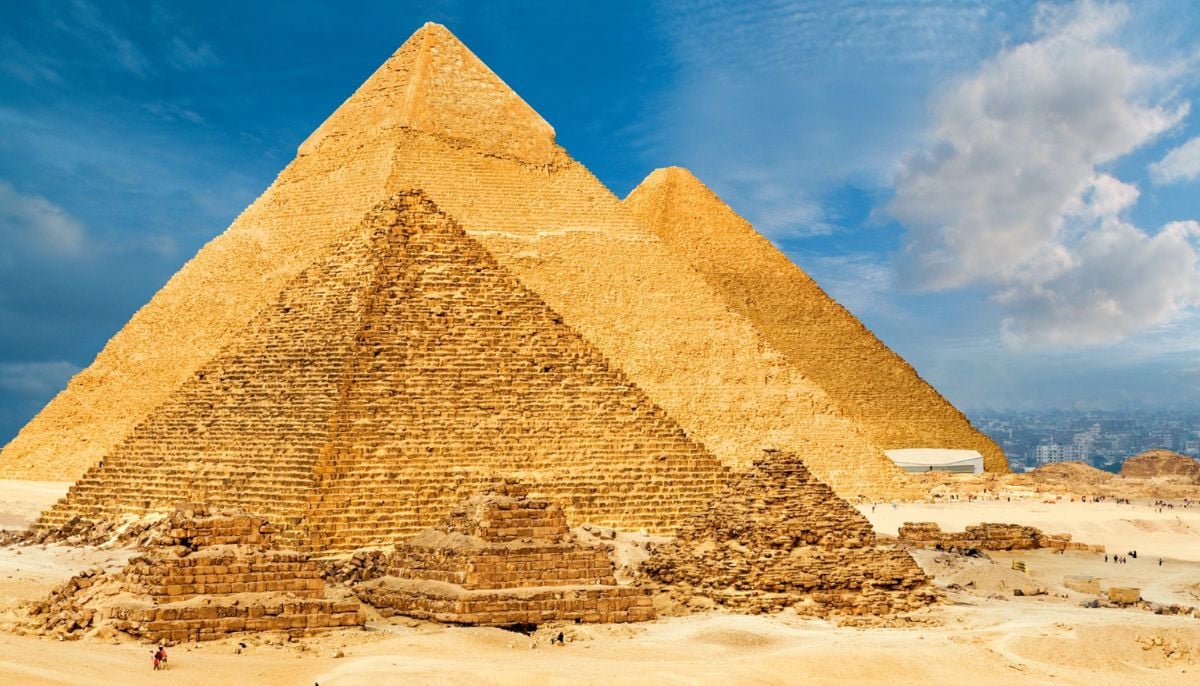
Archaeologists in a recent breakthrough have discovered two voids on the eastern side of the Pyramid of Menkaure, indicating a hidden entrance passageway at a historic pyramid.
The Pyramid of Menkaure, the third-largest pyramid of the famous Giza complex, was constructed around 2510 BC, serving as the tomb of the Fourth Dynasty’s King Menkaure whose coffin went missing mysteriously.
The pyramid built on Giza plateau is around 213 feet tall and the main entrance is located on the northern side.
Scientists from Germany and Egypt detected these hidden voids using high-tech scanning methods to unravel the pyramid’s eastern side mystery.
According to researchers, "The stones are remarkably polished over an area around four meters [13 feet] high and six meters [20 feet] wide.”
"Such smooth stones are otherwise only found at what is currently the only entrance to the pyramid, on the north side,” they added.
Newly discovered air-filled voids were of different sizes and at different heights. The first void is located at a depth of 4.5 feet, measuring 3.2x4.8 feet. The second one is at a depth of 3.7 feet, measuring 2.9x2.2 feet.
These findings published in the journal NDT & E International hint at the possibility of a second passage of the entrance.
However, more experiments should be conducted to collect more data on these anomalies detected in the Giza Pyramid.





-
 Katherine Heigl breaks silence on attending dog rescue fundraiser at Trump's residence
 -
 Diddy suffers another setback after rejecting sexual assault lawsuit 'in its entirety'
 -
 Conan O’Brien recalls emotional memory of his late father ahead of 2026 Oscars
 -
 Oscars take intense security measures after FBI warns of impending danger
 -
 Colter Wall cancels his 2026 Memories and Empties tour due to major reason
 -
 Where Nicole Kidman stands with Keith Urban after shocking split
 -
 Lord Sear, hiphop radio legend and Shade 45 host, dies at 53
 -
 Selena Gomez, Benny Blanco's 'ideal' baby timeline revealed amid surrogacy rumours