World's first robotic-stroke surgery performed: Here's what you need to know
For an Ischaemic stroke, the best treatment option is a thrombectomy, where a specialist uses catheters and wires to remove the clot.
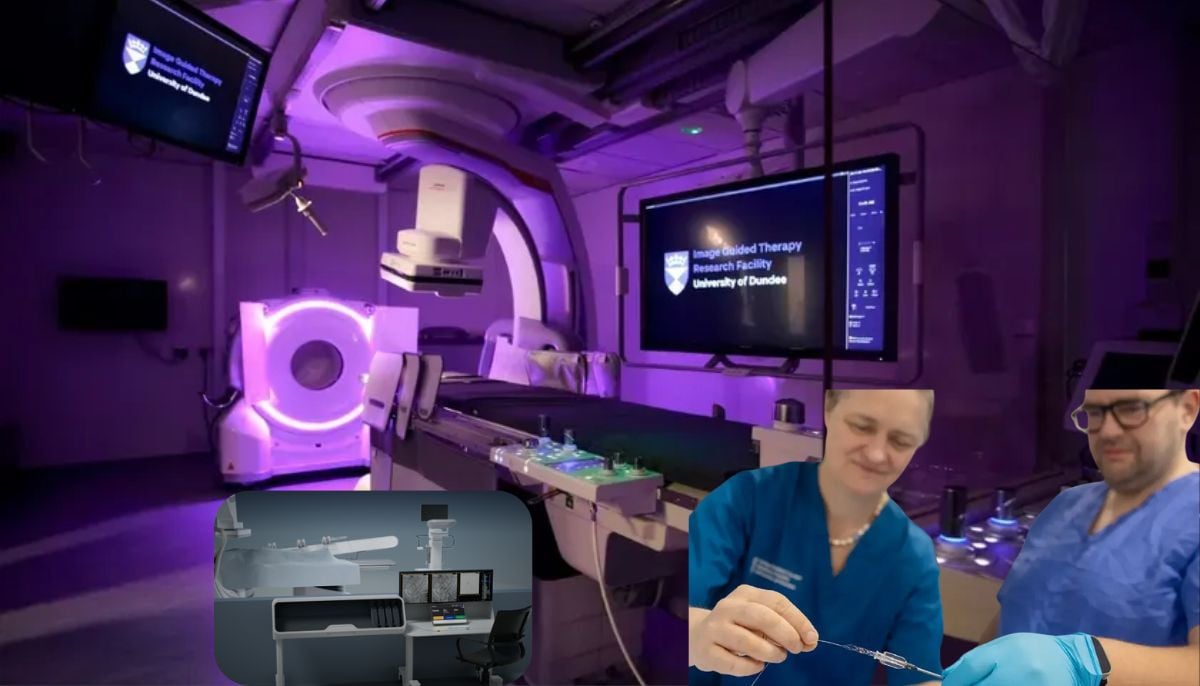
In a medical breakthrough, specialists in neurology and neurosurgery from Scotland and the U.S. have collaborated to perform the world's first stroke surgery using a robot.
The procedure can prove to be a "game changer” if it gets a nod for use on patients.
Prof. Iris Grunwald from the University of Dundee performed the procedure called thrombectomy—where the blood clots are removed after a stroke—on a human cadaver that had been donated to medical science.
The surgeon was stationed at Ninewells Hospital in Dundee, though the cadaver she was performing the procedure on was at the university, within a radius of 3 miles.
This breakthrough procedure relied on a robotic system built by Lithuanian MedTech company Sentante.
By using the device from a remote location at Ninewells Hospital’s School of Medicine, Prof. Grunwald proved that endovascular stroke care can be delivered remotely with surgical accuracy.
Then came the turning point for the entire field: Dr. Ricardo Hanel, a neurosurgeon working with Grunwald, performed the world’s first transatlantic thrombectomy on a human cadaveric model at Dundee’s Image Guided Therapy Research Facility (IGTRF) from Baptist Medical Center in Jacksonville, Florida.
How does the technology work?
For an Ischaemic stroke, the best treatment option is a thrombectomy, where a specialist uses catheters and wires to remove the clot.
But thrombectomy robotic surgery comes into play when a patient finds it hard to get to a specialist who can perform the procedure.
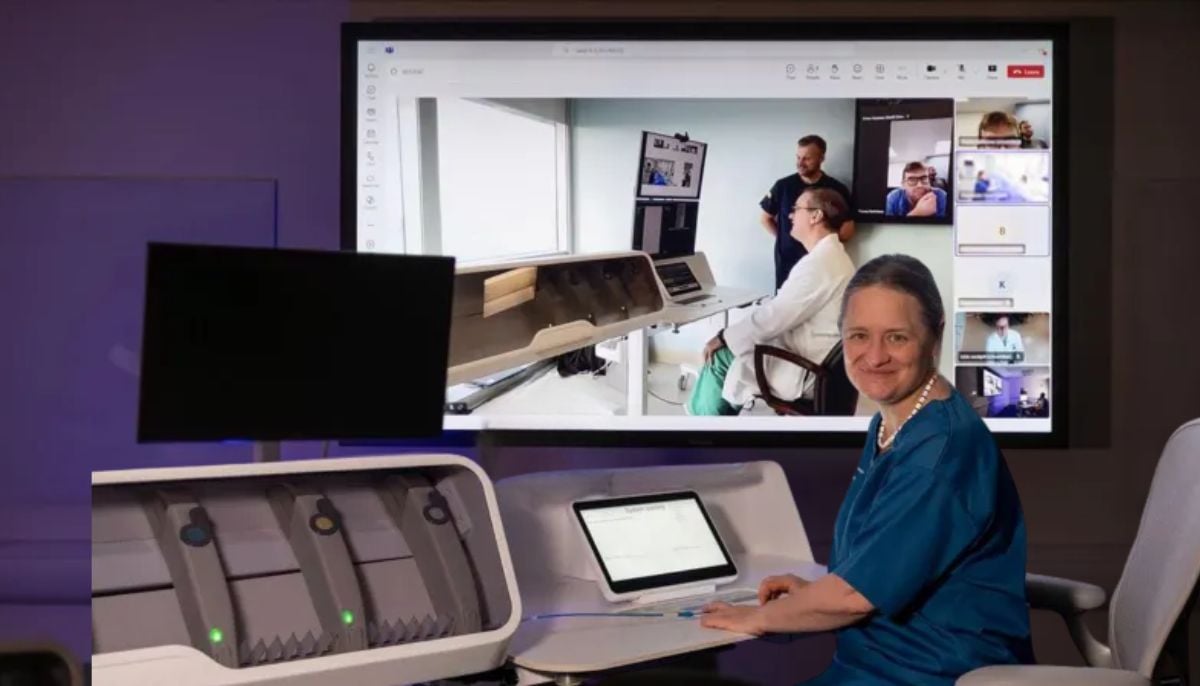
According to Prof. Grunwald, the experiment demonstrated a robot could be linked to the same catheters and wires a surgeon would normally use, and a medic who is with the patient could simply attach the wires.
Then, the surgeon in the remote location could then hold and move their own wires, and the robot then carries out with precision the same movements in real time on the patient to carry out the thrombectomy procedure.
The doctor could remotely perform the procedure on the patient in a hospital operating room using the Sentante machine, even from their own home.
Tech giants like Nvidia and Ericsson were involved in the project to ensure smooth connectivity of the robot.
As Dr. Hanel noted, “To operate from the US to Scotland with a 120-millisecond lag—a blink of an eye—is truly remarkable."
Why is Thrombectomy a Lifesaver
Each year, there are about 15 million strokes globally, and for the UK, the annual cost to the UK is projected to be £26 billion, comprising £8.6 billion in NHS and social care expenditures.
Thrombectomy is considered the most effective way to treat patients with stroke caused by a large, blocked brain vessel, but, in many parts of the world, less than 1% of patients receive this life-and brain-saving treatment.
Just last year, only 212 patients received thrombectomy treatment across Scotland.
This shows 2.2% of patients who had an ischemic stroke (a condition that occurs when a blood clot blocks an artery, cutting off blood flow to the brain.)
The main stumbling block in expanding thrombectomy services to more and more patients is the number of interventional neuroradiologists required to carry out such procedures.


-
 Chappell Roan's security guard takes 'full responsibility' for his interaction with Jorginho's daughter?
 -
 'Buffy' star Nicholas Brendon's death case takes massive turn
 -
 Meryl Streep left shaken on 'The Devil Wears Prada 2' set: Here is what shocked her
 -
 Savannah Guthrie 'Today' return: Fans receive exciting update as search for Nancy continues
 -
 Kim Kardashian shares cryptic message after Lewis Hamilton vow
 -
 'Heated Rivalry' season 2: Jacob Tierney teases shocking twist
 -
 '13 Going On 30' reboot confirmed: Jennifer Garner returns with new cast
 -
 Why Elon Musk sees Starship as humanity’s only bridge to Mars
-
 Stephen Colbert reveals secret project in 'Lord of the Rings' universe but he is not alone
 -
Alan Ritchson gets clean chit in violent altercation with neighbor
-
John Stamos reveals his unique take on fatherhood ahead of upcoming book
-
Miley Cyrus says something surprising about Disney stars Zac Efron and Vanessa Hudgens