Will 3I/ATLAS make its closest approach to Sun on October 29?
NASA will have a hard time observing the comet that will reach its closest point to the Sun
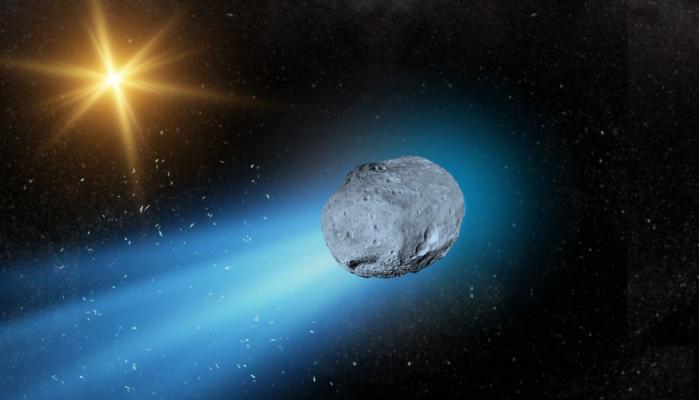
Speculations have been circulating that an interstellar comet will reach its closest point to the Sun at a safe distance of approximately 1.4 astronomical units, roughly 210 million kilometers from the sun.
The interstellar comet ATLAS will reach this position on October 29,2025.
Meanwhile, astronomers across the globe are closely monitoring the event that will reveal surprising new details about how materials travel between stars.
NASA confirmed that 3I/ATLAS will reach its closest point to the sun on October 29-30, 2025.
The comet will come within 1.8 astronomical units, or 270 million kilometers-a completely safe distance.
Jet Propulsion Laboratory (JPL) has further explained that the comet has a hyperbolic trajectory, meaning it did not form within our solar system.
It was initially discovered on 1 July 2025 by the ATLAS telescope in Chile, and at that time it was about 670 kilometers from Earth.
Keeping in line with the experts’ opinion, there is no risk for 3I/ATLAS hitting the sun.
NASA and the European Space Agency (ESA) confirmed that the comet will remain safe outside the Sun’s immediate zone of influence.
3I/ATLAS will speed away along its hyperbolic route after 29 October, and, moving at 60 kilometers per second, it will cross Mars’s orbit before leaving the entire solar system.
According to NASA scientists, it will never return, unlike ordinary comets that orbit the sun constantly.
In this connection, Professor Darryl Seligman of Michigan State University confirmed that the event offers a rare glimpse beyond the Sun’s neighborhood, calling it a significant chance to analyze an interstellar comet.
The upcoming scientific event has captivated attention online, and some concerns originate from remarks from Prof. Alvi Loeb of Harvard University, who described the event as a possible ‘black swan’ moment.
According to Loeb, if the comet were artificial, it could allow for an Oberth manoeuvre, which is a method used by spacecraft for increasing velocity near stars.
Loeb added that the sun’s power at that distance delivers immense energy to the comet’s surface, but he later emphasized that 3I/ATLAS most likely remains a natural body.
Furthermore, astronomers such as Professor David Jewitt of UCLA dismiss such any speculations.


-
 1,700 cruise ship passengers quarantined in France over suspected gastro outbreak
 -
 Khamenei says Iran’s resistance has strengthened nation and created unity amid conflict
 -
 'Anxious' Prince Harry holds secret meetings amid enormous pressure on marriage with Meghan Markle
 -
 Warren Buffett and Stephen Curry charity lunch sells for $9 million
-
 Elon Musk’s son Lil X sparks fashion craze with traditional Chinese-style vest, tiger-head bag
 -
 Millions react after Arianna Roberson, Cooper Flagg confirm dating rumors
 -
 Jensen Huang’s Beijing street food moment goes viral amid Trump-Xi 2026 summit
 -
 China launches world’s first transforming robot with pilot cockpit
 -
 Kodak Black detained again in fresh police action
 -
 Drake drops emotional bombshell: 'My dad got cancer right now’
 -
 Elsie Hewitt heartbreaking confession came just before Pete Davidson split bombshell
 -
 Nicki Minaj drops bombshell: 'Lots of rappers' secretly hate Jay-Z