
Alerts issued after Asian hornets horrors Ireland
First sighting of Asian hornets observed in Belfast Ireland, which consumes 60-70% of honeybees, reports Bee keepers Association
Alerts have been issued after Asian hornets were discovered in Belfast, Ireland, recently.
Following the observation of a soaring hornet population in the UK, people in Northern Ireland have been warned to be vigilant, as hornets were captured in the Dundonald area in October.
Sightings of this invasive, non-native species, also known as a yellow-legged hornet, have been growing in recent years.
Beekeeper Association warns that Asian hornets can decimate bee hives after they revealed that nearly 110 hornet nests have been found across the country in 2025.
The chairperson of the Ulster Beekeepers Association, Valentine Hodges, has described the discovery of hornets as a 'worrisome problem' in the region.
Hodges informs that Asian hornets feed on insects and pose a threat to bees because they prefer to feed bee grubs and dismembered adult bee thoraxes to their young.
"It's a huge predator for honey bees, other little wasps, and little native insects," said Valentine Hodges.
Moreover, Julian Newton from the Laddingford and District Beekeepers Association, said 2025 had been "our worst year both for sightings and nests of hornets."
Newton reports that the Asian hornet diet consists mainly of 60-70% honeybees.
"This is not a beekeeper problem, this is a pollinator problem-they eat any flying insect...our solitary bees and bumblebees are already under environmental pressures, this is just an additional one,” said Newton.
About Asian Hornets
The Asian hornet also known as the "yellow-legged" hornet or "Asian Predatory" was discovered in east Asia and firstly recorded in France 2004.
The species of the Asian hornets are active in April till November and their nests are often found in hedges or near to the grounds.
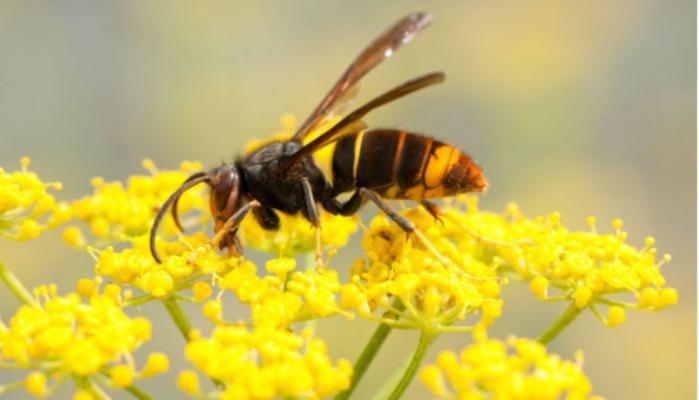
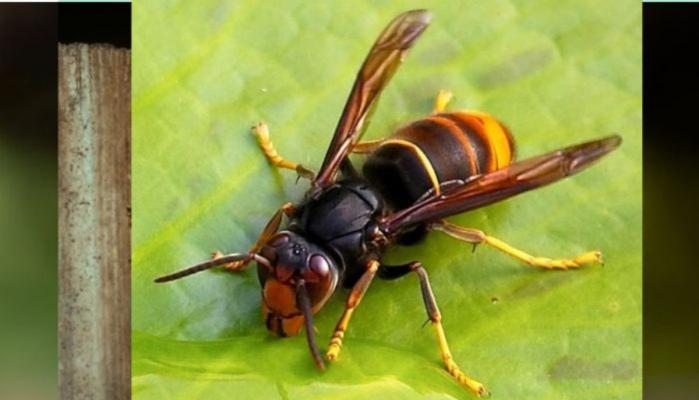
The yellow-legged hornet is about 2cm long, mostly black and brown with an orange face, orange tail, and yellow legs
The Asian insect can be confused with the native European hornet, which is larger and mostly pale yellow with black stripes.
These hornets are famous as “Asian Predatory” as they feed on more than 1,000 species of insects, including honey bees, bumble bees, butterflies, and beetles.
Are Asian hornets dangerous for Human?
Compared to Native hornets or wasps, Asian hornets pose no threat to humans; however, they present greater threats to native insects.
Furthermore, Ms Hodges from the beekeepers informs that hornets have a significant impact on biodiversity and on pollinator services.
She also emphasized the importance of public awareness about hornets’ appearance and how people can report them.
Hodges further informed that they have specifically designed an app for reporting hornets.
The app, called the “Asian Hornet watch app,” can be easily downloaded on phones to report these dangerous insects.
What to do if you get stung by an Asian Hornet?
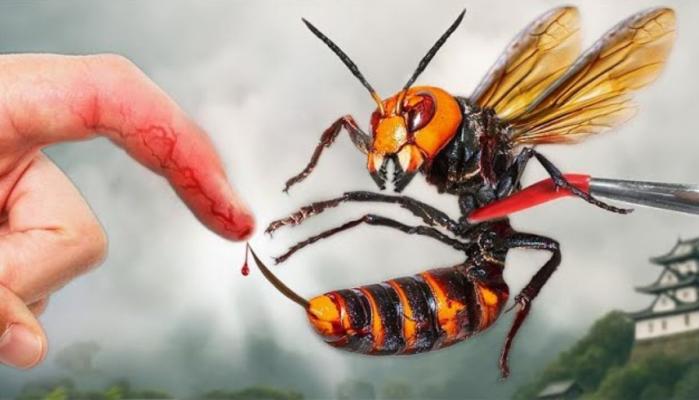
People who are stung by wasps or hornets may feel a small, painful, or swollen lump on their skin.
The National Health Authority (NHS) UK advises that if a person gets stung by a hornet, they should wash the area with soap or antiseptic solutions to reduce the risk of swelling.
People can also use salt water to clean the area thoroughly. If the area is already swollen, it is advised to use an ice pack or apply pressure to the swollen area for 20 minutes with a cloth dipped in cold water.
For severe allergic reactions, people should avoid scratching the sting and seek immediate medical help.






-
 Paul Anthony Kelly opens up on 'nervousness' of playing JFK Jr.
 -
 'Finding Her Edge' creator explains likeness between show and Jane Austin novel
 -
 How AI boyfriends are winning hearts in China: Details might surprise you
 -
 James Van Der Beek's final days 'hard to watch' for loved ones
 -
 Will Smith, Jada Pinkett's marriage crumbling under harassment lawsuit: Deets
 -
 Khloe Kardashian reveals why she slapped ex Tristan Thompson
 -
 Taylor Armstrong walks back remarks on Bad Bunny's Super Bowl show
 -
 Elon Musk’s xAI shake-up amid co-founders’ departure: What’s next for AI venture?