Worst kinds of wildfires are becoming more frequent, new research reveals
Nearly half of the Coastline wildfires in modern history have occurred in the last decade, study finds
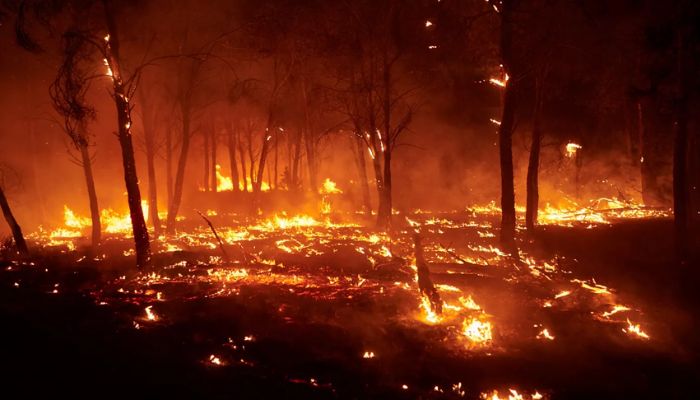
According to a recent study, the most devastating and expensive wildfires are being witnessed at an alarming rate. A report by the researcher indicates that almost half of the most costly wildfires since 1980 occurred in the past decade.
The increase in fire management systems is placing strain on such systems due to a rise in the warming climate and human settlement patterns.
Research by the University of Tasmania, published in the journal Science, found that more than 43% of the most economically destructive wildfires that have occurred since 1980 have happened within the previous decade.
The research indicated that they have encountered 43 events with direct losses of over $1 billion since 1980. More than half of these disastrous fires have occurred in the past ten years.
“We’re now seeing societal effects of fire that are much larger than ever before, fueled by climate change,” said Calum Cunningham, a research fellow at the Fire Centre at the University of Tasmania and lead author of the study, in a statement to Bloomberg.
The research team assessed fire severity by comparing damage costs to national gross domestic product (GDP), a metric that standardises economic impact across countries of different wealth levels.
They have found that fire-prone conditions, including drought, have intensified significantly in recent years.
NASA satellite data confirms the trend
National Aeronautics and Space Administration (NASA) satellite analysis supports this ground-based economic analysis. NASA satellite images from the Terra and Aqua satellites, which identify active fires twice a day, indicate that extreme wildfire activity has increased more than twice across the globe over 21 years.
The research of the space agency on global climate change underlines a significant increase in extreme fire behaviour in both the temperate conifer forests of the Western U.S. and the boreal forests in northern North America and Russia.
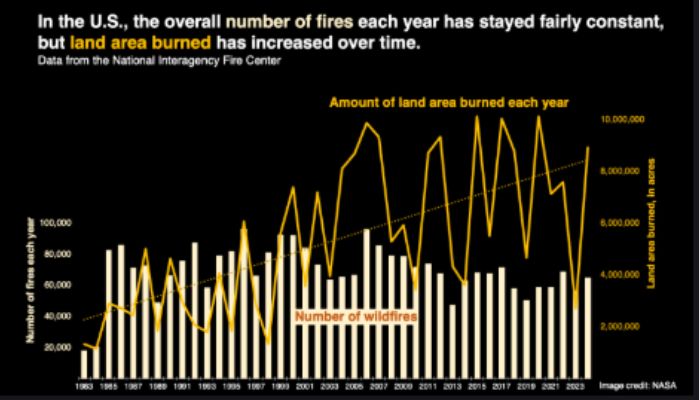
Night temperatures have become a decisive element, and the fires are kept going at night as opposed to drying out.
Moreover, NASA scientists have reported that fire seasons are becoming longer, with autumns starting earlier and ending later in the spring. Some areas now have fire seasons lasting over a month, compared to 35 years ago.
Economic toll and human impact
North America has suffered especially badly economically due to wildfires targeting high-value infrastructure in fire-prone areas.
Scientists observed that the fires in Los Angeles at the beginning of 2025 were literally out of scale, more than twice the size of previous ones. The direct losses from the fires amounted to about 65 billion dollars, likely becoming the most expensive fire tragedies in history.
The human toll has also been terrible. The official documents of deadly fires include the Camp Fire of 2018 in Paradise, California, which killed 85 individuals and the Lahaina fire of 2023 in Hawaii, which killed 102 people.
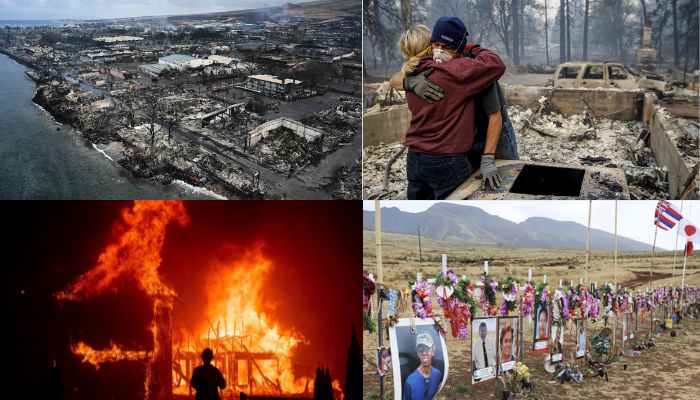
The researchers revealed a serious gap in disaster adaptation and suggested that communication and evacuation planning should be improved.
“Climate change is not the only cause of fire disasters,” Cunningham observed.
“The manner in which we treat built and natural environments also impacts them,” he added.
The study highlights the necessity of integrated approaches to climate change and urban planning, as wildfires are becoming longer and deadlier. This can be achieved by considering both climate change and community planning.


-
 Why Robert Pattinson chose to star in and produce 'Primetime'
 -
 When will taxpayer-funded pro-Trump ads end? Border Patrol official answers
 -
 'The Social Reckoning' bombs at the box office
 -
 UK skies lit-up by stunning northern lights after intense solar storm
 -
 Zara Larsson reveals 'Blue Moon' music video release date
 -
 Trump sends Columbus Day greetings to Americans and Italian Americans
 -
 Trump announces Ukraine-Russia ‘energy ceasefire’
 -
 5 bizarre things people discovered while exploring Google Earth