Can Crickets replace thermometers? Study finds
Known globally for their distinctive chirping, crickets can also serve as a natural thermometer
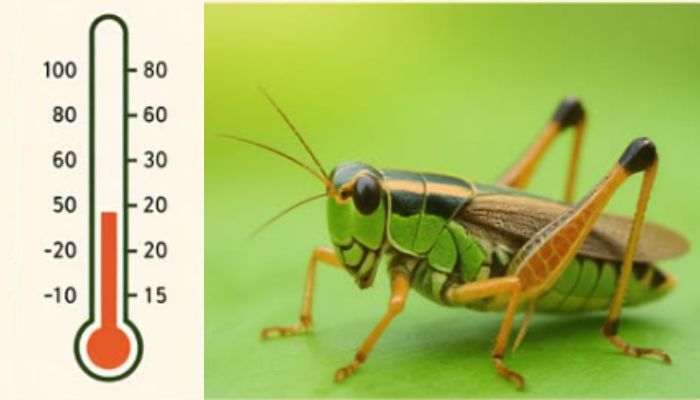
A new study finds that crickets can also measure temperature in our surroundings just as thermometers do.
Crickets are cold-blooded creatures, which means their environment influences their body temperature.
These insects are considered ectotherms, meaning the rate at which they chirp is directly affected by temperature.
The secret lies in Western science's ‘Dolbear’s law’ which was published in an article in 1897 by American physicist Amos Dolbear titled “The Cricket as a Thermometer”.
The idea clicked when an American physicist and inventor, Dolbear, observed the relation between the chirp rate and temperature, which was first reported in 1881 by Margarette W. Brooks of Salem, Massachusetts, in her letter to the Editor of the Popular Science Monthly edition.
Following the case study, Dolbear did not name any specific species of bush insects, but some researchers identified them as snowy tree crickets or Oecanthus niveus, also known as the thermometer crickets, which are commonly found in North America.
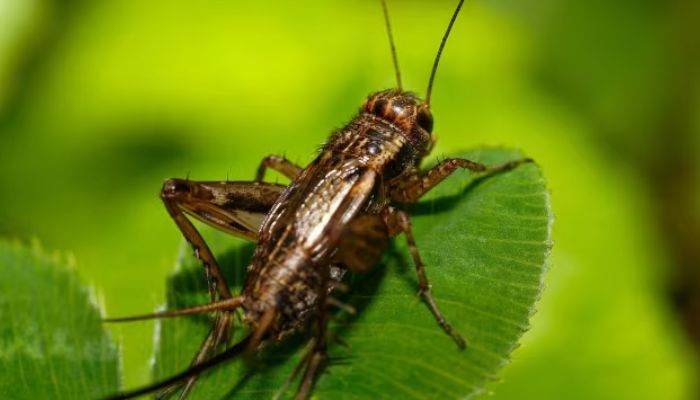
In addition to that, Dolbear also expressed the relationship of cricket with temperature through a formula which provides a way to estimate the temperature TF in degrees Fahrenheit from the number of chirps per minute N60.
Dolbear's law: Temperature (F) = number of cricket chirps in 15 seconds + 40
Moreover, the chirping sound of these field crickets is correlated not only with temperature but also with other factors such as age and mating success.
Crickets warm their bodies by rubbing their wings together in a fast motion, which is how they make repetitive chirps to attract mates.
Additionally, the National Oceanic and Atmospheric Administration (NOAA) reports that the El Paso Weather Forecast Office in Texas also uses Dolbear's formula to calculate temperature, efficiently providing a cricket chirp converter.
The weather forecasting agency further informs that they found this formula to be both helpful and easier to use. By simply plugging in the number of chirps, the temperature can be converted into degrees such as Fahrenheit, Celsius, or even Kelvin.


-
 Taylor Swift, Travis Kelce wedding guest addresses champagne shortage, long food lines rumours
 -
 Did Connor Murphy have a heart problem before he drowned?
 -
 Nancy Guthrie case update: Judge orders ransom imposter into inpatient treatment before sentencing
 -
 Minecraft adds new sitting feature after 17 years
 -
 Iran slams US World Cup hosting as ‘MAGA Playbook’
 -
 Trump shares doctored meme, reigniting feud with Italy’s Giorgia Meloni
 -
 New USPS fee coming soon for all Americans: Here’s what to know
 -
 Mitch McConnell hospitalization, wife’s China visit spark conspiracy theories