Hungarian novelist Laszlo Krasznahorkai wins 2025 Nobel Prize in Literature: Here's what we know
Laszlo Krasznahorkai’s 'Herscht 07769,' honored by this year’s Nobel Prize in Literature, is celebrated as a remarkable contemporary German novel for its precise depiction of Germany's social turmoil
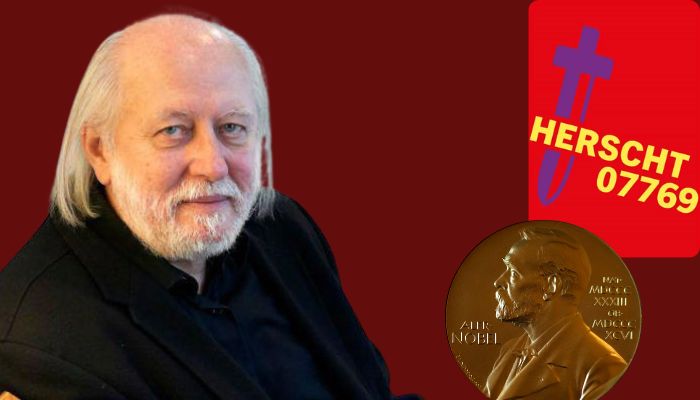
This year’s Literature Nobel Prize has been awarded to a Hungarian writer Laszlo Krasznahorkai.
Laszlo Krasznahorkai, Nobel laureate of 2025 in literature was born in 1954 in Gyula, a small town in southeast Hungary near the Romanian border.
Laszlo Krasznahorkai’s Herscht 07769, honored by this year’s Nobel Prize in Literature, is celebrated as a remarkable contemporary German novel for its precise depiction of Germany's social turmoil.
The Swedish Committee while announcing the prize at a ceremony in Stockholm, Sweden, praised Krasznahorkai “for his compelling and visionary oeuvre that, in the midst of apocalyptic terror, reaffirms the power of art.”
Krasznahorkai is the second Hungarian to win the Nobel Prize in Literature after Imre Kertesz in 2002.
Krasznahorkai has written five novels and received numerous accolades, including the 2015 Man Booker International Prize and the 2013 Best Translated Book Award in Fiction for his debut novel, Satantango, a postmodern exploration of apocalyptic themes.
The novel was later adapted for the big screen in 1994.
Laszlo Krasznahorkai books include:
- The Melancholy of Resistance 1989
- War and War 1999
- Seiobo There Below 2008
The plot of Herschet 07769
In Herschet 07769, Laszlo Krasznahorkai transports readers not only to a feverish Carpathian nightmare but also to a believable depiction of a modern small town in Thuringen, Germany, engulfed with social upheaval, murder, and arson.
Amid this turmoil, the novel’s tension unfolds against the profound influence of Johann Sebastian Bach’s legacy.
Krasznahorkai's Herschet 07769 is widely considered a masterpiece of contemporary German novels because of its perfection in portraying the social upheaval just before the pandemic.
The Chair of the Nobel Committee noted, “Laszlo Krasznahorkai is a great epic writer in the Central European tradition that extends through Kafka to Thomas Bernhard, and he is characterized by absurdism and grotesque excess.”
A reader of Krasznahorkai is immediately captivated by his sentences: extended, winding, and self-correcting.
Krasznahorkai once remarked that the period “doesn’t belong to human beings—it belongs to God.”
The previous year’s Nobel Prize was awarded to Han Kang, a South Korean author who was celebrated for her “intense poetic prose that confronts historical traumas and exposes the fragility of human life.”
The prize money given is worth to 11 million Swedish Kronor ($ 1 million).
Since its establishment in 1901, the Nobel Prize in Literature has been awarded 118 times to 122 Nobel laureates, with 18 of those awards given to women.
Over a century since their establishment, the Nobel Prizes remain rich in tradition.
The Nobel Prizes were created through the will of Alfred Nobel, a wealthy Swedish businessman and the inventor of dynamite.
Since 1901, they have been awarded for exceptional achievements in science, literature, and peace, with pauses primarily during the World Wars.
The awards conclude with ceremonies attended by the royal families of Sweden and Norway, followed by grand banquets on December 10, marking the anniversary of Alfred Nobel’s death.






-
 'Never in million years': Dog owner looks back at beloved pet nearly losing life
 -
 Space X’s Starship vision could enable 10,000 launches a year, says Elon Musk
 -
 GTA 6 Ad spotted before official summer marketing push
 -
 UK dog owners could regret it for life if they ignore these heatwave rules
 -
 Destiny 2 development ends after nearly a decade of updates
 -
 'Virgin River' star found dead days after going missing: Here's what we know
 -
 'It Takes Two' rapper Rob Base passes away at 59
 -
 Dustin Hoffman sets clear boundaries at 88: 'I can't look'