Three Gorges Dam shifted Earth’s axis, slightly slowed rotation: NASA scientists
The dam created a reservoir holding an estimated 10 trillion gallons of water

China’s massive Three Gorges Dam has reportedly caused a subtle but measurable shift in the Earth’s axis and a slight increase in the length of a day, an effect confirmed by scientists at NASA’s Goddard Space Flight Centre.
The dam, which was completed in 2006 on the Yangtze River, created a reservoir holding an estimated 10 trillion gallons of water. This colossal mass, stored at a high elevation above sea level, resulted in a redistribution of the Earth’s total mass.
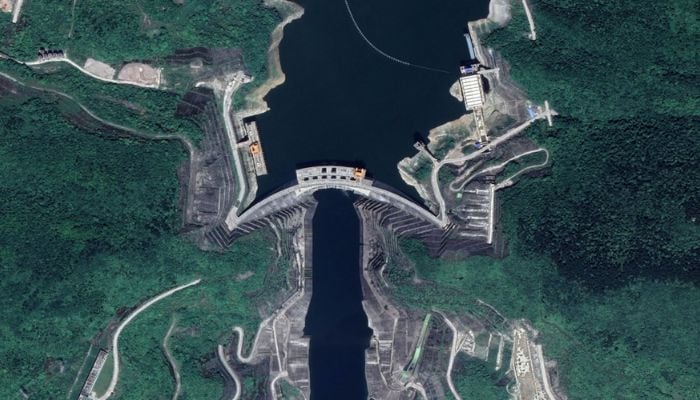
Scientists have confirmed that the added weight caused the Earth’s rotation axis to shift by approximately two centimetres, or about three-quarters of an inch.
The redistribution of mass, particularly moving it farther from the rotational axis, has slightly slowed the Earth’s rotation. This change increases the length of the day by approximately 0.06 microseconds.

The effect is governed by the physical principle of the conservation of angular momentum. A change in the mass distribution of a rotating object must result in a change in its rotation rate to keep its angular momentum constant.
While this shift is tiny, the effect of natural events like the 2004 Indian Ocean tsunami shortened the day by a comparatively larger 2.68 microseconds due to tectonic shifts.
Researchers stress that this change poses no practical risk to daily life or the global system, but it serves as a powerful reminder of humanity’s growing influence on the planet.


-
 Who is South Africa's Navanethem 'Navi' Pillay? Meet the 2026 Nobel Peace Prize winner
 -
 Final Fantasy 14's Bygone Serenity music box is up for pre-order
 -
 Ben Affleck does a Rosamund Pike impression looking back on 'Gone Girl'
 -
 Caitlin O’Connor on wedding plans with Joe Manganiello as they celebrate three-year anniversary
 -
 Joe Manganiello disputes Sofia Vergara’s account of why they split at length
 -
 Jenna Dewan’s fiance Steve Kazee responds to 'too much chemistry' concern with Val Chmerkovskiy
 -
 Netflix taps Jennifer Coolidge to return for 'The Watcher' Season 2
 -
 Spotify and Joe Rogan strike new deal with reported $250M earnout