Afghanistan’s internet blackout extends into third day under Taliban order
Taliban imposes nationwide internet blackout, plunging Afghanistan into digital darkness
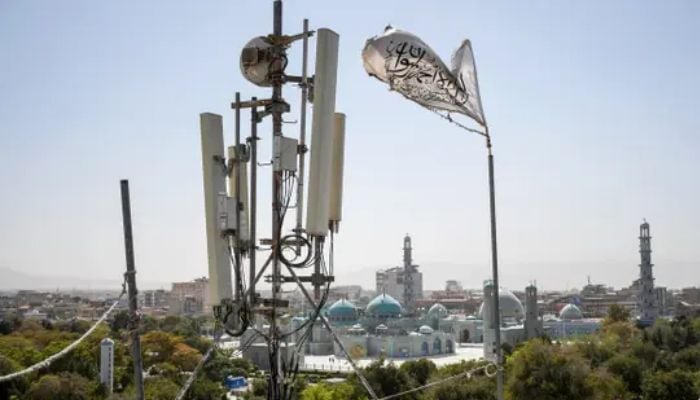
The Taliban regime has imposed a near-total shutdown of mobile data services across Afghanistan.
The digital blackout began on Monday, September 29, crippling essential digital services and severing the country’s connection with the outside world.
According to internet monitor NetBlocks, Afghans have only 1% internet connectivity.
The unprecedented nationwide blackout occurred as part of a phased crackdown that began earlier this month when Taliban authorities started cutting fibre-optic links to several provinces, citing concerns about “immortality” and online pornography.
According to local broadcaster Tolo News, the officials have given a one-week deadline to shut down 3G and 4G services completely.
Only 2G networks will remain active.
“The cut in access has left Afghanistan almost completely cut off from the outside world, and risks inflicting significant harm on the Afghan people,” the United Nations mission in Afghanistan stated, calling for authorities to immediately restore connections.
The impact of the disconnectivity is immediate and severe.
The air traffic system failed, causing the cancellation or grounding of commercial flights at Kabul International Airport.
The entire banking system in the country was frozen, and the central bank and other private banks were unable to carry out transactions.
This power outage has also disrupted humanitarian efforts, such as earthquake relief efforts in eastern Afghanistan, where a recent magnitude-6.0 earthquake left thousands dead.
A UN source came out strongly, claiming that operations are seriously affected and performance has regressed due to limited radio communications and sparse satellite connections, which means that aid groups can no longer access frontline workers.
An unidentified telecommunications firm reported that companies were complying with orders issued by the government and were optimistic that they would recover soon. The Taliban government has not given any official reason behind the blackout and was not available to comment, itself a by-product of the same limitations it imposed.
The communications shutdown is just the most recent in a progressively more extreme policy of the Taliban leadership, which has already restricted women's access to education and most jobs, as well as burned out university libraries of books by female writers. The relocation virtually seizes the 43 million Afghans at a moment when the nation is experiencing various humanitarian disasters, such as mass flight of refugees and extreme drought.


-
 Chappell Roan's security guard takes 'full responsibility' for his interaction with Jorginho's daughter?
 -
 'Buffy' star Nicholas Brendon's death case takes massive turn
 -
 Meryl Streep left shaken on 'The Devil Wears Prada 2' set: Here is what shocked her
 -
 Savannah Guthrie 'Today' return: Fans receive exciting update as search for Nancy continues
 -
 Kim Kardashian shares cryptic message after Lewis Hamilton vow
 -
 'Heated Rivalry' season 2: Jacob Tierney teases shocking twist
 -
 '13 Going On 30' reboot confirmed: Jennifer Garner returns with new cast
 -
 Why Elon Musk sees Starship as humanity’s only bridge to Mars
-
 Stephen Colbert reveals secret project in 'Lord of the Rings' universe but he is not alone
 -
Alan Ritchson gets clean chit in violent altercation with neighbor
-
John Stamos reveals his unique take on fatherhood ahead of upcoming book
-
Miley Cyrus says something surprising about Disney stars Zac Efron and Vanessa Hudgens