EU environment agency issues stark warning on Europe’s ecological health
EU agency warns Europe must urgently boost environmental protections and climate resilience
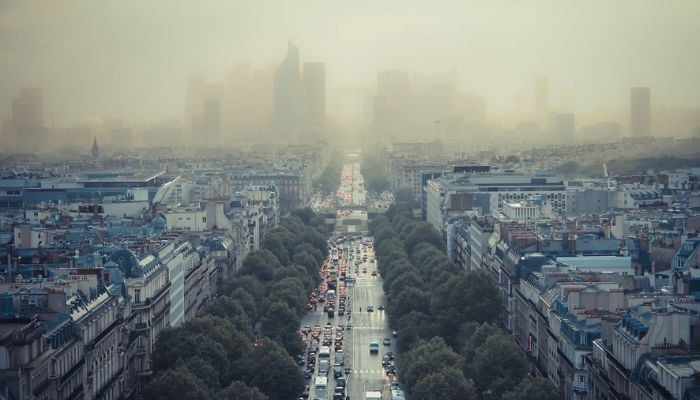
The European Environment Agency (EEA) warned European leaders to take significant steps to protect their deteriorating environment and bolster their defenses against a rapidly warming world.
The report released on Monday, September 29, contains a call to action that comes amid political gridlock within the European Union, where member states have remained unsuccessful in mutually agreeing on a formal 2035 emissions-cutting plan.
The European Commission proposed reducing emissions by 90% by 2040 at a recent UN climate summit. However, members remained divided on this stance.
EEA comprehensively assessed the current circumstances and stated, “Significant progress has been made in reducing greenhouse gas emissions and air pollution, but the overall state of Europe’s environment is not good.”
The report acknowledged Europe's leadership in cutting greenhouse gases, as EU greenhouse gas emissions have dropped by an impressive 37% since 1990. This has been made possible due to a reduction in fossil fuel use and a doubling of renewable energy since 2005.
Additionally, the report also underlined that deaths from air pollution have also decreased by 45% between 2005 and 2022.
But the increasing ecological degradation in the region overshadows this progress. If not controlled, the persistent situation will lead towards "degradation, overexploitation, and biodiversity loss" in Europe.
EEA found out that:
- 81% of protected habitats are in poor or bad condition
- 60-70% of soils are degraded
- 62% of water bodies are not in good ecological condition, with water scarcity becoming an increasing crisis
Climate change is exacerbating these problems and posing a direct threat to European citizens and economies.
According to the report, the consequences of extreme weather and climate events, which have been experienced in the EU since 1980, have resulted in more than 240,000 fatalities.
The economic cost is increasing at a breakneck pace, and the average financial loss per year from 2020-2023 is 2.5 times greater than it was over the last ten years.
One dramatic example is the 2023 Slovenian floods, which cost the equivalent of 16% of the GDP of that nation.
A significant issue is also societal weakness. The EEA found that the majority of European buildings were not designed to cope with extreme heat and 19 percent of the population could not keep their homes comfortable.
Although the frequency of fatal heatwaves is rising, only 21 of the 38 member countries in EEA have health action plans devoted to them.
The agency urged a doubling of efforts to enforce current policies inline with the European Green Deal.
It also indicated solutions whereby through improved governance and innovation at least 40% of water would be saved in areas that require it most.
Catherine Ganzleben, head of the EEA’s sustainable and fair transitions unit, stated, “Human survival depends on high-quality nature, particularly when it comes to adaptation to climate change.”
“So sustainability is not a choice, it’s a question of when we do it. Do we do it in the short term and start now, or do we park it, in which case it’s going to be harder and the costs of inaction will be higher,” she added.





-
 Michael Jordan explains why he keeps his philanthropy private amid public debate
 -
 Drama deepens as Pete Davidson's pal responds to Elsie Hewitt's parenting claims
 -
 Ella Langley dominates ACM awards with record-breaking 5 wins: 'Thank you so much'
 -
 Jon Favreau reveals how 'Star Wars' shaped his life before 'The Mandalorian and Grogu' release
 -
 Matthias Schmid’s girlfriend Nora Worlke joins him at PGA Championship
 -
 Who is Aaron Rai’s golfer wife? Meet Gaurika Bishnoi
 -
 Paul McCartney sparks severe backlash before his upcoming album: 'Don't live'
 -
 KJ Apa feels 'honored' to depict Jimmy Stewart in upcoming biopic