One-million-year-old 'Dragon Man' skull discovered in China may rewrite human evolution
The skull was excavated in 1990 from Hubei province, central China
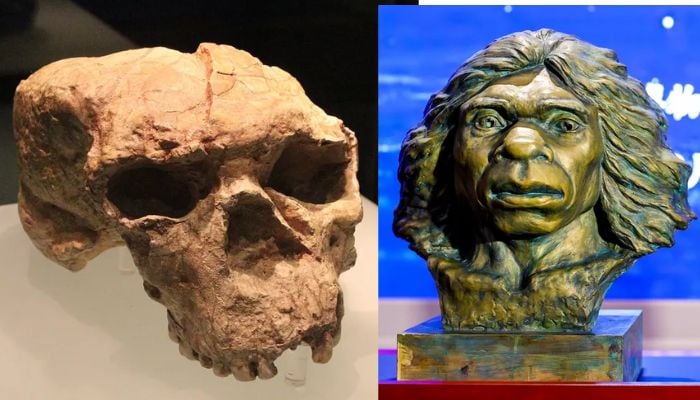
A one-million-year-old skull has recently been discovered in China and experts believe that it might hold clues to the origins of Neanderthals, Denisovans and modern humans.
The skull was excavated in 1990 from an archaeological site in Hubei province, central China.
According to a study published in the journal Science, researchers presented their reconstruction of the Yunxian 2 skull.
Previously it was believed that the skull belonged to Homo Sapiens, new analysis suggests that it is more closely linked to “Dragon Man (Homo Longi)”, a long extinct species.
The new evidence suggests it is also more closely related to the mysterious group of humans that went extinct 30,000 years ago known as Denisovans.
The digital reconstruction has revealed several distinct traits of the Yunxian 2 skull, including:
- Large cranial capacity,
- A long and low frontal skull bone,
- Narrow space between eye sockets
Researchers believe that this set of characteristics belong to the Homo Longi clade.
A paleontologist at the Natural History Museum in London, Chris Stringer, told Live Science, “The Homo Longi clade, containing the Denisovans, lasted for more than a million years. But so did the Neanderthals and sapiens lineages.”
This new discovery has given humans the opportunity to look earlier in time for factors that may have triggered human evolution.


-
 Russia approved secret China military training at top level, sources reveal
 -
 GTA 6 developers make fresh claims against Rockstar
 -
 FBI reaches new conclusion in Nancy Guthrie kidnapping case
 -
 Elon Musk accused of lying about secret government UFO program
 -
 Taylor Swift, Travis Kelce set up giant wedding castle at MSG
 -
 Kendall Jenner throws family out after dating Jacob Elordi?
 -
 Jennifer Lopez regrets her divorce from Ben Affleck: 'What could I have done better?'
 -
 Was Shakira mentioned in Epstein files?
-
 Thylane Blondeau: ‘Most Beautiful Girl in the World’ gets married
 -
Taylor Sheridan criticizes Marvel Studios for breaking storytelling rules
-
Trump shares apparent AI image of large golden eagle on Truman Balcony ahead of America’s 250th anniversary
-
Is US preparing 60,000-troop invasion of Iran? Viral Chinese professor makes explosive claim