
Brazilian jaguar breaks world record with 2.5km swim
Jaguars are strong swimmers and they often plunge into the water to capture prey
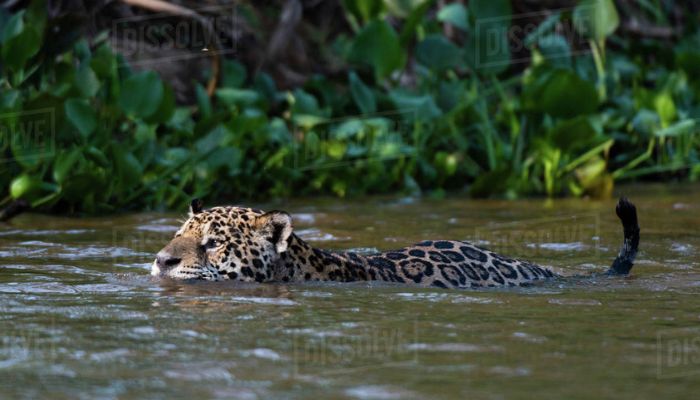
A Brazilian jaguar has set the world record for the longest ever swim recorded by any member of its species.
The big cat swam a distance of 2.48 kilometers, shattering the previous known record of 650 feet.
A on-peer-reviewed paper shared on pre-print server bioRxiv on September 10, revealed a male jaguar swam near the Serra da Mesa Hydroelectric Power Dam in Brazil and its movement was captured by secret cameras.
The study authors claim the jaguar swam at least 1.27km to reach a small island in an artificial lake created by the dam in May 2020. The same male was spotted four years later on the same island.
The study presents two scenarios of how the beast reached the island:
- Jaguar swam to a small islet that is 1.07km from the land and then re-entered water to swim the remaining 1.27km.
- Jaguar swam from mainland to the island in one go covering a distance of 2.48 km.
The paper further claims that even if the distance was covered over two journeys, it still makes it a record swimming distance in history.
According to Live Science, Jaguars are strong swimmers and they often plunge into the water to capture prey such as caimans, fish and turtles.
It remains unclear why the big-cat decided to explore the new area as there exists no evidence indicating the island or surrounding shoreline has more prey.






-
 Britney Spears' ex lawyer breaks silence on singer's DUI arrest
 -
 Ray J, Kim Kardashian sex tape saga gets shocking twist after his lawyer's recent claims
 -
 Savannah Guthrie's missing mom Nancy whereabouts revealed?
 -
 'American Idol' alum Taylor makes steamy offer to Kelly Clarkson amid rare confession
 -
 Nicole Kidman's secret date to Met Gala comes to light after Keith Urban divorce
 -
 Jack Harlow shares rare insight into his dating life
 -
 Stephanie Buttermore fans continue to raise big question
 -
 Harper Beckham makes bold move to become next Kylie Jenner