
MIT shocks world with bee-like robot
Tiny winged machine could revolutionize agriculture on Earth and in space
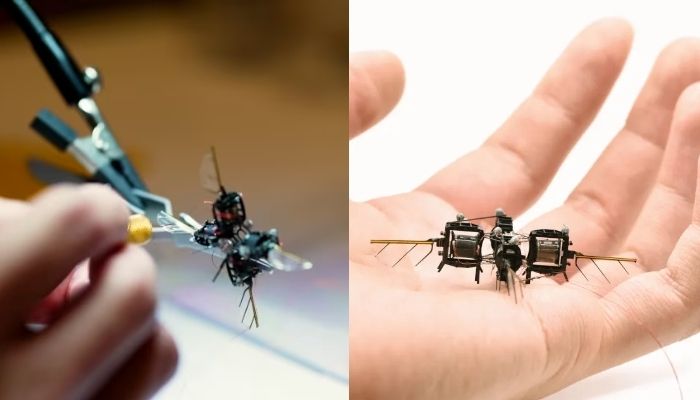
Scientists at the Massachusetts Institute of Technology (MIT) have engineered a revolutionary bee-inspired robot weighing less than a paperclip that could transform artificial pollination and even support future agriculture on Mars.
The micro-robot shows record breaking aerial capabilities, beating its wings 400 times per second to reach speeds of two meters per second while performing complex mid-air flips and sustained stationary flight.
Yi-Hsuan Hsiao, the PhD student leading development revealed: "We are just trying to mimic these amazing maneuvers that bumblebees can achieve.”
Bio-inspired creation's research team shared their goals that they aim to complement rather than replace nature's pollinators, deploying the robots where bees cannot survive.
"If you're going to grow something on Mars, you probably don't want to bring natural insects, that is where our robot could potentially come into play," Hsiao explained.
Project lead Professor Kevin Chen confirmed additional applications in vertical farming facilities where artificial lighting proves challenging for biological bees.
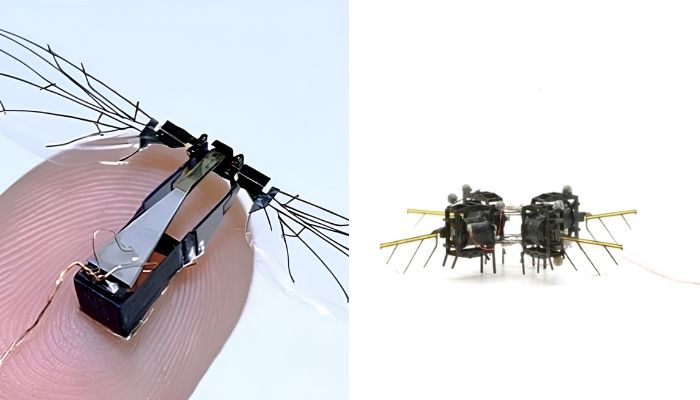
The breakthrough robot utilizes innovative soft artificial muscles that contract and expand to power wing movements, with microscopic internal components rivaling watch mechanisms in their precision, all fabricated within MIT's laboratories.
In addition to the flying prototype milestone, researchers have developed a grasshopper-inspired jumping robot smaller than a human thumb that can leap 20 centimeters high across diverse terrain from grass to ice, offering superior energy efficiency to flying models.






-
 Donald Trump slams Bad Bunny's Super Bowl performance: 'Absolutely terrible'
 -
 Drake 'turns down' chance to hit back at Kendrick Lamar at Super Bowl
 -
 Super Bowl weekend deals blow to 'Melania' documentary's box office
 -
 Adrien Brody opens up about his football fandom amid '2026 Super Bowl'
 -
 What did Olivia Colman tell her husband about her gender?
 -
 Major Hollywood stars descend on 2026 Super Bowl's exclusive party
 -
 Travis Kelce's true feelings about Taylor Swift's pal Ryan Reynolds revealed
 -
 David Beckham pays tribute to estranged son Brooklyn amid ongoing family rift