Astral visitor may have changed orbital path of solar system planets, says study
Paths of four outer giant planets, Jupiter, Saturn, Uranus and Neptune minorly deviate from ideal orbital shape
_updates.jpg)
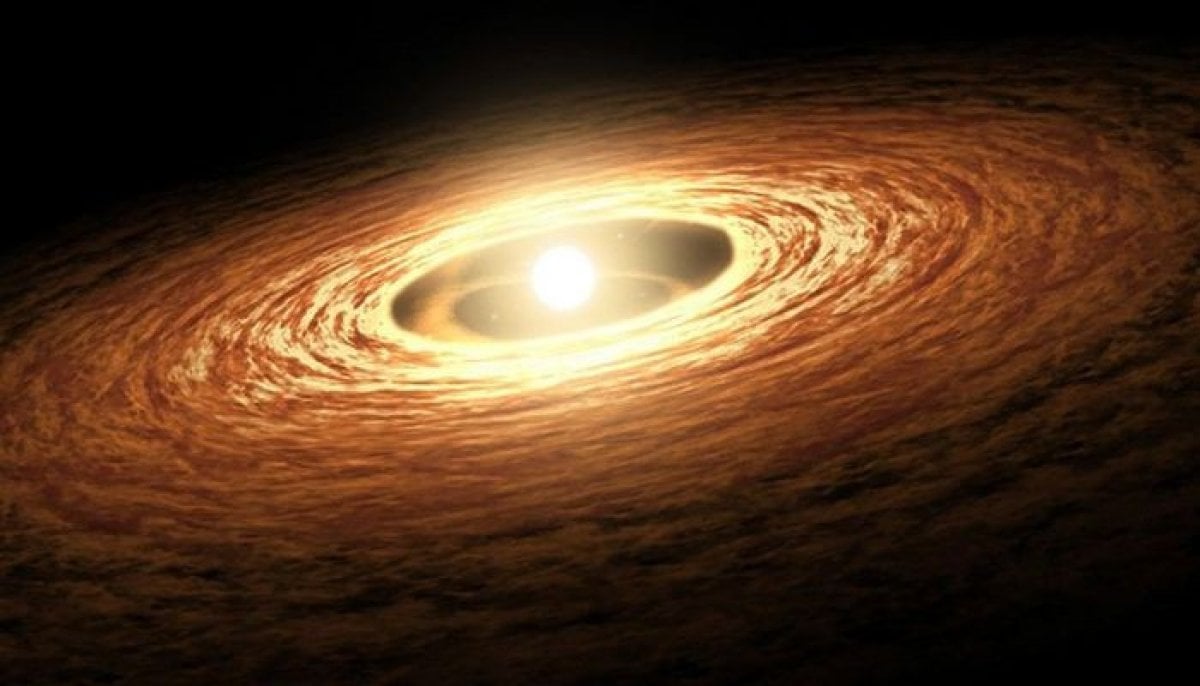
A planet-sized visitor possibly visited the solar system billions of years ago and permanently changed the cosmic neighbourhood by warping the orbital path of four outer planets of the system, a new study indicates.
These findings can answer as to why some planetary paths have certain features.
The formation of the solar system's planets has been a subject of debate but still, most agree that the orbit of the planets should be in circles that are arranged concentrically around the sun and lie on the same plane.
However, none of the planets orbiting the sun have perfectly circular orbital paths and the paths don't even lie on the same plane.
Compared with Mercury, the paths of the four outer giant planets, Jupiter, Saturn, Uranus and Neptune minorly deviate from the ideal orbital shape.
A planetary scientist at the University of Arizona and a co-author of the new study, Renu Malhotra, remarked that explaining these niggling discrepancies has been challenging.
"The puzzle for theoretical astrophysics has long been to figure out how the orbits later became out-of-round and tilted from their mean plane by not too much and not too little," she wrote in an email to Live Science.
The previous hypotheses and research focused on how interactions between these planets reshaped their orbits, Malhotra said that they are not consistent "with certain important details of the observed orbits".
To overcome this debacle, Malhotra and her colleagues considered a less-examined and thought about scenario that around four billion years ago, a star-size object visited the solar system and tweaked these planets' paths.
The team carried out 50,000 simulations of such events, using computer models of the four outer planets, each over 20 million years. They altered parameters of each of the visiting objects including their mass, speed and how closely they flew by the sun.
Although most of the simulations run by the team created situations very unlike the current layout of the solar system, the researchers found that in approximately 1% of the simulations, the planet-sized object's path altered the orbits to approximately their current state.
The visitors in 1% of simulations dove straight into the solar system, travelling past Uranus' orbit and some even grazed Mercury's path and they ranged from two to 50 times the mass of Jupiter.
"This range includes planetary masses to brown dwarf masses," Malhotra said.
Because many simulations had the planet-like object swooping through the inner solar system, the researchers created an additional 10,000 simulations and included the terrestrial planets as well.
The objects in these flybys that had previously altered the giant planets' orbits to their present states again created the solar system's current appearance.
The simulations prove that just one object flying by the solar system was enough to alter the planet's orbital path.


-
 Elon Musk’s Mars colonization dream faces reality check from Nobel laureate
 -
 NASA competition model 2.0 cuts mission selection by 45%
 -
 A ‘neglected’ neutrino may hold the key to why the Universe exists
 -
 Can cancer drugs be made in space? Here’s what the new mission aims to find out
 -
 SpaceX Falcon 9 successfully launches Bandwagon-5 mission with 32 payloads
 -
 Europe launched 8 orbital rockets last year, can it rival Starlink?
 -
 Japan launches world’s first mission to bring sample back from phobos
 -
 Orionid meteor shower 2026: Peak date, viewing tips and what to expect