Aurora borealis light up New Year's Eve sky with stunning display
Storms lit up sky throughout the New Year's Eve night going as far as California, Austria and Germany
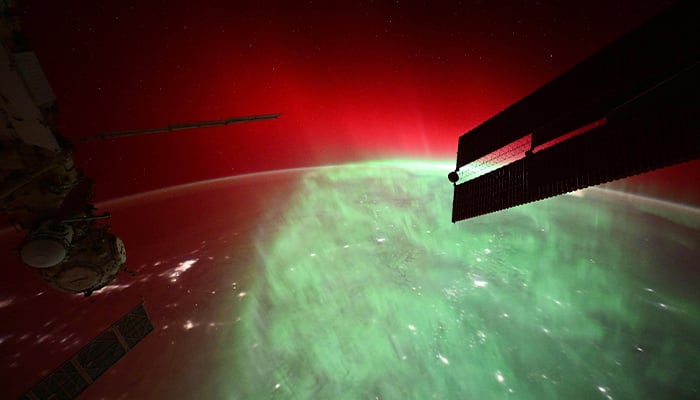
As we welcomed the New Year with fireworks and immense joy, the sky lit up in celebration over the Northern Hemisphere with a stunning display of its own — the northern lights also known as the aurora borealis.
The phenomenon graced the night sky after two coronal mass ejections (CME) hit the magnetic field of the Earth and prompted geomagnetic storm conditions and painted the sky with vibrant aurora borealis displays as far as the US (California), Austria and Germany, as per Space.com.
The storms lit up the sky throughout the New Year's Eve night, blessing us with a natural and radiant display of fireworks.
The CME hit Earth’s magnetic field on December 31 at 16:21 GMT and a second CME struck later that night.
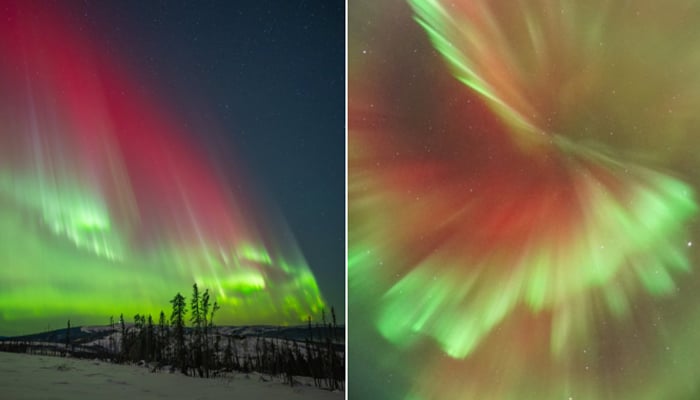
When they strike Earth’s magnetosphere, they bring forth electrically charged particles called ions that collide with Earth’s magnetic field. These collisions can lead to sparking geomagnetic storms and during these storms, ions collide with atmospheric gases and release energy in the form of light.
The light creates the stunning northern lights also known as aurora borealis in the Northern Hemisphere and the southern light or aurora australis in the Southern Hemisphere.
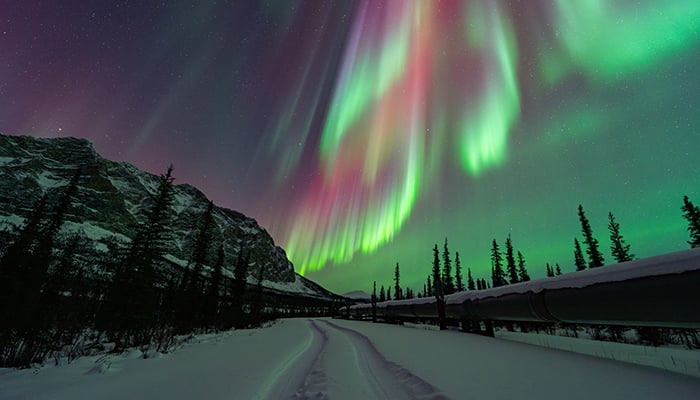
More light shows can be triggered as the sun has thrown a new CME toward Earth. Aurora borealis’ new show could grace the Northern Hemisphere around January 3 or 4, as per space weather physicist Tamitha Skov.


-
 Robot dogs on Mars: Swiss researchers reveal how autonomy speeds up space exploration
 -
 From Apollo to Artemis: How astronauts honor loved ones with lunar names
 -
 Emperor penguins on verge of extinction: ‘A grim story shaped by climate change’
 -
 NASA Artemis II crew prepares Earth return after historic Moon mission
 -
 NASA Artemis II astronauts spot meteorite strikes on Moon during flyby
 -
 China vs US: Artemis II mission drives new Moon race momentum
 -
 ‘Sonic boom’ rocks New Jersey after rare daytime meteor sighting: NASA confirms
 -
 Forbidden exoplanet TOI-5205 b shocks scientists with ‘unexpected atmosphere’