Scientists discover first-ever billion-light-year-wide 'bubble of galaxies'
This colossal bubble spans a billion light-years, dwarfing our galaxy 10,000 times in size
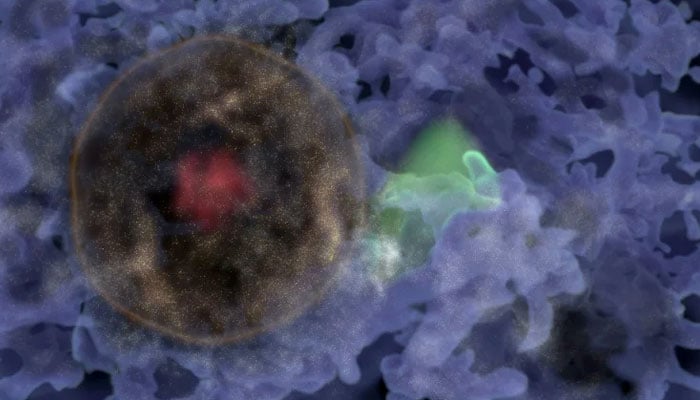
Astronomers have discovered the first "bubble of galaxies," an enormous cosmic structure believed to be a relic from shortly after the Big Bang, lurking just 820 million light-years away from our Milky Way galaxy.
This colossal bubble spans a billion light-years, dwarfing our galaxy 10,000 times in size.
Named "Ho'oleilana" (meaning "sent murmurs of awakening" in Hawaiian), this bubble is like a spherical shell with a heart, containing the Bootes supercluster of galaxies surrounded by a vast void known as "the Great Nothing." It also encompasses other known galaxy superclusters, including the Sloan Great Wall.
The discovery, described in The Astrophysical Journal, confirms a phenomenon first proposed by cosmologist Jim Peebles in 1970. Peebles theorised that in the early universe, sound waves created bubbles in a hot plasma soup shortly after the Big Bang. These bubbles froze in shape about 380,000 years after the Big Bang as the universe cooled down and then expanded as the universe grew.
This bubble, although the first of its kind to be identified, may not be the last. The Euclid space telescope, launched by Europe in July, and massive radio telescopes like the Square Kilometre Array, being built in South Africa and Australia, could potentially reveal more such cosmic bubbles in the universe.
The significance of this discovery lies in the window it provides into the early universe and the formation of cosmic structures. Understanding these ancient remnants helps astronomers piece together the puzzle of how our universe evolved over billions of years, ultimately leading to the galaxy-rich cosmos we observe today.
Ho'oleilana stands as a testament to the endless wonders of the universe, waiting to be uncovered by the curious minds of scientists exploring the cosmos.


-
 Scientists develop technology to send smells through phones
 -
 Earth’s close encounter with giant asteroid Apophis is less than 3 years away
 -
 Chinese astronomers discover real-life three-body system unlike Liu Cixin’s fiction
 -
 Hunter’s Moon 2026: When and how to watch October’s full moon
 -
 Elon Musk’s Mars colonization dream faces reality check from Nobel laureate
 -
 NASA competition model 2.0 cuts mission selection by 45%
 -
 A ‘neglected’ neutrino may hold the key to why the Universe exists
 -
 Can cancer drugs be made in space? Here’s what the new mission aims to find out