Why do travellers have to walk exhausting distances in airports?
While travellers dread walking long distances in airports, it is not the most common reason why you miss your flight
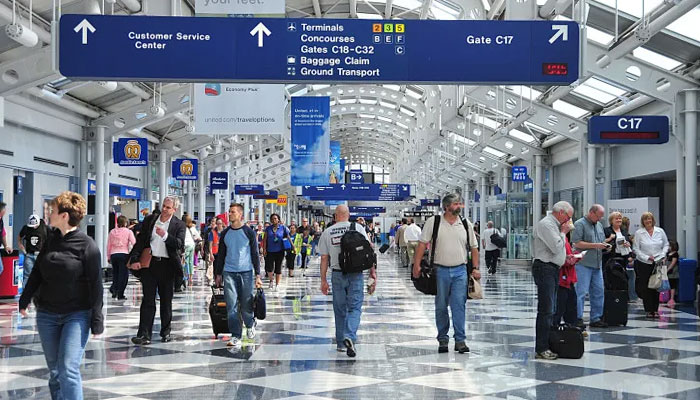
People have different feelings about travelling, since some do it for work, some do it for fun, and some just travel for the variety of adventures it offers; however, the dreadful amount of leg work you must do just to get to one airport corner is one thing that the majority of travellers agree on.
It is a must for every traveller to wear comfortable shoes, especially when they are commuting via air because as you walk past Hudson News, Chanel and Estée Lauder duty-free, lounges, Auntie Anne’s, and Starbucks, your concourse walk never seems to end.
Due to the post-pandemic increase in air travel, passengers appear to struggle to walk the seemingly endless distances in airports.
"I have just travelled thru the new LaGuardia airport. It confirms a theory of mine," former US Treasury Secretary Larry Summers recently observed. "The newer the terminal, the less convenient it is to use because all the walks are longer. I wonder why?"
Airport treks have worsened since security changes after the 9/11 attacks, with more changes during the pandemic. Larger aircraft have made hikes at the airport longer, mainly for business reasons.
In Newark and Chicago, airport terminals have removed moving walkways to accommodate more shops and restaurants, making the journey harder for passengers.
"You get to the gate and you're exhausted," said Henry Harteveldt, who covers the travel industry for Atmosphere Research Group. "You are dealing increasingly with airports that are designed around financial objectives and safety. The traveller gets lost in the dust."
Designing 21st-century travel
US airports built in the mid-20th century have undergone significant expansion plans in the 21st century, with gate extensions and renovations extending concourses. Security checkpoints were added to existing terminals after the tragic 9/11 incident, dividing terminals in two.
As airlines reduce in-flight meals, airports have added more retail and concession stands in terminals, offering more amenities that aren't offered onboard, according to Alexander Thome, who leads design firm Stantec's US airport work
Airports generate revenue through both aeronautical and non-aeronautical sources, including fees for runway usage, taxiways, and parking.
To increase non-aeronautical revenue, airports are expanding their stores, restaurants, and bars, especially as mass transit and rideshare usage increase and parking income decreases. Such expansions only add to the distances travellers have to cover within airports.
"People joke that today airports are shopping malls that have aeroplanes parked outside," Harteveldt said. “If you look at design of terminals, much of the added space is given over to retail services.”
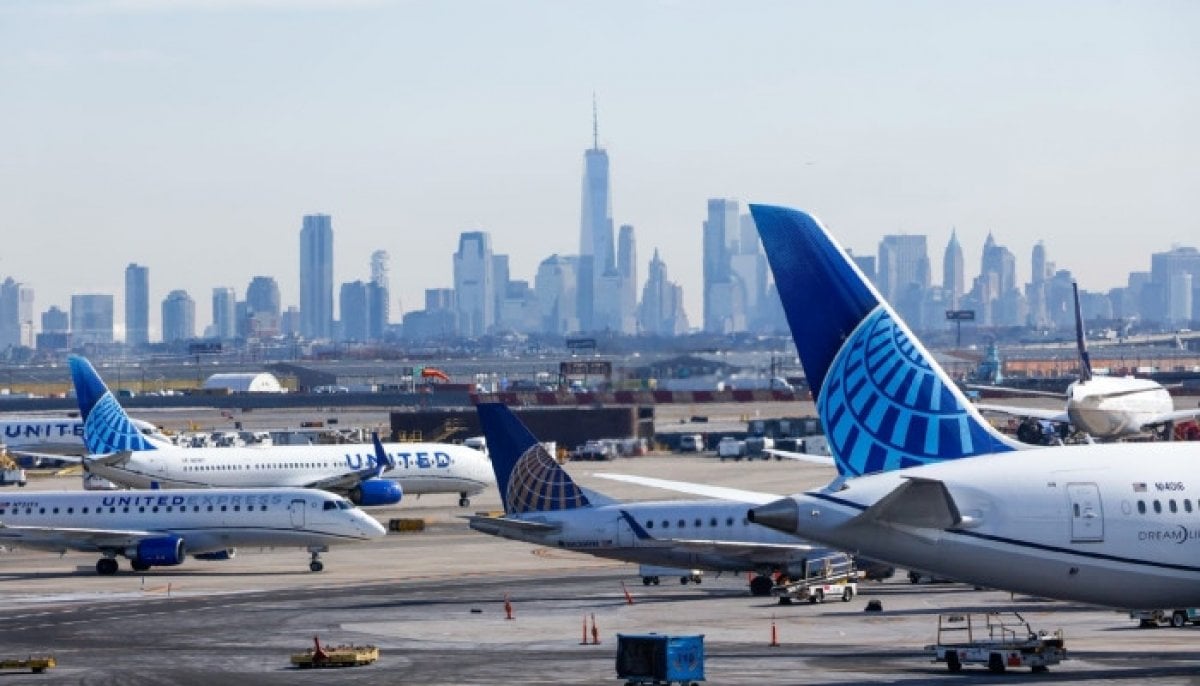
Airlines are implementing "upgauging" to increase passenger capacity, with smaller planes being retired. United is replacing 200 regional jets with larger ones, each carrying 50 passengers, to accommodate larger planes, necessitating wider tarmac spacing.
"There's a much better business case for larger planes. That’s pushing airlines to upguage their fleet," said Wilson Rayfield, executive vice president of aviation at Gresham Smith, an architectural firm. "When you park 10 planes next to each other and they’re 75 feet, it naturally translates to a much longer walk."
The blessing of moving walkways
Sprawling airports cause inconvenience for crews and employees, causing delays in flights which has prompted some airports to implement electronic signs to estimate travel time for passengers, such as gate arrival times or terminal-linking monorail arrival times, CNN reported.
A study by Kuru Footwear reveals Dallas Fort Worth has the longest airport trek in the US, spanning 2.16 miles from Terminal B to Terminal E. Additionally, Phoenix's Sky Harbor International Airport features a "fitness trail," allowing travellers to view city landmarks from the concourses.
Furthermore, travellers were not amused when some new airports that recently opened did not feature moving walkways.
Orlando International Airport and Salt Lake City International Airport are addressing travel complaints about their terminals. Orlando opened a $2.8 billion terminal last year but left out moving walkways.
Airport leaders in the city are now voting on a plan to install them.
Meanwhile, Salt Lake City is building a tunnel to shorten the 20-minute walk from security to the concourse.
Are people now missing planes as a result of the distance they must cover within airports? While it is a major problem, it is not the top reason why people miss their flights.
Over the past year, weather-related flight delays have been so frequent that millions of passengers are still stuck at the gate.


-
 Trump-Xi meeting could put Taiwan arms sales in focus: Report
 -
 Trump heads to UN for high-stakes address as global crises mount
 -
 Nolan Wells case takes major turn as grand jury declines to indict anyone
 -
 Mamdani opens up about surprisingly friendly meetings with Trump
 -
 Lindsay Clancy legal team seeks investigation into lone holdout juror
 -
 Paramount and states reach deal over Warner Bros. merger lawsuit
 -
 Natalie Harp behind Trump's ban on CNN, MS NOW and Politico at White House
 -
 Flights halted at Philadelphia, Newark and Teterboro airports due to equipment outage
-
 US working on major Belarus potash deal that could undercut Canada, Trump says
 -
Putin’s United Russia wins landslide as 49 Ukraine war veterans enter parliament
-
Converse apologises after Karina ad sparks backlash over alleged racist imagery
-
Venice to raise tourist entry fee to $34 in new push to tackle overtourism