Two killed in border clashes between Afghan, Iranian forces
Taliban spokesperson says matter has been brought into the notice of both sides
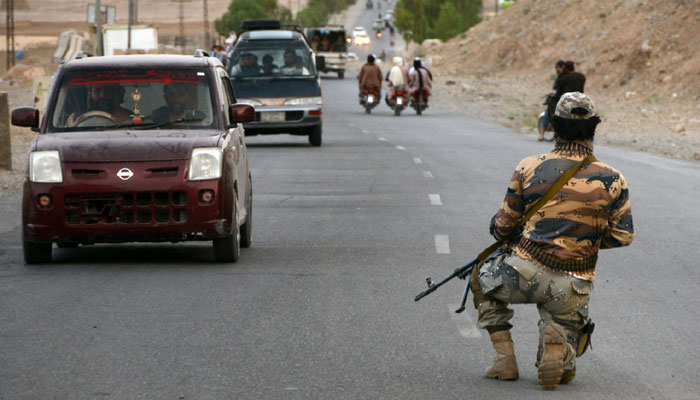
At least two people were killed on Saturday when clashes broke out between Taliban and Iranian forces at the Afghan-Iranian border amid “water rights” dispute between the two state.
Iranian news agency Mehr reported one Iranian border guard had been killed in the clashes.
"In the clash, one person was killed on each side and many were injured," Taliban's interior ministry spokesperson Abdul Nafy Takor said in a tweet about the incident in the southwestern province of Nimroz.
"The matter has been brought into the notice of the leaders on both sides and now the situation is under control. The Islamic Emirate does not want a war with its neighbour," the spokesperson added.
The deputy head of the Iranian police force, Qassem Rezaee, was quoted by state-run IRNA as saying that "Taliban forces started shooting with all kinds of weapons" at an Iranian police station in Sistan-Baluchistan province.
Tasnim news agency reported that "light and semi-light weapons and artillery were used in the clashes".
Even though Tehran and Kabul are bound by diplomatic relations, the Islamic republic of Iran does not recognise Afghanistan's Kabul government, and ties between the two have been recently tense over a water dispute.
Last week, Iran demanded that Afghanistan respect its "water rights", charging that an upstream river dam there is restricting the flow into a lake that straddles their common border.
During a visit on May 18 to drought-parched southeastern Iran, President Ebrahim Raisi said: "I warn the rulers of Afghanistan to immediately give the people of Sistan-Baluchistan their water rights."
The Helmand River flows from the mountains of the central Afghan province of the same name for more than 1,000 kilometres (600 miles) into Lake Hamoun, which straddles the Afghanistan-Iran border.
Afghanistan has blamed climatic factors for reduced river volumes.
Iran maintains that the country's share was legally defined in a 1973 agreement between the two sides and demands that Taliban leaders uphold the deal, and last week it said Tehran "reserves" the right to take action to settle the dispute.
On the same day as the border clashes, Afghanistan's Foreign Minister Amir Khan Muttaqi met with the Iranian ambassador to Afghanistan Hassan Kazemi Qomi in Kabul where the two discussed "coordinated management of the border", the foreign ministry said in a statement.
"Assuring Iran's rights in the waters of Helmand river" was also discussed, it said.
— With additional input from AFP


-
 Xi Jinping’s Washington visit takes an unexpected turn: What to know
 -
 US delegation walks out as Iran hit back at Trump at UN: ‘We will not bow our heads’
 -
 Trump to meet China’s Xi as Congress considers sweeping AI restrictions
 -
 Trump says Canada is ‘destroying itself’ with its immigration policies and ‘unemployment’
 -
 US major news outlets ask fedral judge to end Trump’s White House press ban
 -
 Trump praises NATO at UN, highlighting massive defense spending boosts
 -
 Hurricane Polo weakens to Category 4 but remains ‘very powerful’ near Mexico
 -
 Russia cuts natural gas output and export forecasts amid shifting global energy markets